Frog Tuck Front Lever
Knees splayed wide like a frog, the lats and abs hold the body face-up and horizontal, opening the tuck to load the front lever harder.
Want a bodyweight core workout?
Our wizard builds one around your time, goal, and equipment in about two minutes. Free — no signup needed.
Make Me a Workout → Just did it? Track your sets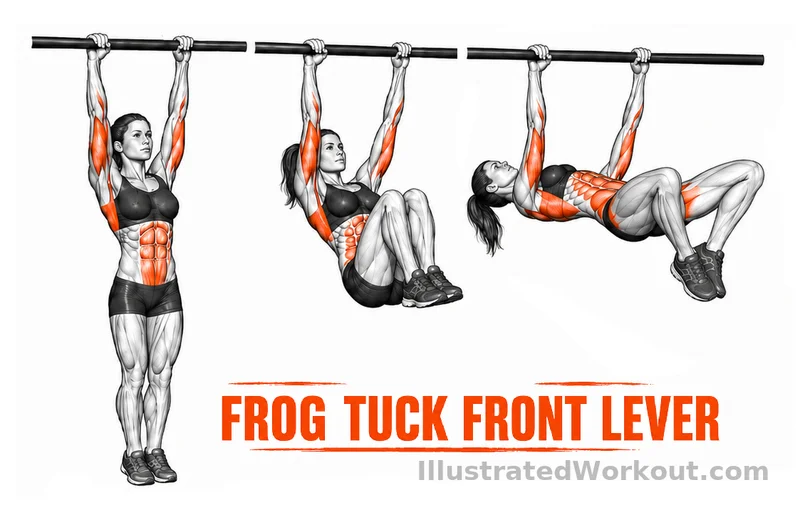
Knees splayed wide like a frog, the lats and abs hold the body face-up and horizontal, opening the tuck to load the front lever harder.
Level: Advanced
Primary: Abs Back - Upper
Secondary: Biceps Forearms Shoulders - Rear
Movement: Compound
Tags: Core Stability
Type: ISO
Equipment: Body Weight
Target muscles
Splaying the knees wide while keeping the heels near the seat spreads the mass slightly away from the bar, so the lats and teres major hold a heavier straight-arm pull than the compact tuck demands. The rectus abdominis and hip flexors brace to keep the hips from sagging, meeting the front lever's characteristic anti-extension load. Opening the hips into the frog shape also draws the adductors and glutes into stabilising the pelvis, while the rear deltoids, biceps and forearms support the hanging structure.
How to perform
Setup
Hang with a shoulder-width overhand grip and depress the shoulder blades. Pull the knees up and let them fall wide to the sides, heels tucked toward the seat, so the legs form a frog. Straighten the arms, tuck the pelvis into a hollow and brace before rising to horizontal.
Execution
Draw the straight arms down toward the hips to lift the torso level with the floor, face-up, keeping the knees flared wide in the frog position. Pull through the lats rather than the elbows and hold the arms locked. Keep the hips at shoulder height by bracing the abs and tilting the pelvis under. The wide knees make the position feel more open than a tight tuck, so resist letting the hips drift low. Hold for time with short breaths, ending the set when the line collapses or the arms bend.
Common mistakes
- Bringing the knees together toward a tighter tuck under fatigue, which shortens the lever and eases the load unintentionally.
- Dropping the hips below the shoulders so the body tilts rather than holding a level, face-up line.
- Bending the elbows instead of maintaining a locked straight-arm pull from the lats.
- Letting the shoulders shrug up toward the ears, which disengages the lats and loads the joint passively.
Progressions and regressions
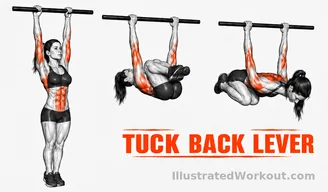
Regress to the tuck or advanced tuck front lever, keeping the knees closer to the chest for a shorter lever. Progress by extending the legs from the frog toward the straddle front lever, then squeezing them together for the full hold. Straddle raises and straight-arm pulldowns build the pulling strength that lets the legs open without the hips dropping.
Programming notes
Use it as an advanced skill hold early in a session while the lats and grip are fresh, accumulating time over sets of eight to fifteen seconds instead of one long grind. Two or three times a week keeps progress moving. It sits alongside the advanced tuck as a bridge toward the straddle, useful for lifters who find opening the hips easier in the flared frog shape than in a symmetric open tuck.