Plate Plank Switch
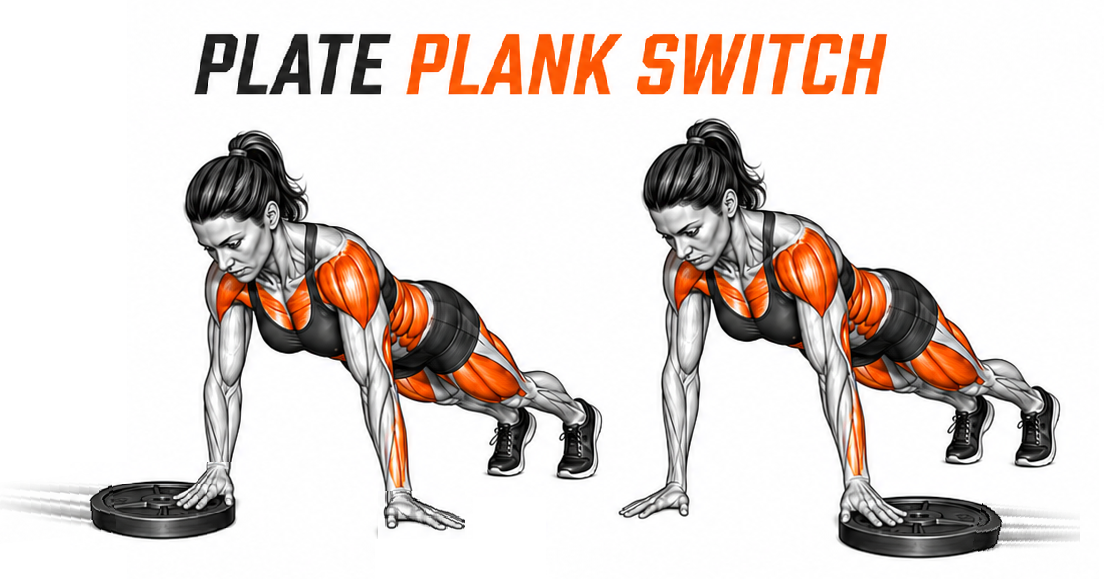
A plank with one hand sliding or passing a plate side to side, forcing the core to resist rotation while holding a rigid plank.
Level: Intermediate
Primary: Abs
Secondary: Shoulder
Movement: Isolation
Tags: Anti-Rotation Core Stability
Type: Functional Fitness (Obstacle & Hybrid)
Equipment: Plates
Target muscles
Holding a plank already demands anti-extension work from the whole abdominal wall, and reaching one hand out to slide or pass a plate adds a strong anti-rotation challenge: the obliques and transverse abdominis fight to keep the hips square as the support shifts to one arm. The shoulders and serratus stabilise the supporting side, and the glutes hold the body in a straight line. It trains the core to stay stiff while a limb moves a load.
How to perform
Setup
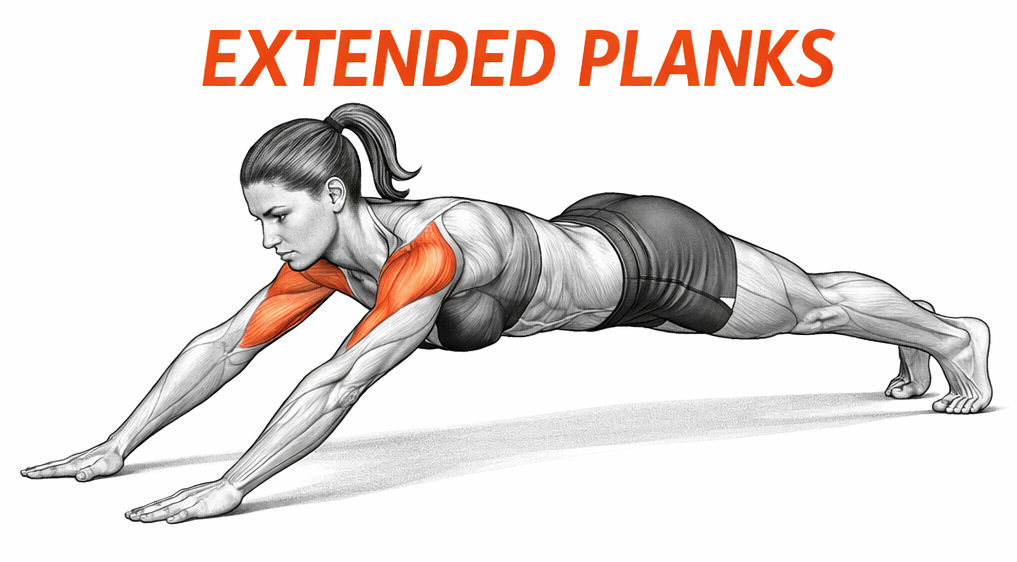
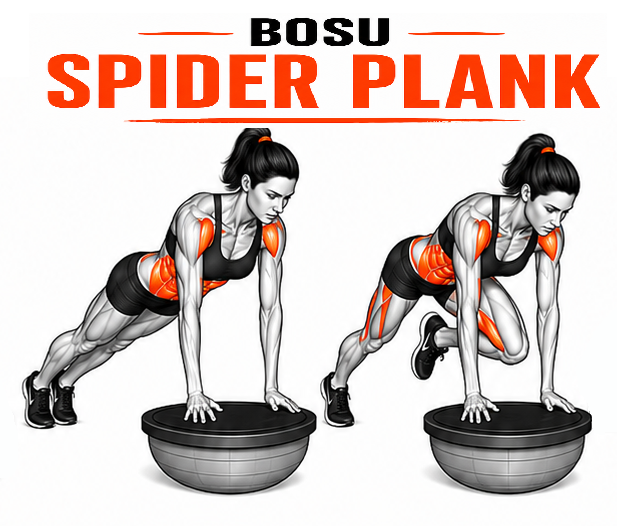
Set up in a high plank with hands under the shoulders and a plate on the floor just outside one hand. Brace the abs, squeeze the glutes, and set a flat, neutral spine with the feet about hip-width for stability.
Execution
Keeping the hips perfectly level, reach one hand across to slide or drag the plate to the other side of your body, then return that hand to the floor. Switch hands and pass the plate back the other way. The instinct is to let the hips twist toward the supporting arm — resist it by bracing hard and keeping both hip bones pointing down. Move slowly and deliberately; the win is a still pelvis while the arm and plate travel, not how fast you can slide it.
Common mistakes
- Letting the hips rotate or rock as the plate slides across.
- Piking the hips up to make the reach easier.
- Widening the stance so much the drill becomes trivial, or so narrow it's uncontrollable.
- Rushing the passes so momentum, not the core, moves the plate.
Progressions and regressions
Regress by sliding a lighter plate or by performing the plank from the knees. Progress by using a heavier plate, passing it further across, or narrowing the feet to make the anti-rotation demand harder.
Programming notes
Use it as anti-rotation core work, 2-3 sets of 8-12 passes per side or 30-second efforts. It directly trains the trunk stiffness that protects the spine during loaded carries and single-arm work, so it complements those movements well. Keep the feet wide enough to control the rotation and stop when the hips start to twist.