Dumbbell Upright Rows
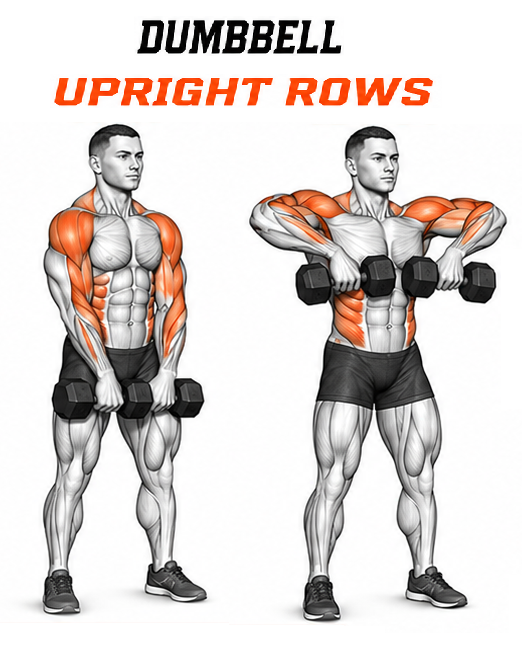
The deltoids and traps pull a pair of dumbbells up the front of the body to chest height, the free wrists tracking a joint-friendly path.
Level: Foundation
Primary: Shoulder
Secondary: Biceps Shoulders - Rear Traps
Movement: Compound
Tags: Pull
Type: Strength (Weight Lifting)
Equipment: Dumbbell
Target muscles
The lateral and front deltoids and the upper traps raise the dumbbells up the body as the elbows lead high, with the rear delts and rhomboids assisting at the top as the shoulder blades retract. The biceps and forearms hold the weights throughout. Because each dumbbell moves independently, the wrists and elbows can travel a slightly wider, more natural path than a fixed bar allows, which usually feels kinder on the shoulders while still loading the delts and traps hard.
How to perform
Setup
Stand tall with a dumbbell in each hand, arms hanging in front of the thighs, palms facing the body. Set the feet hip-width, brace the core, pull the shoulders down and back, and keep a soft bend in the knees.
Execution
Pull the dumbbells straight up the front of the body by driving the elbows high and out to the sides, keeping the weights close to the torso the whole way. Lead with the elbows rather than the hands, and let the dumbbells separate slightly to follow a comfortable path. Stop when the upper arms reach about shoulder height, around chest level for the weights, pause for a beat, then lower under control to the start. Keep the torso upright and still — no heaving with the hips or leaning back.
Common mistakes
- Pulling the elbows above shoulder height into a pinchy, internally rotated position the shoulder dislikes.
- Swinging the torso and using momentum to throw the dumbbells up rather than pulling with the delts and traps.
- Letting the dumbbells drift forward and away from the body.
- Shrugging hard at the top and losing the high-elbow lead that targets the side delts.
Progressions and regressions
Regress by limiting the height to belly-button level or using lighter weights and a slow tempo while you learn the path. Progress by adding load, pausing at the top, or moving to a barbell or cable version once the pattern is solid. Single-arm dumbbell upright rows let you brace the torso and clean up any side-to-side asymmetry.
Programming notes
Program it as a deltoid and trap accessory, 3 sets of 10-12 reps, on a shoulder or upper-body day after your main pressing. The independent dumbbells make it a sensible first upright-row variation, so it suits newer lifters building shoulder strength. Keep the load moderate and the range comfortable, and back off the top end if the shoulders complain.