Plate Front Shoulder Raises
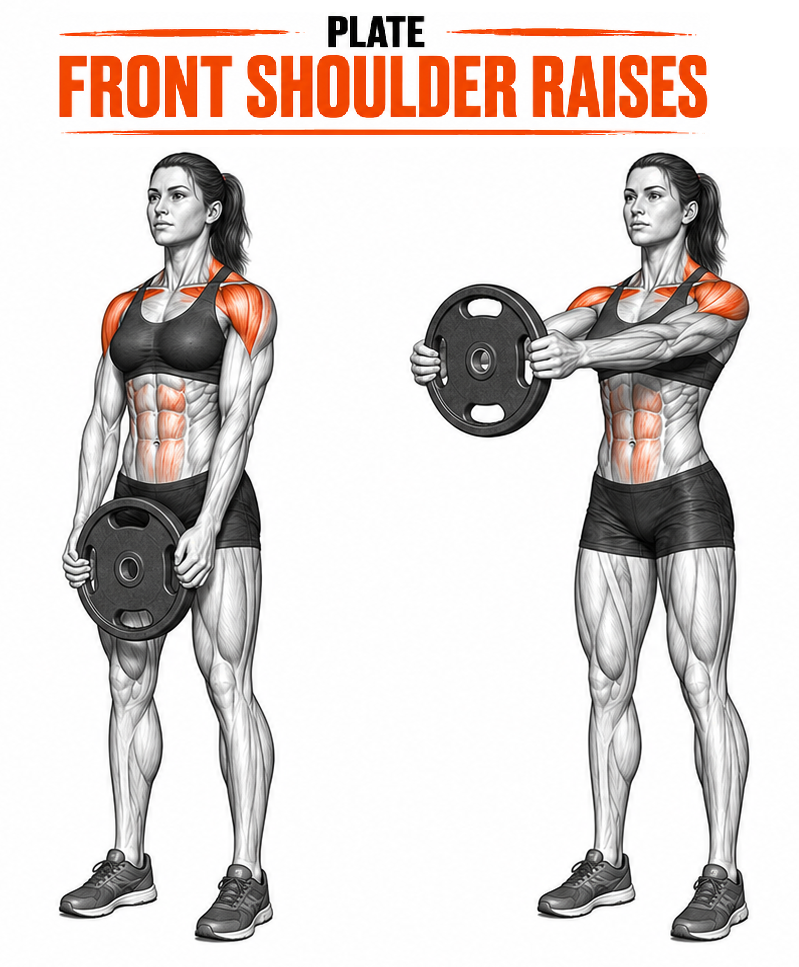
A front raise holding a plate at the sides, isolating the front delts by lifting the weight from the thighs to shoulder height.
Level: Beginner
Primary: Shoulder
Movement: Isolation
Tags: Push
Type: Strength (Weight Lifting)
Equipment: Plates
Target muscles
The anterior deltoid is the prime mover, raising the plate from the thighs to shoulder height through pure shoulder flexion. The upper chest assists slightly at the bottom, and the core braces to stop the torso swinging back to help. Holding a single plate with both hands keeps the load centred and lets you control the path precisely, making it a clean isolation exercise for the front of the shoulder.
How to perform
Setup
Stand tall with feet hip-width, holding a plate with both hands gripping the sides, arms hanging so the plate rests in front of the thighs. Brace the core and set the shoulders down before lifting.
Execution
Raise the plate forward and up in a controlled arc until it reaches shoulder height, keeping the arms nearly straight with a soft elbow bend. Pause briefly at the top, then lower the plate slowly back to the thighs without letting it drop or swing. Keep the torso still — if you have to lean back to lift the plate, it is too heavy. The movement should come purely from the shoulders raising the weight, with the wrists neutral throughout.
Common mistakes
- Swinging the torso and using momentum to throw the plate up.
- Raising the plate above shoulder height and shrugging the traps in.
- Letting the plate drop on the way down instead of lowering with control.
- Using a weight so heavy that strict form is impossible.
Progressions and regressions
Regress with a lighter plate or by raising to a slightly lower height. Progress by using a heavier plate, adding a pause at the top, slowing the lowering phase, or holding the plate at shoulder height for an isometric burn.
Programming notes
Program it as shoulder isolation, 2-3 sets of 10-15 reps, after compound pressing. Front raises are easy to overload with momentum, so keep them strict and moderate in weight. Because pressing already hits the front delts, use this sparingly and prioritise lateral and rear-delt work for balanced, healthy shoulders.