Hand Stand
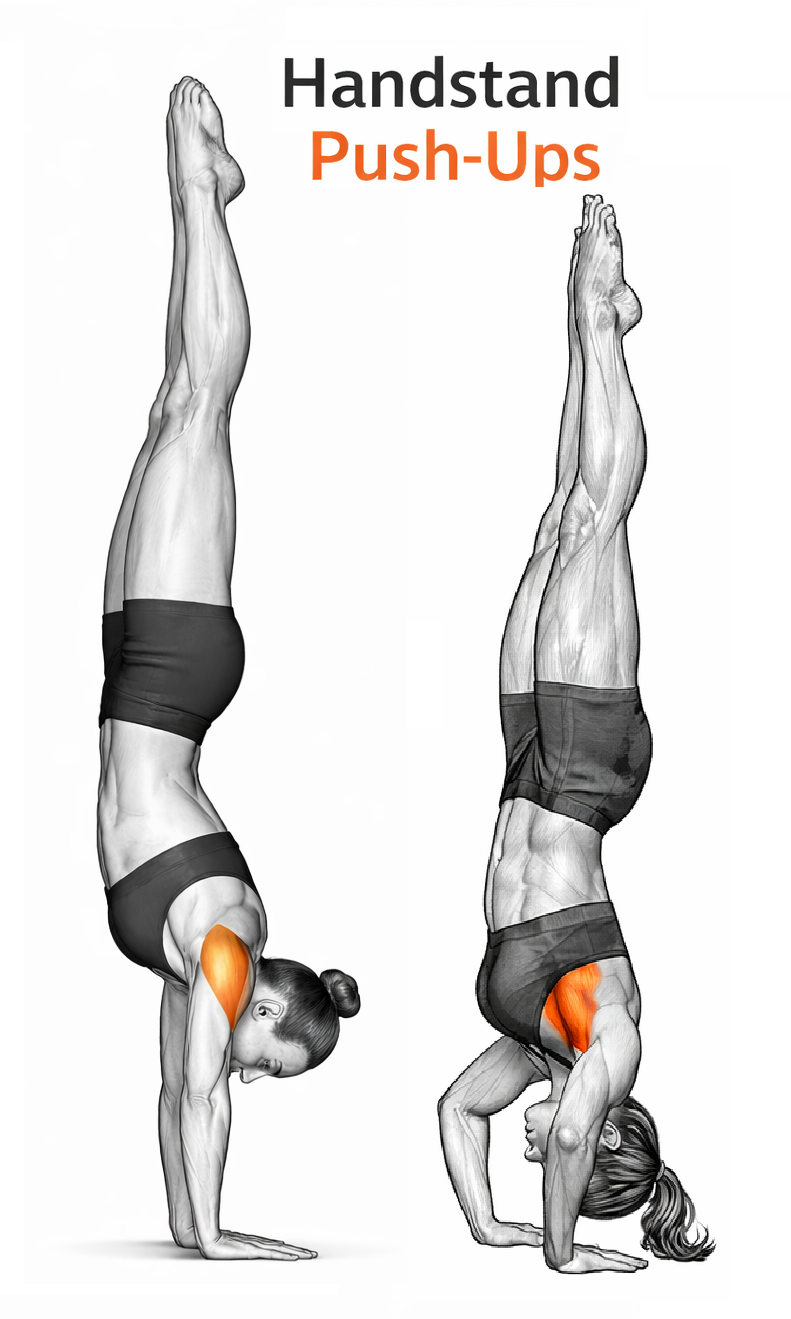
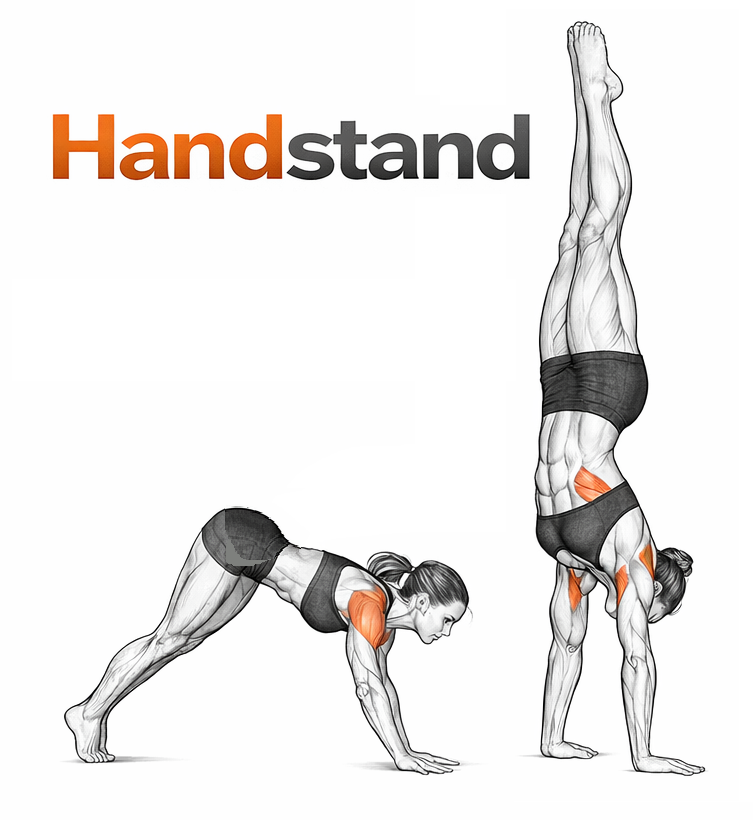
Wall-supported handstand hold — fundamental inverted position for shoulder strength, body line, and balance.
Level: Elite
Primary: Shoulder
Secondary: Full Body
Movement: Compound
Type: Functional Fitness (Obstacle & Hybrid)
Equipment: Body Weight
Sports: Gymnastics MMA Wrestling
Target muscles
The deltoids and triceps hold the inverted body weight. The serratus anterior packs the scapulae. The trunk muscles brace the body line. The wrists and forearms work isometrically against the load. The cardiovascular cost is real because so much musculature is engaged. As a foundational gymnastic skill, the handstand carries over to handstand pushups, planche progressions, and pressing strength generally.
How to perform
Setup
Stand facing a wall. Place your hands about six inches from the wall, fingers spread wide. Trunk braced. Take a breath.
Execution
Kick up into the inverted position by swinging one leg up and following with the other. The heels lightly touch the wall for support. Lock the arms. Squeeze the glutes and core to keep the body in a straight line — head, hips, and feet stacked. Breathe in slow controlled cycles. Hold for the prescribed time. To come down, walk the feet down the wall or carefully bring one leg down at a time.
Common mistakes
- Banana-back position (lower back arched). Squeeze the glutes and tuck the ribs to maintain a straight line.
- Soft elbows. Lock the arms.
- Letting the head drop down between the arms. Look at the floor between the hands.
- Practicing far from the wall. Stay close to the wall as a safety net.
- Going overhead before wrists are conditioned.
Progressions and regressions
Regress to the pike push-up (feet on a low box, body in a pike position) for vertical-press strength. Then to the wall-walk handstand (walking up the wall facing it). To progress, work freestanding handstands, chain with handstand pushups, and eventually handstand walks.
Programming notes
Skill work. 3-5 sets of 10-30 second holds, two or three times a week. Wrist conditioning is the rate limiter; build the wrists with daily light work before increasing handstand volume.