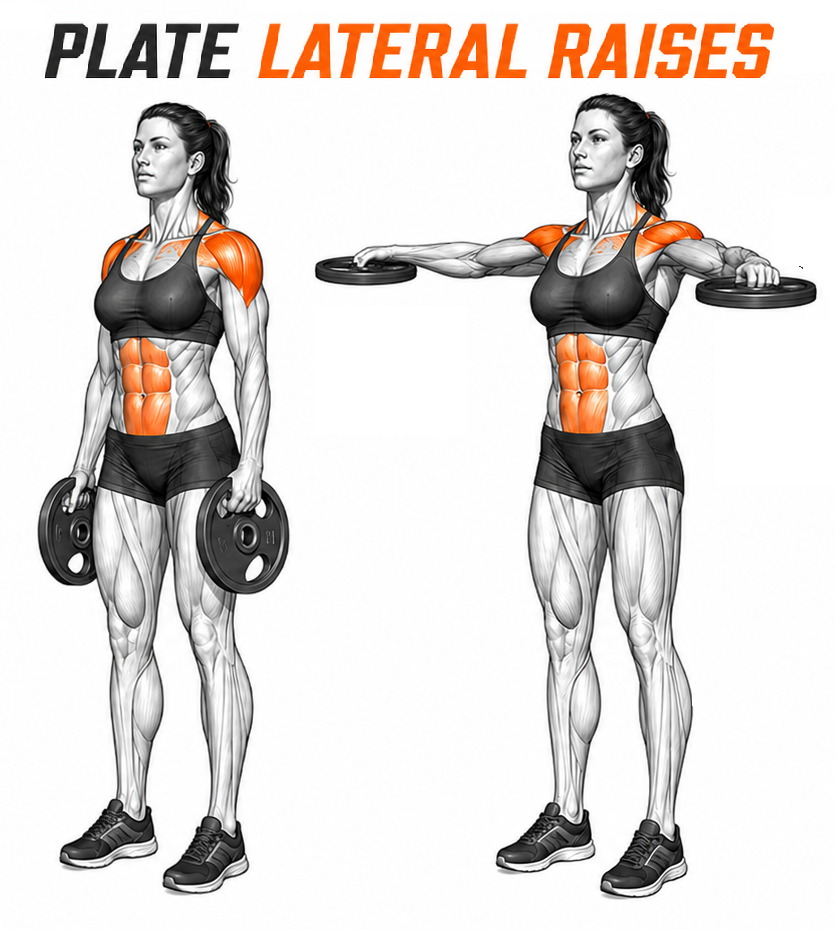
Plate Lateral Raises
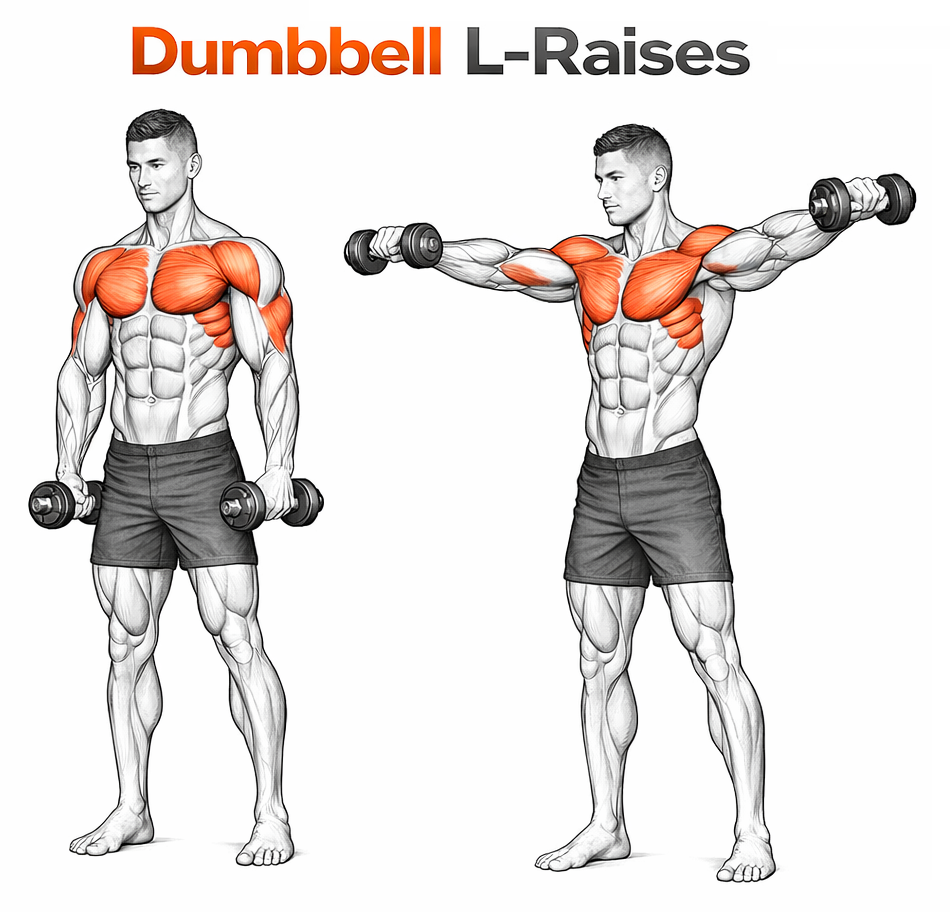
A lateral raise holding small plates out to the sides, isolating the lateral deltoids to build shoulder width through controlled abduction.
Level: Beginner
Primary: Shoulder
Secondary: Traps
Movement: Isolation
Type: Strength (Weight Lifting)
Equipment: Plates
Target muscles
The lateral or middle deltoid is the prime mover, abducting the arms out to the sides to lift the plates to shoulder height. The supraspinatus assists at the start of the movement and the upper traps help stabilise the shoulder blades, though the aim is to keep the traps from taking over. This is the key exercise for building shoulder width, since pressing alone doesn't fully target the side delts.
How to perform
Setup
Stand tall with a small plate in each hand, arms at your sides with a soft bend in the elbow. Brace the core, set the shoulders down away from the ears, and lean very slightly forward from the hips.
Execution
Raise the plates out to the sides in a wide arc until they reach shoulder height, leading with the elbows and keeping the wrists neutral. Imagine pouring from a jug at the top — a slight tilt of the little finger up — to bias the side delt. Pause briefly, then lower the plates slowly back to your sides under control. Keep the movement strict, with no swinging or shrugging; the side delts should do the lifting, not momentum or the traps.
Common mistakes
- Swinging the torso to throw the plates up rather than raising them strictly.
- Shrugging the shoulders up so the traps take over from the side delts.
- Raising above shoulder height, which shifts the work off the target.
- Using plates too heavy to control the lowering phase.
Progressions and regressions
Regress with lighter plates or by raising one arm at a time. Progress by using slightly heavier plates, adding a pause at the top, slowing the eccentric, or performing partial reps at the top after reaching failure.
Programming notes
Program it as shoulder isolation, 2-4 sets of 12-20 reps, after compound pressing. The side delts respond well to higher reps and strict form rather than heavy loading, so leave the ego at the door. It is essential for balanced, broad shoulders and should appear regularly in any upper-body routine.