Dumbbell Floor Press
Chest and triceps press done lying on the floor, where the ground stops the elbows early and keeps the shoulders out of a deep stretch.
Want a dumbbell chest workout?
Our wizard builds one around your time, goal, and equipment in about two minutes. Free — no signup needed.
Make Me a Workout → Just did it? Track your setsChest and triceps press done lying on the floor, where the ground stops the elbows early and keeps the shoulders out of a deep stretch.
Level: Foundation
Primary: Chest
Secondary: Shoulder Triceps
Movement: Compound
Tags: Push
Type: Strength (Weight Lifting)
Equipment: Dumbbell
Target muscles
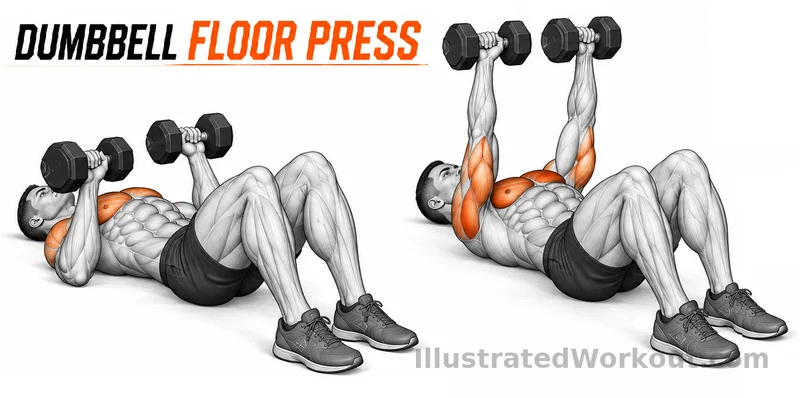
The pectoralis major drives the dumbbells up, with the sternal fibres doing most of the work through the middle of the press. Because the floor stops the upper arms at roughly torso height, the chest never reaches the deep stretched position of a bench press, so the triceps brachii take a larger share and finish every rep through lockout. The anterior deltoids assist off the floor, while the rotator cuff and serratus anterior steady each dumbbell independently. Bent knees and planted feet keep the pelvis neutral, and with no leg drive available the upper body has to produce all of the force.
How to perform
Setup
Sit on the floor with a dumbbell resting on each thigh, then roll back and bring the weights to your chest as you lie down. Bend your knees and plant your feet flat, about hip width apart. Pull your shoulder blades together and down so the upper back is the firm base, not the shoulders. Hold the dumbbells over your lower chest with the upper arms on the floor at about forty-five degrees from your ribs, wrists stacked over elbows.
Execution
Brace your abs, exhale, and press both dumbbells straight up until the elbows lock out above the shoulders, keeping the wrists stacked and the shoulder blades pinned. The weights travel in a slight arc, finishing a little closer together than they started, but they should not clang. Inhale and lower under control for two to three seconds until the backs of your upper arms touch the floor softly. Pause there for a full second with the triceps resting but the chest still tight, then press again. That dead stop removes the stretch reflex, so each rep starts from zero and the lockout muscles have to do honest work.
Common mistakes
- Dropping the elbows onto the floor and bouncing back up, which jars the elbow joint and throws away the dead-stop benefit of the lift.
- Flaring the upper arms out to ninety degrees, which grinds the front of the shoulder and leaves the chest in a weaker line of pull.
- Letting the wrists fold back under the load so the dumbbell sits behind the forearm instead of stacked directly over the elbow.
- Lifting the hips into a bridge to finish a heavy rep, turning a strict press into a different exercise and straining the lower back.
Progressions and regressions
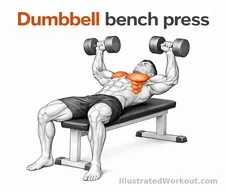
To make it easier, press one dumbbell at a time while the other rests on the floor, or use a neutral grip with palms facing each other, which most shoulders tolerate better. Straightening the legs removes the last bit of stability from the feet and makes the same weight harder. From there, progress to the single-arm floor press for an anti-rotation challenge, the dumbbell bench press for a full range of motion, or the barbell floor press when you want to load the lockout heavily. A three-second pause on the floor at every rep is a simple way to add difficulty without adding weight.
Programming notes
Three to four sets of six to twelve reps suits most goals; go to the heavier end when it is your main press and the lighter, higher-rep end when it follows bench work as triceps-focused volume. It is a practical main chest lift for home training with no bench, and a sensible substitute when the bottom of a bench press irritates the shoulders. Train it once or twice a week, early in the session while the triceps are fresh. If maximum chest growth is the goal, pair it with a movement that loads the stretched position, such as a push-up from handles or a dumbbell flye.