Disc Slider Spiderman Push-Up
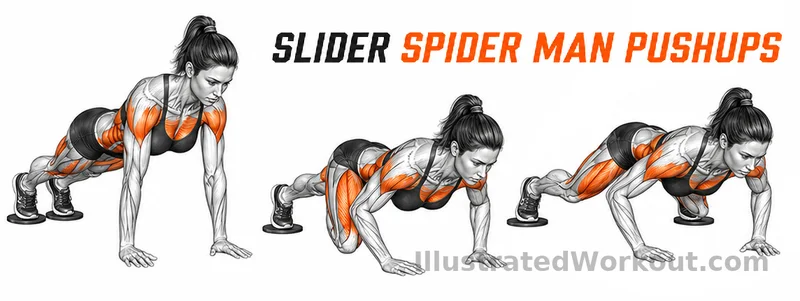
A push-up paired with a sliding knee-to-elbow drive, blending heavy chest work with a rotational core and hip-flexor challenge.
Want a disc sliders chest workout?
Our wizard builds one around your time, goal, and equipment in about two minutes. Free — no signup needed.
Make Me a Workout → Just did it? Track your setsA push-up paired with a sliding knee-to-elbow drive, blending heavy chest work with a rotational core and hip-flexor challenge.
Level: Advanced
Primary: Chest
Secondary: Abs Shoulder Triceps
Movement: Compound
Tags: Core Stability Push
Type: Functional Fitness (Obstacle & Hybrid) Strength (Weight Lifting)
Equipment: Disc Sliders
Target muscles
Pressing power comes from the pectorals, triceps and front deltoids as the body lowers and pushes back up, while one knee slides up toward the elbow on each rep. That knee drive brings the hip flexors and obliques into play, and the whole core braces hard to keep the hips from dropping or twisting as the leg travels, blending a heavy push with a demanding rotational-core challenge.
How to perform
Setup
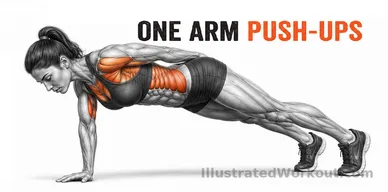
Assume a high push-up position with hands under the shoulders and a slider under each foot. Set the feet hip-width, brace the abs and squeeze the glutes so the body holds a rigid plank. Draw the shoulders down and screw the hands into the floor to load the chest before the first rep.
Execution
Lower into a push-up and, as the chest descends, slide one foot up so the knee travels toward the same-side elbow along the floor. Press back up as you slide that foot back to the start, then alternate sides on the next rep. Keep the hips level and in line with the shoulders as the knee comes up; do not let the pelvis drop or hike. Move under control so the discs glide quietly, exhaling as you press. Keep the elbows tucking toward the ribs rather than flaring wide, and hold the neck long throughout.
Common mistakes
- Letting the hips sag or twist as the knee slides up instead of bracing the core to keep them square.
- Flaring the elbows wide, which strains the shoulders and weakens the press.
- Sliding the knee only a short way, missing the hip-flexor and oblique work the drive provides.
- Rushing the push-up so depth is lost and the chest never reaches a full range.
Progressions and regressions
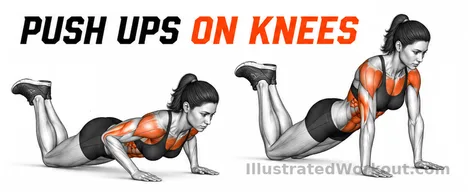
Regress by performing the knee slide from the top of the plank without a push-up, or by doing the push-ups from the knees while sliding one foot at a time. A shallower push-up range helps newer lifters. Progress by deepening the push-up, pausing with the knee at the elbow, or elevating the hands to shift more load onto the chest. Adding a slow three-second lowering raises the strength demand considerably.
Programming notes
Slot it into push or full-body sessions as a combined chest and core exercise, five to eight reps per side for two to three sets. It builds pressing strength while training rotary core control, so it suits circuits and athletic-prep work. Because it demands both push strength and core stability, build a clean standard push-up and slider mountain climber first, and stop the set when the hips start to sag or twist.