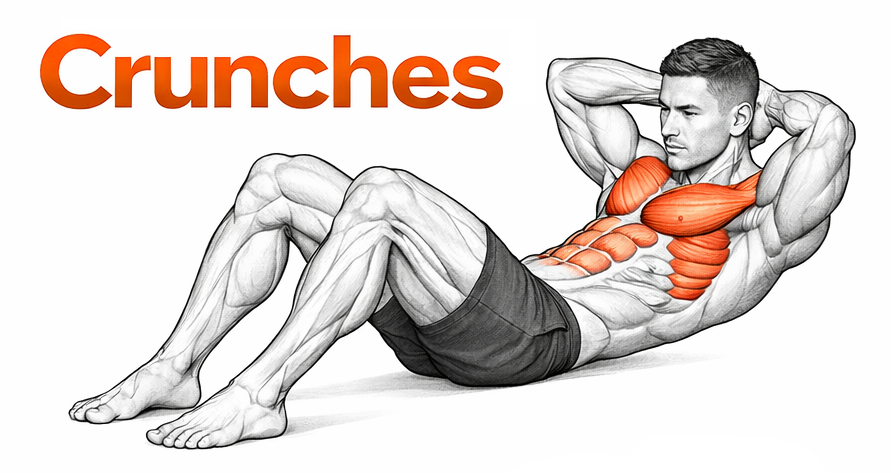
Crunches
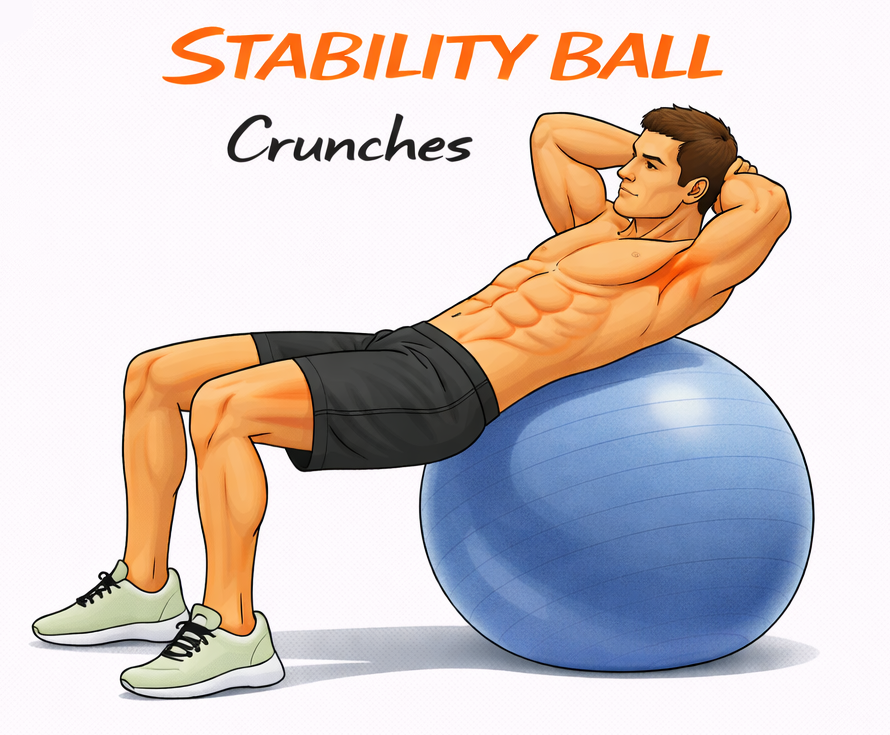
The standard floor crunch — shoulders off the floor, knees bent, the foundational spinal flexion movement.
Level: Beginner
Primary: Abs
Movement: Isolation
Type: Functional Fitness (Obstacle & Hybrid)
Equipment: Body Weight
Sports: Boxing MMA
Target muscles
The rectus abdominis is the prime mover — true spinal flexion. The obliques contribute. The deep core stabilizes the lumbar spine. The hip flexors should be minimally active — if they're doing the work, the lift has become a partial sit-up and stopped loading the abs effectively. Of all the abdominal exercises, the crunch is the most direct loader of the rectus abdominis, but the limitation is the short range of motion and the limited capacity to add load (most people stop progressing within a few months).
How to perform
Setup
Lie on your back on the floor. Knees bent, feet flat. Hands lightly touching the sides of the head — fingertips at temples, not behind the neck. Brace the trunk; the lower back should stay in contact with the floor throughout.
Execution
Crunch the upper body up by contracting the abs — the shoulder blades come off the floor, but the lower back stays down. The chest moves toward the knees through pure spinal flexion (the rib cage curls toward the pelvis). Pause briefly at the peak contraction with a hard ab squeeze. Lower under control to the start. The hands stay relaxed at the head; the abs do the work. Slow controlled tempo.
Common mistakes
- Pulling on the neck. The hands are placeholders; the abs do the work.
- Sitting up too far. The lower back should stay in contact with the floor — going further is a sit-up, which loads the hip flexors more than the abs.
- Going too fast. Slow controlled — one to two seconds up, brief pause, one to two seconds down.
- Lifting just the head. Lift the head and shoulders together.
- Holding the breath. Exhale on each crunch up.
Progressions and regressions
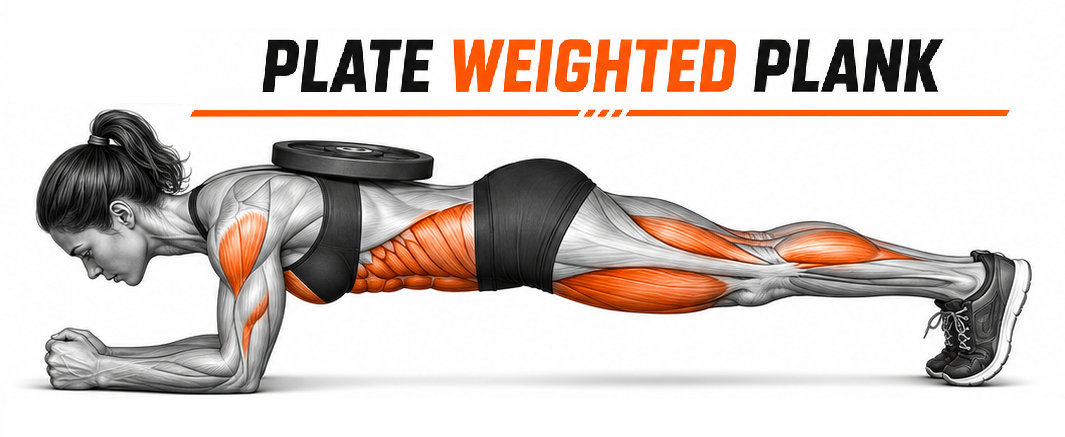
Regress to a partial crunch with a smaller range until the spinal flexion pattern is clean. To progress, hold a light dumbbell or plate at the chest, work pause crunches (2-second hold at peak), or move toward more demanding ab exercises — cable crunches, rollouts, hanging leg raises — that allow progressive loading.
Programming notes
Honest beginner ab work. 3-4 sets of 15-25 reps, two or three times a week. The crunch is self-limiting — most lifters outgrow it within a few months and need to move to loadable variants (cable crunches, weighted decline sit-ups) for continued progression. Pair with anti-extension work (planks, rollouts) and anti-rotation work for a complete trunk program.