Plate Weighted Plank
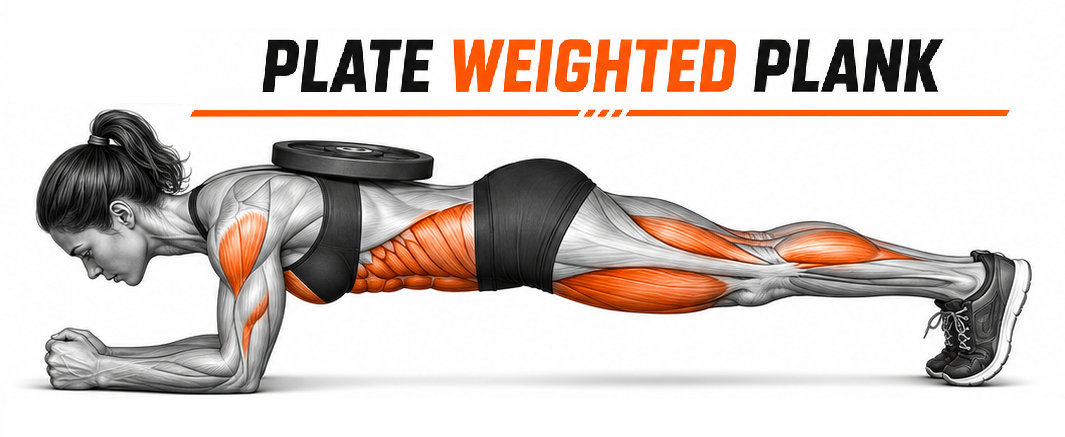
A forearm plank with a plate on the back, increasing the anti-extension load so the core works harder to hold a rigid, straight line.
Level: Intermediate
Primary: Abs
Secondary: Glutes Shoulder
Movement: Isolation
Tags: Core Stability
Type: ISO
Equipment: Plates
Target muscles
The plank is an anti-extension hold, so the rectus abdominis, obliques and deep transverse abdominis all work to keep the lower back from sagging. Adding a plate to the back increases the downward force, forcing the core to brace harder to hold the straight line. The shoulder stabilisers keep the shoulder blades set, and the glutes and quads stay engaged to lock the body rigid. The extra load makes it a genuine strength hold rather than an endurance test.
How to perform
Setup
Set up in a forearm plank with elbows under the shoulders, and have a partner place a plate across your upper back (or set it carefully yourself). Brace the abs, tuck the pelvis slightly, and squeeze the glutes so the body forms one straight line.
Execution
Hold the position rigid, resisting the plate's pull toward arching the lower back. Press the forearms into the floor, push the floor away to set the shoulder blades, and keep breathing in steady, controlled breaths. Nothing should move — every muscle is working to keep you perfectly still under the added load. Hold for the prescribed time, then have the plate removed before you come down. Quality of position matters more than duration.
Common mistakes
- Letting the lower back sag under the added weight, which strains the spine.
- Piking the hips up to offload the core.
- Holding the breath instead of breathing through the brace.
- Placing the plate too low on the back where it slides toward the hips.
Progressions and regressions
Regress by using a lighter plate or holding a bodyweight plank. Progress by adding weight, extending the hold time, or lifting one foot off the floor while keeping the plate balanced.
Programming notes
Prescribe it by time, 2-4 holds of 20-40 seconds, as loaded core work. Stop the set when the lower back starts to sag rather than grinding shaky time. The added load builds the trunk stiffness that protects the spine under heavy squats and deadlifts, so a partner to place and remove the plate makes it safer and more practical.