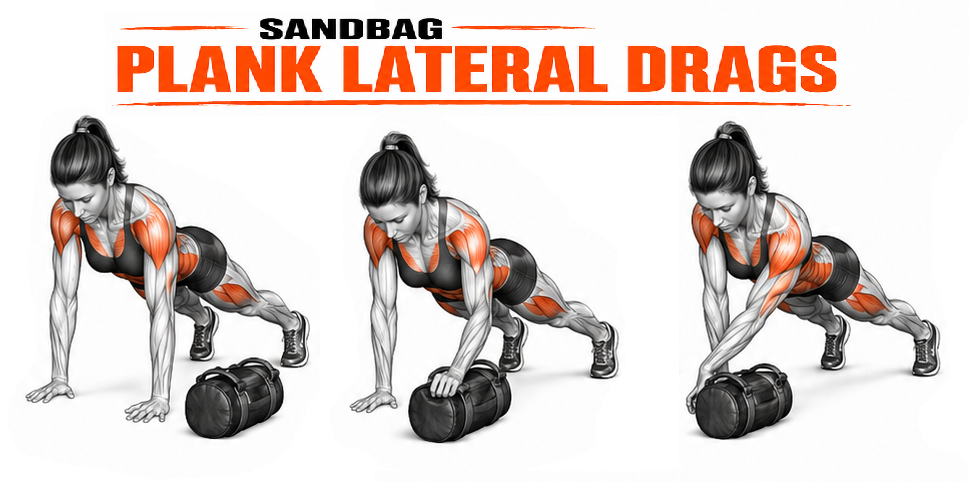
Sandbag Lateral Drags
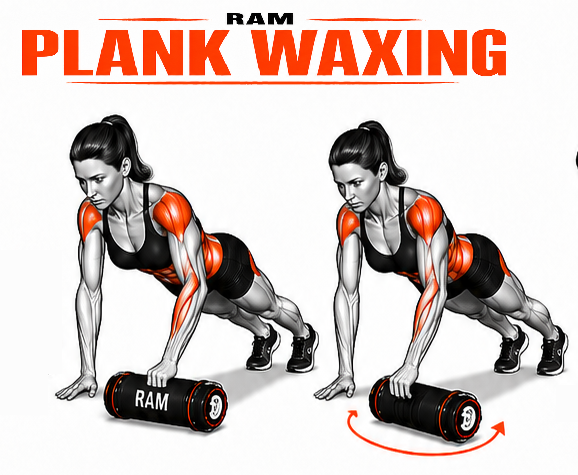
Anti-rotation core drag from a high plank, hauling the sandbag side to side beneath the chest while fighting to keep the hips square.
Level: Advanced
Primary: Abs
Secondary: Back - Upper Shoulder
Movement: Compound
Tags: Anti-Rotation Core Stability
Type: Functional Fitness (Obstacle & Hybrid) ISO
Equipment: Sandbag
Target muscles
This is an anti-rotation plank with a job to do. The entire anterior core — rectus abdominis, transverse abdominis and obliques — works to keep the spine rigid and the hips square while one arm leaves the floor to drag the bag across. The standing arm's shoulder, serratus and triceps hold the plank, and the dragging arm's lats and rear delt pull the load through. The glutes stay switched on to keep the hips level against the rotational pull of the moving weight.
How to perform
Setup
Set up in a high plank with hands under your shoulders and the body in a straight line from heels to head. Place the sandbag on the floor just outside one hand. Brace the abs hard, squeeze the glutes, and square the hips and shoulders to the floor — this rigid position is your starting point and you must keep it.
Execution
Shift your weight onto the supporting arm, reach under your chest with the free hand, grip the bag, and drag it across to the opposite side, finishing with it just outside the other hand. The entire challenge is to move the load while your hips and shoulders stay perfectly level — do not let the body rotate or pike as the weight shifts. Replace the hand, re-set your brace, then reach with the other hand and drag the bag back. Alternate for the prescribed reps, keeping each drag slow and the plank dead still.
Common mistakes
- Letting the hips rotate or twist as you reach across, which hands the anti-rotation work back to gravity.
- Piking the hips up to shorten the reach and take load off the core.
- Dragging the bag with a fast yank that jerks the body out of position.
- Spreading the feet wide for a more stable base, which lowers the anti-rotation demand the drill is built on.
Progressions and regressions
Regress by widening the stance for stability, using a lighter bag, or dropping to the knees until you can keep the hips square. Progress by narrowing the feet, adding bag weight, or pausing with the arm extended mid-drag. A version performed from the forearms or combined with a renegade row raises both the stability and the pulling demand.
Programming notes
Program it as anti-rotation core work, 3 sets of 6-10 drags per side. It belongs on a core day or in a circuit alongside carries and crawls, all of which train the trunk to resist unwanted movement. Keep the load moderate so the hips never break square, and stop the set the moment the body starts to twist. It complements dynamic ab work by training the bracing, anti-rotation side of the core.