Treadmill Reverse Walk
Walking backward on a slow belt, loading the quads and sharpening balance and coordination while keeping the joints low-impact.
Want a treadmill conditioning workout?
Our wizard builds one around your time, goal, and equipment in about two minutes. Free — no signup needed.
Make Me a Workout → Just did it? Track your setsWalking backward on a slow belt, loading the quads and sharpening balance and coordination while keeping the joints low-impact.
Level: Foundation
Primary: Cardio
Secondary: Quads
Movement: Isolation
Type: Aerobic (Cardio)
Equipment: Treadmill
Target muscles
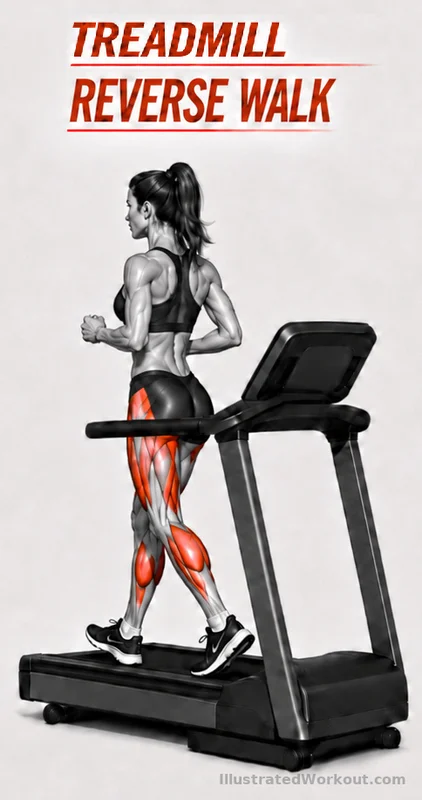
Stepping backward turns an ordinary walk into a quad-biased, coordination-heavy drill. The quadriceps control and drive each reverse step, the calves push off the forefoot, and the glutes assist. The hip flexors draw the legs back under the body, and because the movement is done essentially blind, the core and ankle stabilisers work continuously to keep balance. It stays gentle on the joints yet demands real coordination.
How to perform
Setup
Choose a slow, safe belt speed and hold both side rails before turning to stand with your back to the belt's travel. Rise slightly onto the balls of the feet, soften the knees, and keep the torso tall over the hips. Take a moment to feel the deck under your feet before letting the pace settle.
Execution
Step backward with short, deliberate steps, reaching each foot back and rolling from the ball of the foot toward the heel as the belt carries it beneath you. Keep the steps compact and the cadence unhurried, holding the rails lightly for balance. Stay tall through the torso rather than leaning back, and keep the hips stacked over the feet. Breathe easily and keep the eyes forward, relying on feel for the deck. Stop and reset if the rhythm or balance slips.
Common mistakes
- Setting the belt too fast for a movement performed without seeing where the foot lands.
- Landing heel-first with a long reaching step instead of rolling smoothly from the forefoot.
- Leaning the torso backward rather than staying upright and stacked over the hips.
- Releasing the rails before the backward walking rhythm is steady and confident.
Progressions and regressions
Regress to a very slow reverse march holding both rails, taking one step at a time until the pattern is comfortable. Progress by lifting the speed slightly, lightening the rail grip, or adding a gentle incline to increase the quad emphasis. Building up to reverse jogging is the natural next step once the walk feels secure.
Programming notes
Use it as a low-impact coordination drill and quad-focused warm-up or recovery piece, one to three minutes at an easy pace. It is popular in knee rehabilitation settings because it loads the quads while sparing the joints, and it sharpens balance. Keep the belt slow and the rails within reach, and avoid it if balance is unreliable, since walking blind carries a fall risk.