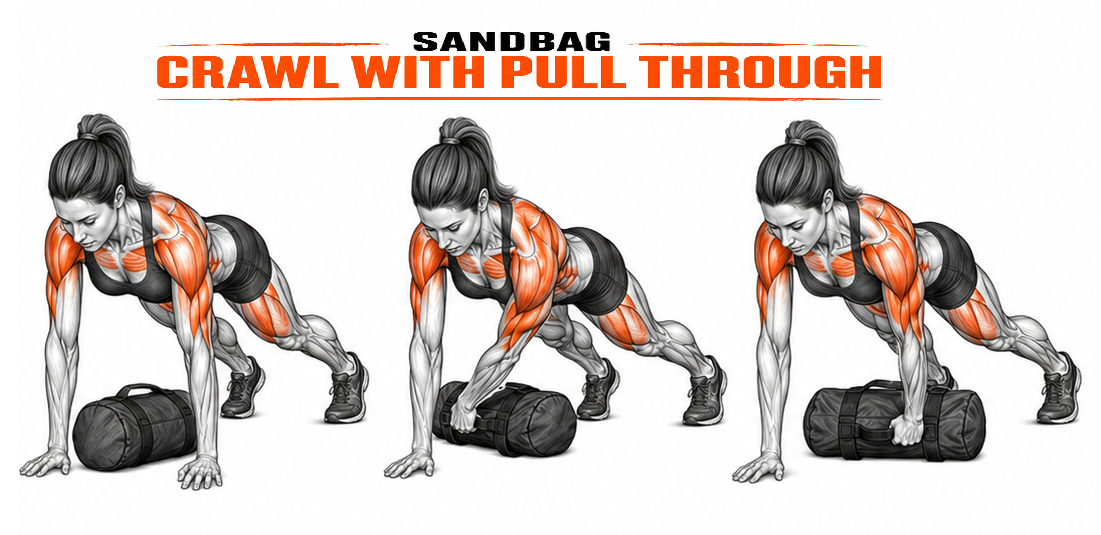
Sandbag Crawl with Pull Through
Full-body animal-flow crawl that drags the sandbag under the torso each rep, taxing the shoulders, quads and anti-rotation core control.
Level: Advanced
Primary: Full Body
Secondary: Abs Quads Shoulder
Movement: Compound
Tags: Animal Movement Anti-Rotation
Type: Functional Fitness (Obstacle & Hybrid) Primal Movments (Animal Flow-QMT Specifics)
Equipment: Sandbag
Target muscles
Holding the bear-crawl stance lights up the shoulders, serratus and triceps to support the upper body, while the quads and hip flexors keep the knees hovering just off the floor. The deep core — transverse abdominis and obliques — works relentlessly to stop the hips twisting as one arm leaves the ground to drag the bag. The reaching arm's lats and grip pull the load through. It is whole-body tension held under a moving, asymmetrical task.
How to perform
Setup
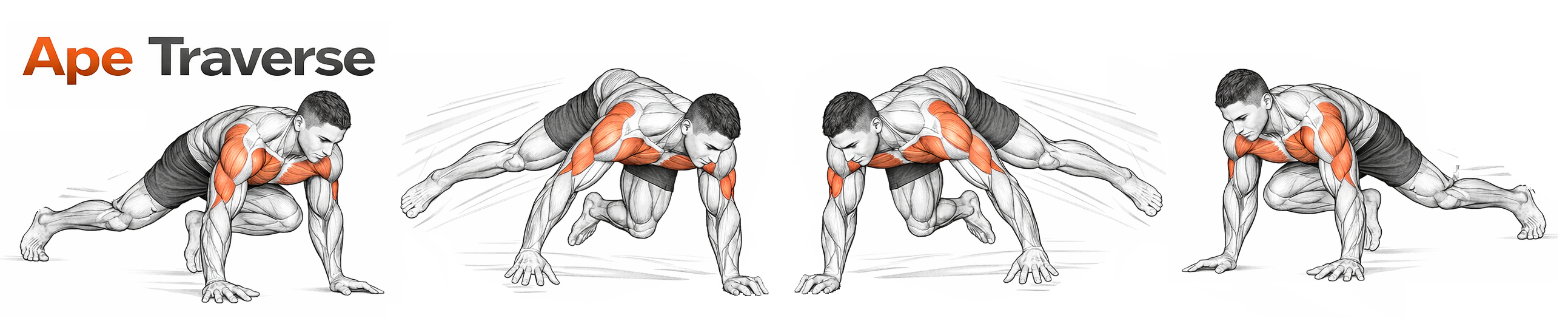
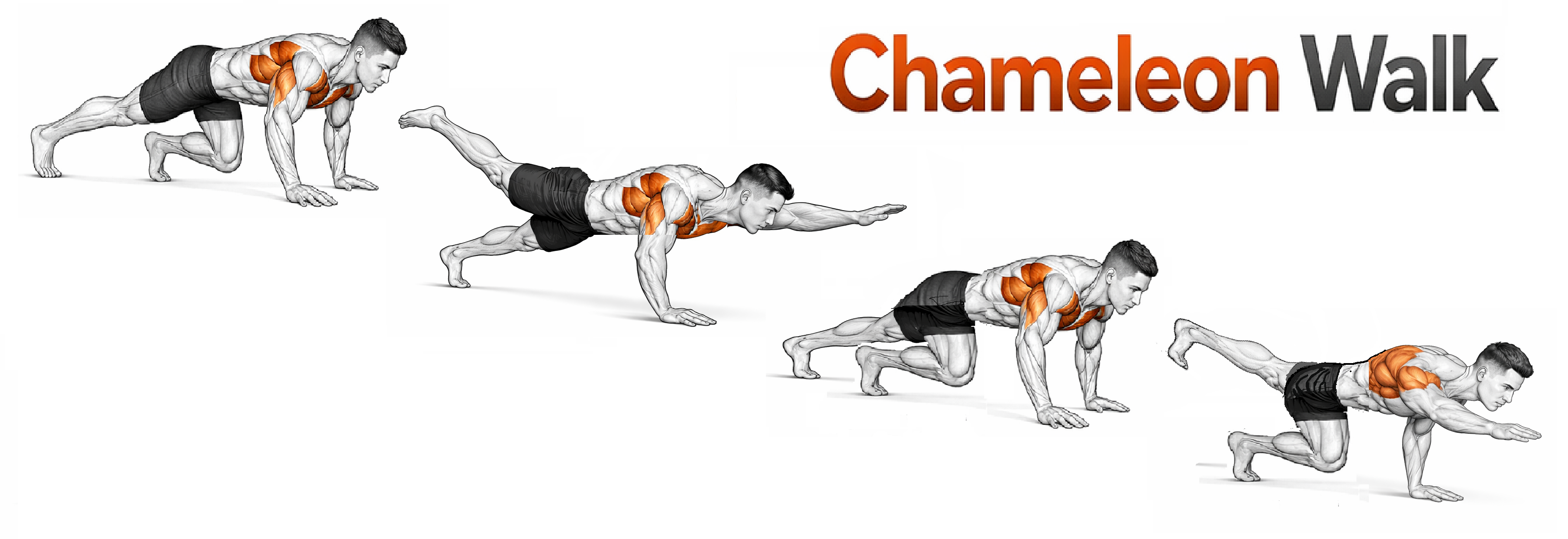
Set up in a bear-crawl position — hands under shoulders, knees bent and hovering an inch off the floor, back flat. Place the sandbag just outside one hand. Brace the abs and square the hips and shoulders to the floor before the first pull.
Execution
Take your weight onto three points, reach under your torso with the free hand, grab the bag, and drag it across to the opposite side, finishing with it just outside the other hand. Move it smoothly without letting your hips rotate or pike — the whole point is that the trunk stays locked while one limb works. Replace the hand, reset your brace, then reach with the other hand and pull the bag back through. Alternate sides for the prescribed reps or distance, keeping the knees low and the spine flat the entire time.
Common mistakes
- Letting the hips rotate or hike as you reach across, which means the anti-rotation work has been given away.
- Raising the hips into a downward-dog pike to make the reach easier and offload the core.
- Dropping the knees to the floor for a rest, removing the crawl's whole-body tension.
- Yanking the bag with a jerk rather than dragging it under control, which breaks position.
Progressions and regressions
Regress by performing the pull-through from a high-plank position with the knees down, or by using a lighter bag, until you can hold the crawl stance throughout. Progress by adding bag weight, adding a forward crawl step between pulls, or increasing the distance. Pairing it with a forward bear crawl turns it into a longer locomotion-and-drag complex.
Programming notes
Program it as core and full-body conditioning, 3-4 sets of 6-10 pulls per side or 30-40 second efforts. It belongs in circuits, animal-flow blocks, or as anti-rotation accessory work. Keep the load moderate so position never breaks down, and stop the set when the hips start to twist. It pairs well with carries and other loaded-locomotion drills on a conditioning day.