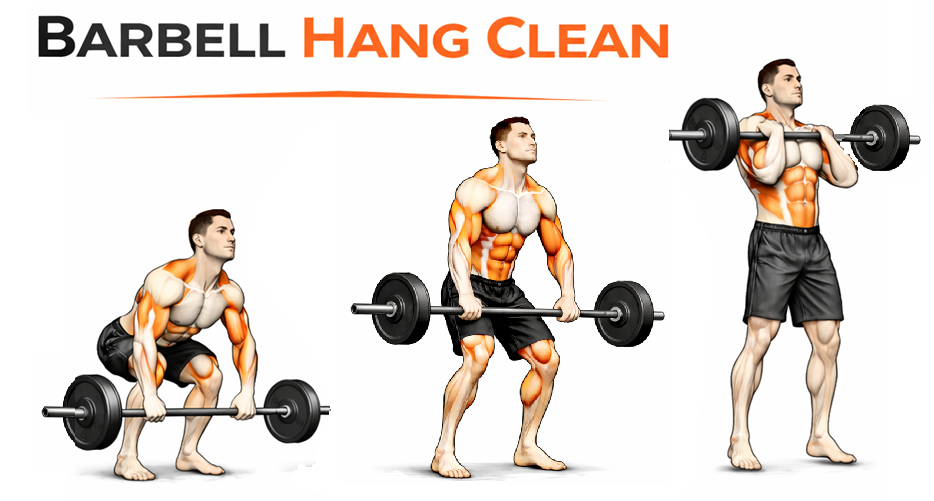
Barbell Hang Clean
Olympic-style clean from the hang position — explosive hip drive launches the bar to the front rack in a partial squat catch.
Level: Elite
Primary: Full Body
Movement: Compound
Tags: Explosive Olympic Lift
Type: Anaerobic Intervals (HIIT / Bootcamp / Circuit) Hybrid Athletic ISO Strength (Weight Lifting)
Equipment: Barbell
Sports: Football Gymnastics Rock Climbing Rugby Track and Field
Target muscles
Almost everything contracts during a clean, but the work concentrates in two places: the posterior chain (glutes, hamstrings, erectors) generating the explosive hip extension, and the trapezius driving the upward shrug that finishes the second pull. The quadriceps load eccentrically as you receive the bar in the catch and drive the lockout. The forearms and grip work continuously, the shoulders catch and stabilize the front rack, and the trunk braces hard throughout. The hang position skips the floor pull, which makes this a more pure hip-and-shrug power expression than the full clean.
How to perform
Setup
Stand with the bar at hip level, feet hip-width apart, hook grip or double-overhand at clean width (just outside the legs). Big breath. Hinge to the power position — bar at mid-thigh, knees slightly bent, hips back, chest tall, shoulders just in front of the bar. This is the launch point.
Execution
Drive aggressively through the legs and snap the hips forward — the second pull of an Olympic lift. As the hips finish, shrug the bar straight up. Pull yourself under the bar by whipping the elbows around to receive it on the front shoulders in a partial squat. The catch happens above parallel — that's what makes it a clean rather than a "power" clean (which catches even higher) or a full squat clean (which catches at the bottom of a squat). Stand tall with the bar racked. Reset to the hang with controlled descent or drop the bar from the rack if it's a heavy single.
Common mistakes
- Reverse-curling the bar to the shoulders. The catch is a fast drop under the bar with the elbows whipping around, not a biceps lift. Curling heavy weight to the shoulders is a torn-bicep waiting to happen.
- Pulling early with the arms. Arms stay relaxed through the second pull; they only contract once the bar is launched.
- Bar drifting forward off the body during the pull. Keep it close — brush the thighs.
- Soft front rack at the catch. Elbows high, bar resting on the shoulders, not held up by the arms.
- Loading too heavy before the technique is automatic. Cleans are coordination-limited for most lifters; chasing weight before owning the movement just builds compensations.
Progressions and regressions
Regress by training the components separately: hang high pull (no catch — pull the bar to about chest height), then add the catch. Power cleans from the hang sit one rung simpler than full hang cleans because the catch is higher and easier. To progress, work the floor clean (full clean from the floor), the squat clean (full depth in the catch), and complexes (clean + front squat, clean + jerk). Olympic technique benefits enormously from coaching — film yourself if you don't have a coach.
Programming notes
Train when fresh and at a moderate to heavy intensity, never as a metabolic conditioning movement. 4-6 sets of 2-3 reps with full recovery, two to three sessions per week if cleans are a focus. As a power expression in a general strength program, 3-4 sets of 3-5 reps once a week. Keep total volume conservative — clean technique deteriorates fast under fatigue, and a missed clean under load is a real injury risk.