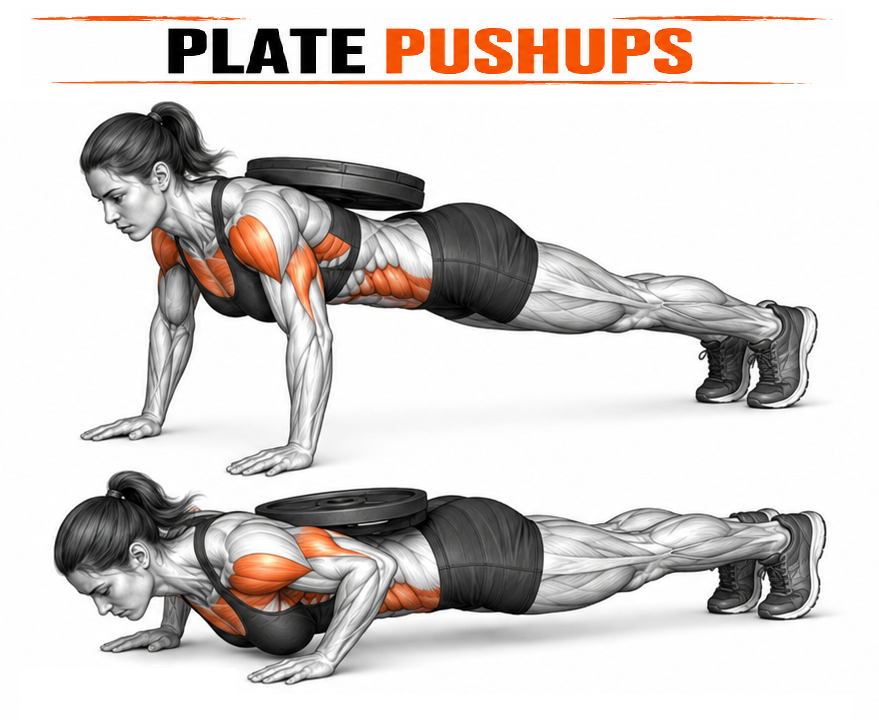
Plate Push Ups
A push-up with a plate resting on the upper back for added resistance, overloading the chest and triceps beyond bodyweight.
Level: Intermediate
Primary: Chest
Secondary: Abs Shoulder Triceps
Movement: Compound
Tags: Push
Type: Strength (Weight Lifting)
Equipment: Plates
Target muscles
The chest, triceps and front delts drive the press as in any push-up, but resting a plate across the upper back adds external load, pushing the chest and triceps past what bodyweight alone provides. The core has to brace even harder to keep the body rigid under the extra weight, and the glutes and quads hold the plank line. It is a simple way to progress the push-up into a genuine strength lift once bodyweight reps are easy.
How to perform
Setup
Get into a strong push-up position and have a partner place a plate across your upper back (between the shoulder blades), or set it there carefully yourself. Brace the core and set a straight line from heels to head with the hands just wider than the shoulders.
Execution
Lower your chest toward the floor under control, elbows tracking at about forty-five degrees, keeping the plate balanced on your upper back. Press back up to lockout, maintaining a rigid plank so the plate stays put — any sag or pike will shift it. Move deliberately, since the added load makes balance and control more important. Keep the neck neutral and breathe in on the descent, out on the press.
Common mistakes
- Letting the hips sag under the added load so the lower back takes the strain.
- Piking the hips up, which slides the plate toward the neck.
- Flaring the elbows wide and stressing the shoulders.
- Placing the plate too high on the spine where it is unstable.
Progressions and regressions
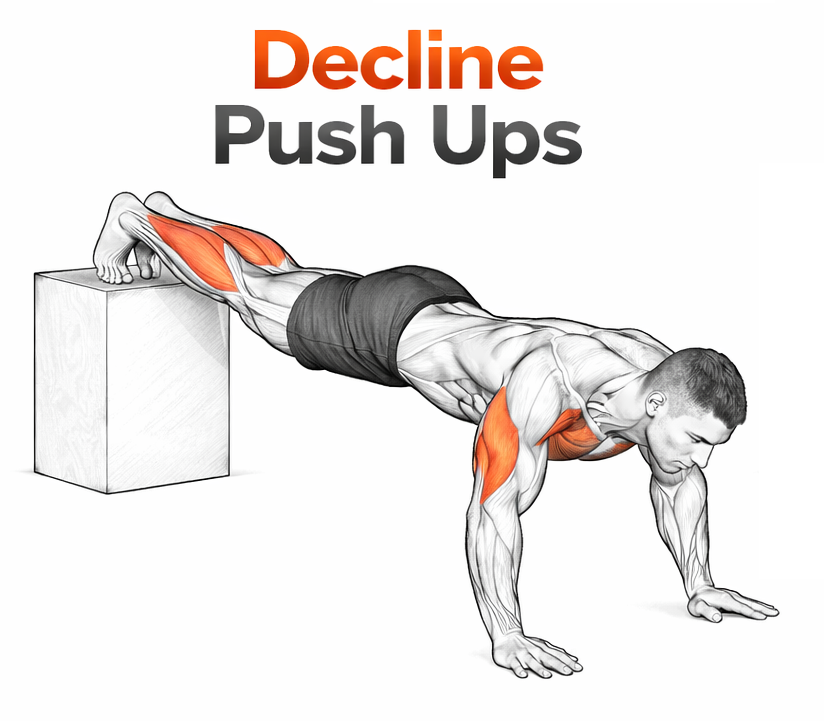
Regress by using a lighter plate or returning to bodyweight push-ups. Progress by adding weight, pausing at the bottom, slowing the eccentric, or elevating the feet for a steeper, more shoulder-focused angle.
Programming notes
Program it as a weighted bodyweight press, 3-4 sets of 6-12 reps. It bridges the gap between bodyweight push-ups and barbell pressing, making it useful when a bench isn't available. A partner makes loading and unloading the plate far safer; pair it with rows to keep the shoulders balanced.