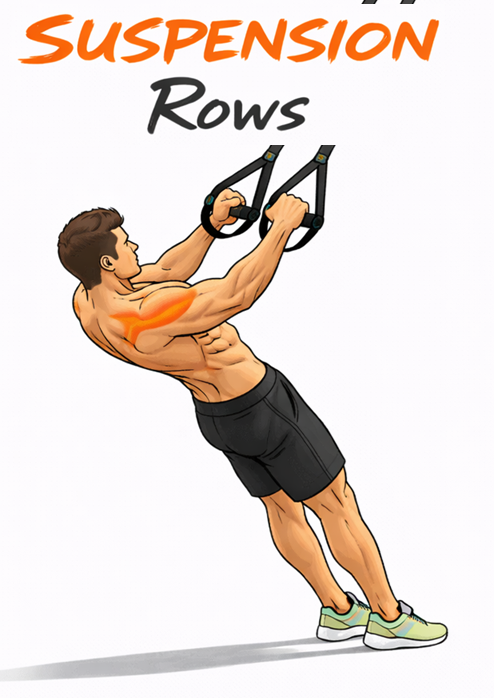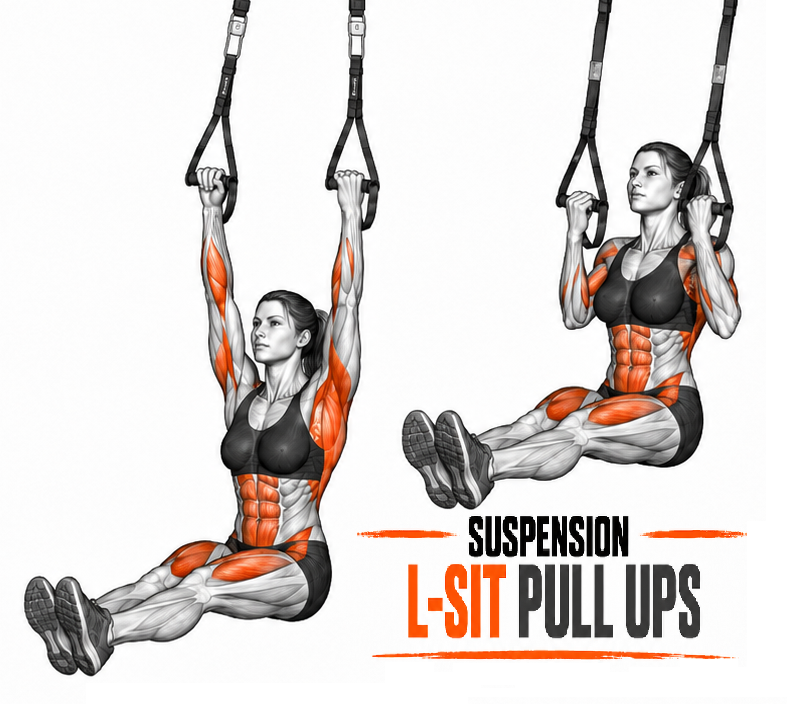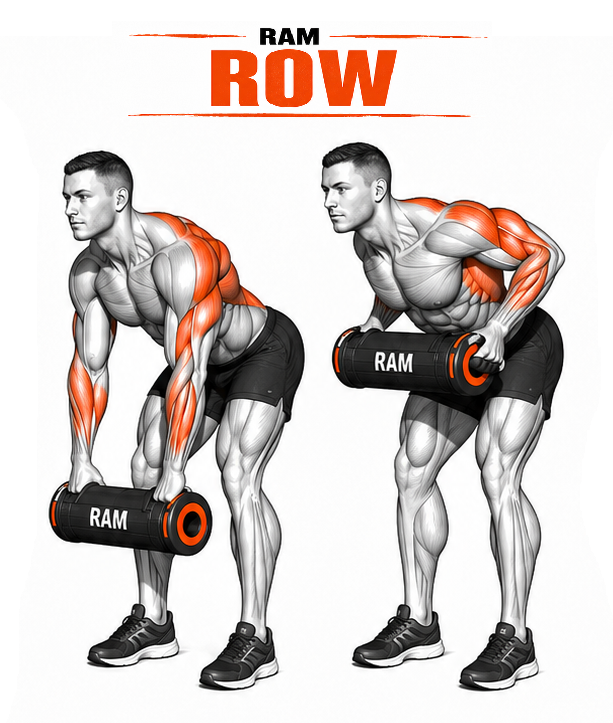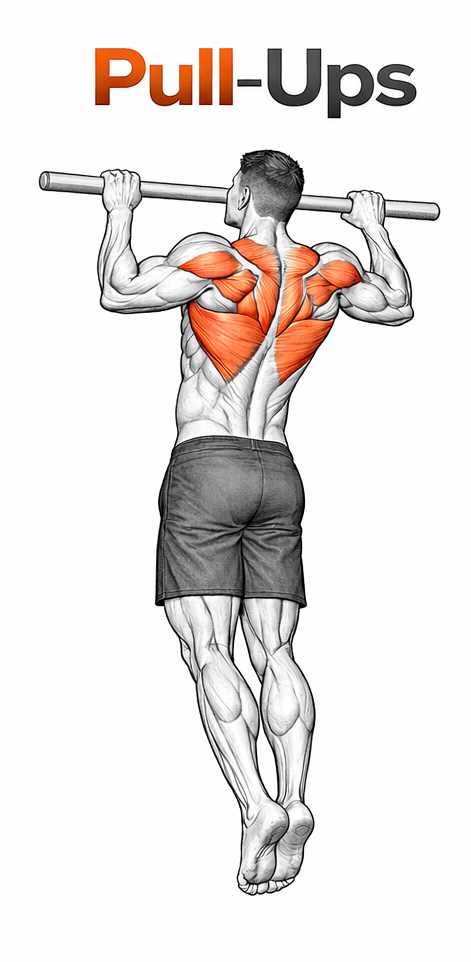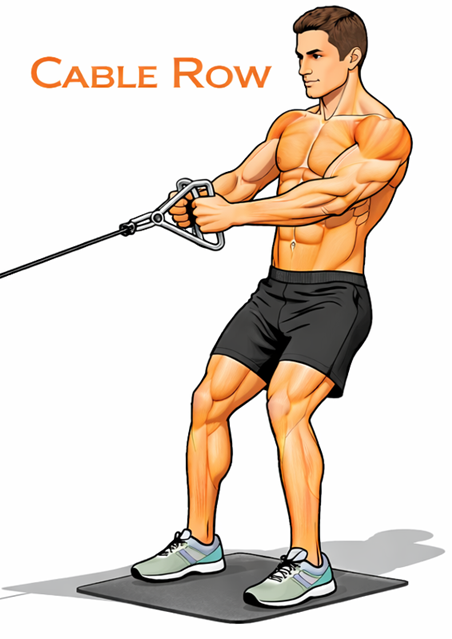
Cable Row
Seated cable row pulled to the lower chest — the foundational horizontal pull, friendly to the lower back and easy to load progressively.
Level: Foundation
Primary: Back - Upper
Secondary: Biceps
Movement: Compound
Tags: Pull
Type: Strength (Weight Lifting)
Equipment: Cable
Sports: Football Rugby Swimming Wrestling
Target muscles
The latissimus dorsi drive the pull from the stretched position. The rhomboids and middle trapezius retract the scapulae at the bottom of the row. The posterior deltoids contribute when the elbows track wide. The biceps and brachioradialis assist at the elbow. The trunk braces against the cable's pull. Unlike a bent-over barbell row, the cable row's seated position removes the lower back from the equation — the work concentrates on the upper back muscles. That makes it accessible for a wider range of lifters and easier to recover from.
How to perform
Setup
Sit at the cable row station with feet braced on the platform. Grip the V-handle or wide bar attachment. Slide back so the cable has tension at the start but your arms aren't fully extended. Sit tall with a slight forward lean — about 5-10 degrees off vertical — chest up, shoulders down and back. Trunk braced.
Execution
Pull the handle toward your lower chest by driving the elbows back. The shoulder blades retract at the end of the pull — you should feel a strong squeeze in the middle of your back. Pause for a one-second contraction. Extend the arms back to the fully stretched start position, letting the lats lengthen and the shoulder blades protract. The torso stays still throughout; don't lean back to use body english on the pull, and don't lean forward to "catch" the handle on the return.
Common mistakes
- Leaning back during the pull to use the lower back as a lever. The torso stays still; the arms and back do the work.
- Pulling to the upper chest or chin. Aim for the lower chest or sternum — that's where the rhomboids and lats work hardest.
- Letting the shoulders shrug up to the ears at the bottom of the pull. The shoulders stay down and back.
- Cutting the top of the range. Let the arms extend fully on every return — the lats need the stretch.
- Pulling primarily with the biceps. The biceps assist; the back leads.
Progressions and regressions
Regress to chest-supported rows (T-bar with chest pad, machine row) if the seated cable position is uncomfortable. Resistance band rows are a useful introduction at home. To progress, work single-arm cable rows (anti-rotation demand), wide-grip cable rows (more rear-delt focus), or pause rows (3-second pause at the contracted position).
Programming notes
Excellent primary horizontal pull. 3-4 sets of 8-12 reps. Two times a week. Pair with vertical pulls (pull-ups, lat pulldowns) for a complete back program. The cable row's friendly recovery profile makes it a good choice for days when the lower back is already taxed from squats or deadlifts. As accessory work after a heavy bench, drop the load and chase a pump.