Plate Bent Over Rows
A bent-over row gripping a weight plate, building the mid-back and lats while the hinged position trains the posterior chain to hold position.
Level: Foundation
Primary: Back - Upper
Secondary: Back - Lower Biceps Shoulders - Rear
Movement: Compound
Tags: Hinge Pull
Type: Strength (Weight Lifting)
Equipment: Plates
Target muscles
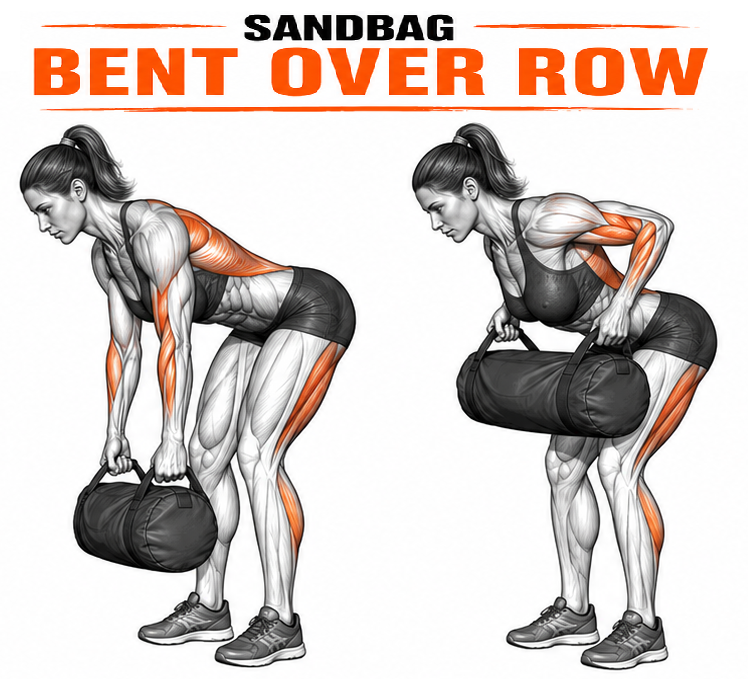
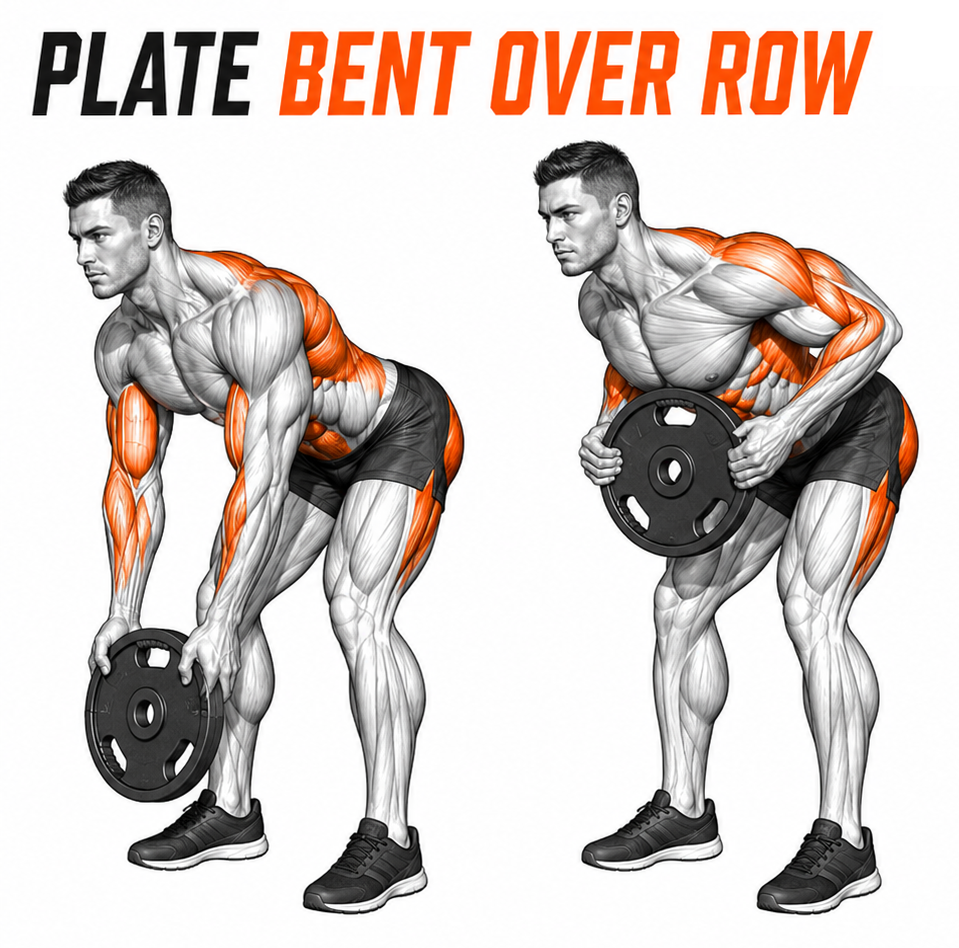
The row drives the upper back — the lats, rhomboids and mid-traps — to pull the plate toward the torso, with the rear delts and biceps assisting the pull. Holding the hinged position loads the spinal erectors, glutes and hamstrings isometrically to keep the back flat and the hips set. Gripping a plate rather than a bar shifts the leverage and adds a forearm and grip element, making it a accessible full-back builder when no barbell is available.
How to perform
Setup
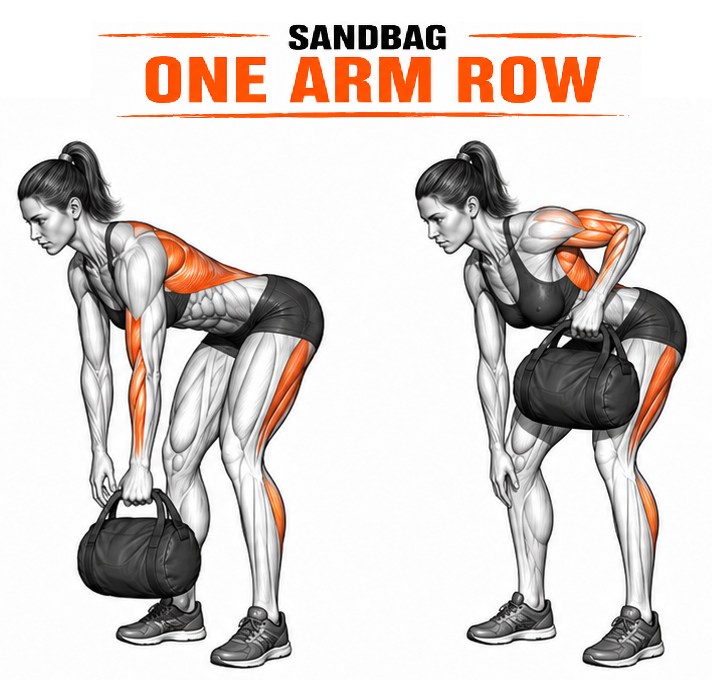
Hold a plate with both hands gripping the sides or the centre hole, feet hip-width. Hinge at the hips, push them back, and let the torso come to roughly forty-five degrees with a flat back and a braced core. Let the plate hang at arm's length.
Execution
Pull the plate toward your lower ribs or upper stomach by driving the elbows back and squeezing the shoulder blades together. Lead with the elbows, not the hands, and keep them fairly close to the body. Pause briefly at the top with the shoulder blades retracted, then lower the plate under control to a full stretch without letting the torso rise or the back round. Keep the hips and spine locked in the hinge throughout — only the arms and shoulder blades move.
Common mistakes
- Rounding the lower back instead of holding a flat, braced hinge.
- Heaving the torso up to swing the plate rather than rowing with the back.
- Shrugging the shoulders up instead of pulling the blades together and down.
- Cutting the range short and not lowering to a full stretch.
Progressions and regressions
Regress by using a lighter plate or supporting the chest on an incline bench to remove the lower-back demand. Progress by using a heavier plate, adding a pause at the top, or slowing the lowering phase to build control.
Programming notes
Use it as a back-builder on pull or full-body days, 3-4 sets of 8-12 reps. It trains both the pull and the isometric hinge hold, so keep the load honest — a flat back matters more than the size of the plate. Balance it against horizontal and overhead pressing to keep the shoulders healthy.