Sandbag Bent Over Rows
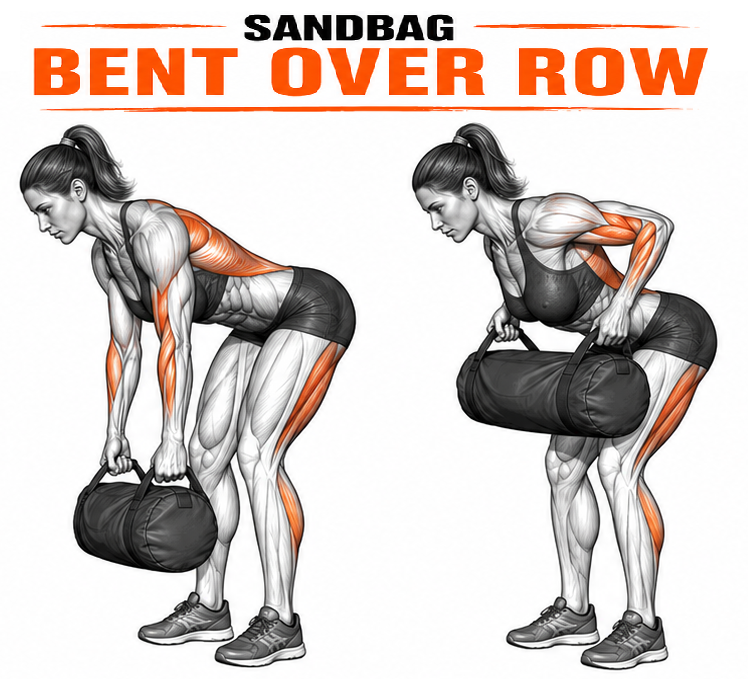
Upper-back row from a hinged position, hauling the sandbag to the lower ribs while the spinal erectors hold a braced flat-back position.
Level: Foundation
Primary: Back - Upper
Secondary: Back - Lower Biceps Shoulders - Rear
Movement: Compound
Tags: Hinge Pull
Type: Strength (Weight Lifting)
Equipment: Sandbag
Target muscles
The latissimus dorsi, rhomboids and mid-trapezius pull the bag toward the torso and retract the shoulder blades, with the rear deltoids assisting at the top of each rep. The biceps and forearms flex the elbows and fight to keep a grip on the bag's bulky body or handles. Holding the hinged position is itself hard work: the spinal erectors, glutes and hamstrings contract isometrically to keep the flat back braced against gravity and the shifting load.
How to perform
Setup
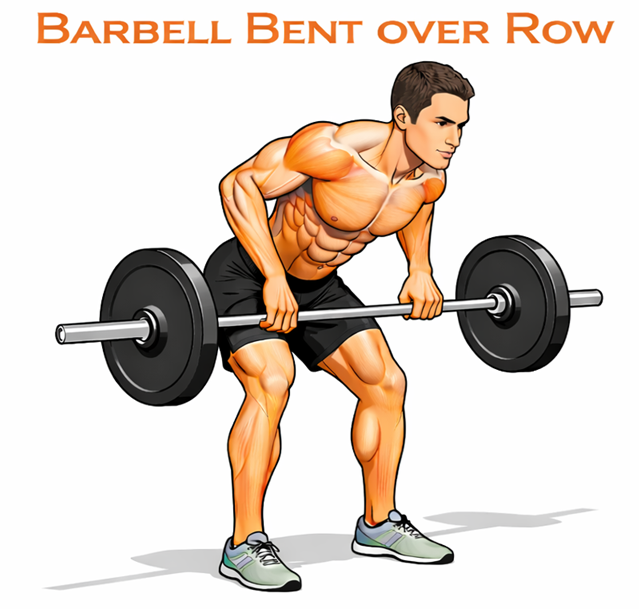
Stand with feet hip-width, hinge at the hips, and let the bag hang at arms' length with a flat back and a torso around 45 degrees or lower. Grip the bag by its side handles or dig your hands under its body. Brace the abs and set the shoulder blades down and back.
Execution
Drive your elbows up and back, pulling the bag to your lower ribs or stomach and squeezing the shoulder blades together at the top. Keep the torso angle fixed — no heaving up with the lower back to swing the load. Pause briefly with the bag against the body, then lower it under control to a full stretch without letting the shoulders round forward. The bag's soft mass shifts as it travels, so keep the path tight to the body and the core locked the whole way.
Common mistakes
- Rising up with the torso on each rep, turning a row into a partial deadlift and offloading the upper back.
- Rounding the lower back under the load, which puts the lumbar spine at risk.
- Shrugging the bag up with the traps instead of driving the elbows behind the body.
- Using momentum to fling the bag rather than controlling the lift and the lowering.
Progressions and regressions
Regress by raising the torso closer to upright or by rowing lighter to hold a flat back, or use a chest-supported row to remove the spinal demand. Progress by lowering the torso toward parallel, adding bag weight, or pausing at the top of each rep. A single-arm sandbag row shifts the work and adds an anti-rotation component for the core.
Programming notes
Program it as a primary horizontal pull, 3-4 sets of 8-12 reps, to balance pressing volume. The isometric hinge limits how heavy you can go before the back position degrades, so prioritise a flat spine and full range over load. It fits well paired with a push movement in an upper-body or full-body session. Ease off if lower-back fatigue from deadlifting that week would compromise the braced position.