Battle Ropes Stage Coaches
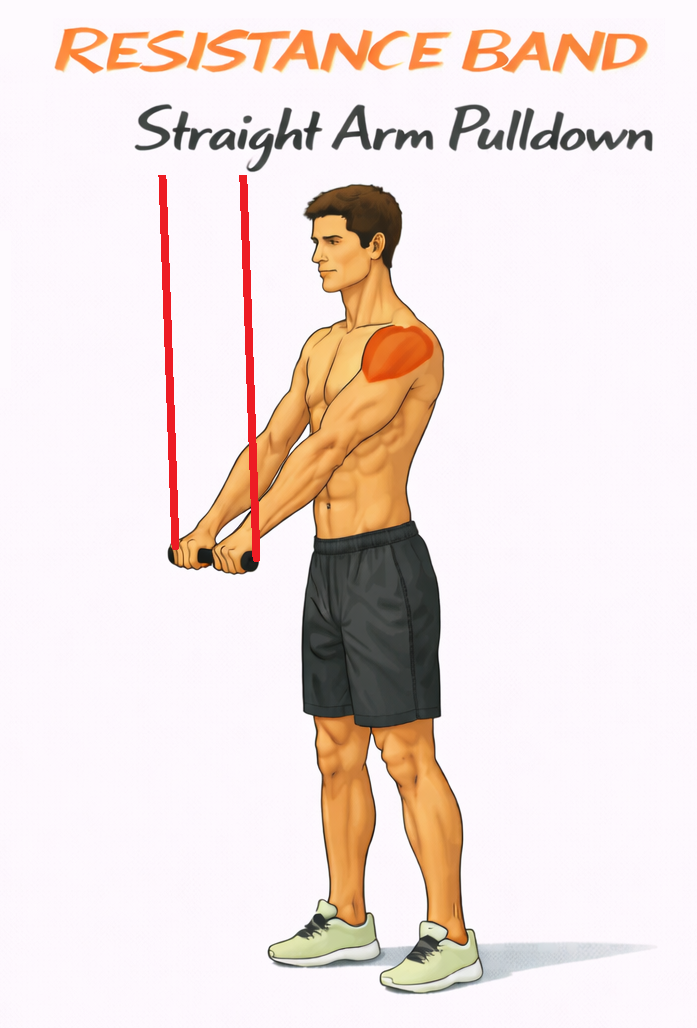
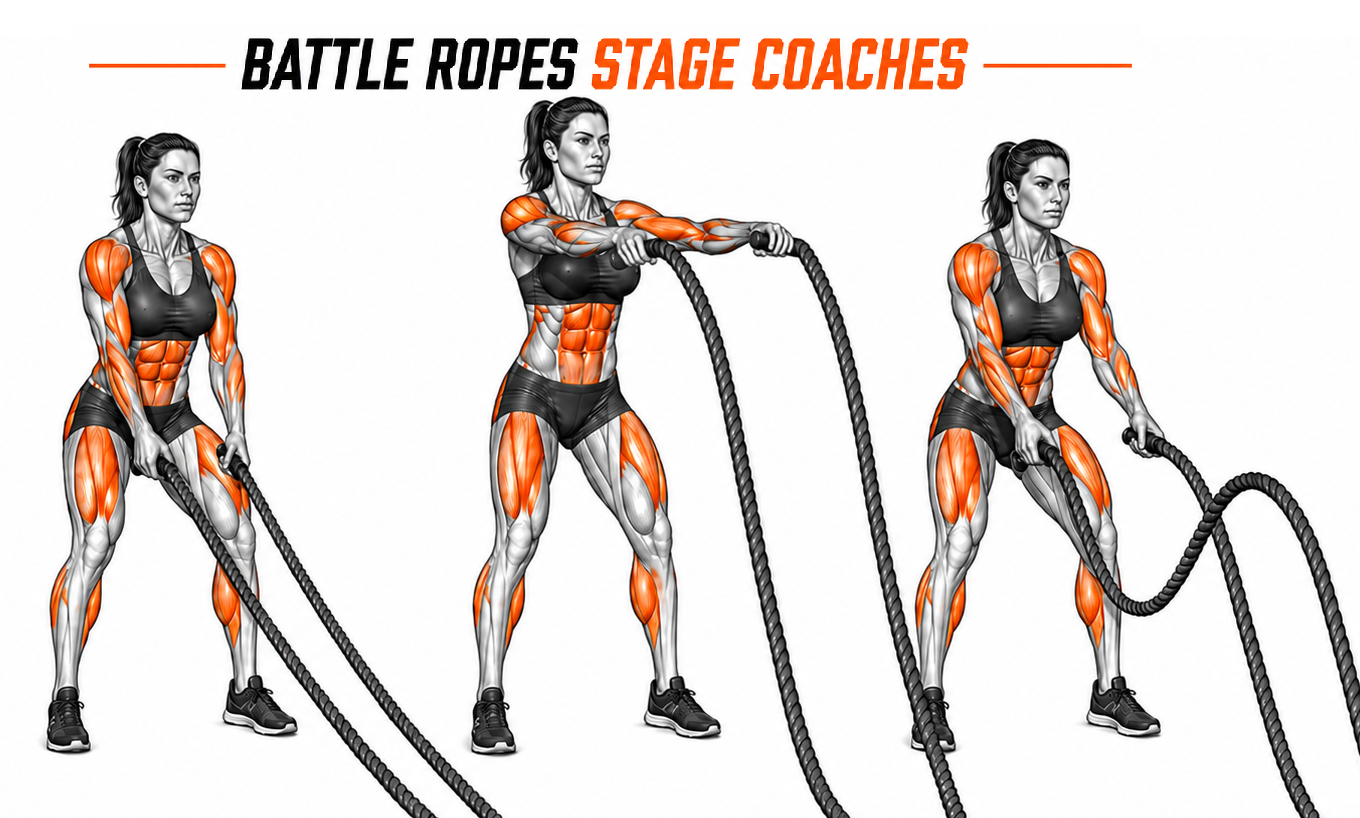
A battle-rope row for the upper back, lats and biceps: alternately pull each rope end back to the hip like cracking the reins of a stagecoach.
Level: Foundation
Primary: Back - Upper
Secondary: Biceps Cardio Forearms Shoulders - Rear
Movement: Compound
Tags: Pull
Type: Aerobic (Cardio) Anaerobic Intervals (HIIT / Bootcamp / Circuit)
Equipment: Battle Ropes
Target muscles
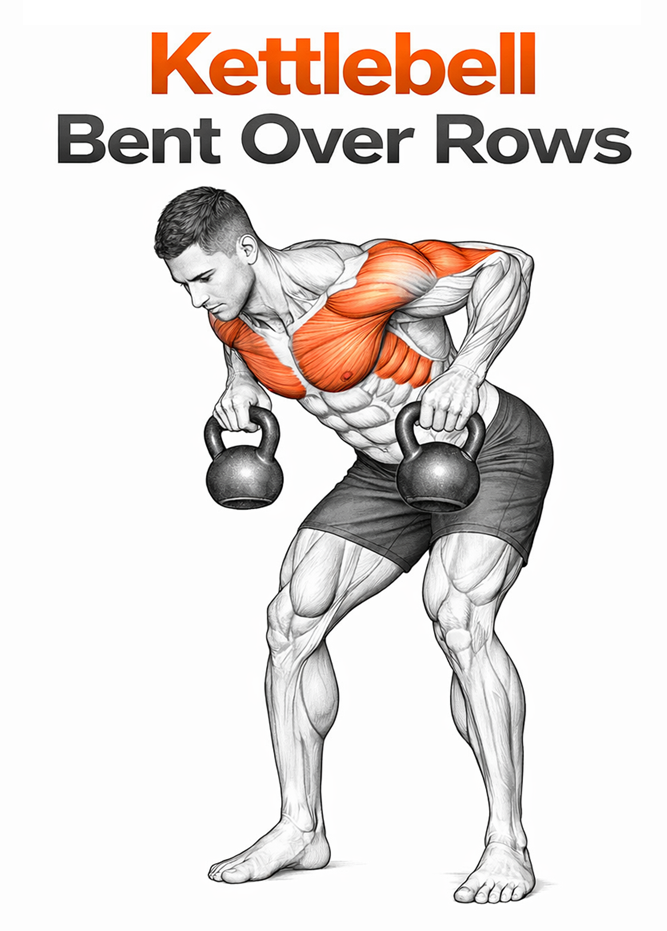
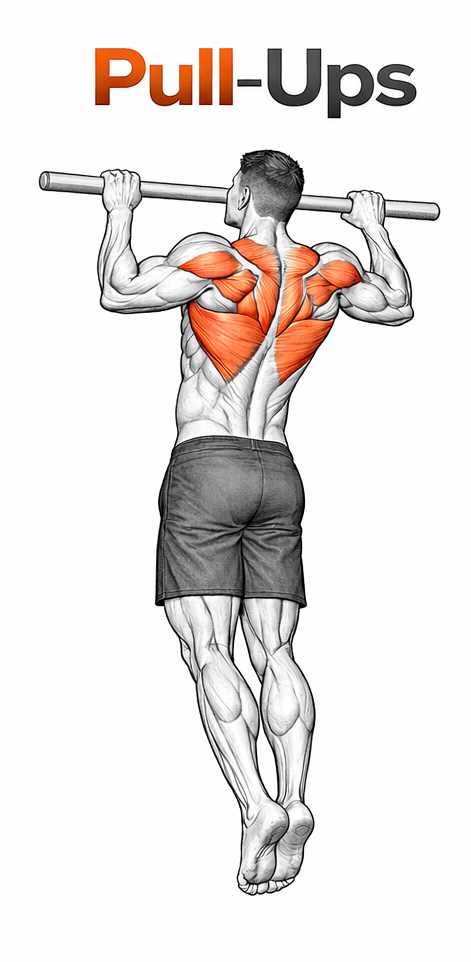
Unlike the shoulder-driven waves, the stagecoach is a pulling drill: the latissimus dorsi, rhomboids and mid-traps draw the rope ends back toward the hips while the biceps and rear deltoids assist the row and the forearm flexors grip hard for the whole interval. The torso braces to keep the chest tall and stop the shoulders rounding forward, and the legs hold a steady athletic stance. Because the arms alternate without pause and the cadence stays high, the upper-back endurance demand sits right alongside a strong cardiovascular cost.
How to perform
Setup
Anchor the rope around a solid post and step back until only a little slack remains. Hold one end in each hand with a firm grip, hinge slightly at the hips, soften the knees into an athletic stance, and set the shoulder blades down and back so the lats are loaded before the first pull.
Execution
Drive one elbow back past your ribs, pulling that rope end toward your hip as if cracking the reins of a stagecoach, then let it travel forward as the other arm pulls back so the hands work in continuous opposition. Keep the elbows tracking close to the body and lead with the elbow rather than the hand, so the back does the work instead of just the arm. Hold the chest up and the core braced throughout; the only thing moving fast is the arms. Settle into a rhythmic, even tempo and keep the rope ends snapping back to the hips for the full interval.
Common mistakes
- Pulling with a bent wrist and hand-only effort, so the biceps fatigue while the lats and mid-back never engage.
- Letting the shoulders round forward and the chest collapse, which strips the upper back out of the movement.
- Flaring the elbows wide instead of driving them back along the ribs, turning the row into a sloppy wave.
- Standing bolt upright with locked knees, losing the athletic base that lets you pull with power.
- Slowing to a crawl as the grip tires rather than ending the interval while the pulls stay crisp.
Progressions and regressions
Regress by shortening the work interval, stepping in for more slack so each pull is lighter, or using a thinner rope that is easier to grip. To progress, lengthen the interval, step further back to load every rep harder, or add a backward lean or alternating reverse lunge so the whole posterior chain joins the pull. Pairing it with downward alternating waves in the same set covers both the pulling and the pressing sides of rope conditioning.
Programming notes
Program it as upper-back conditioning or a pulling finisher, 3-5 rounds of 20-40 seconds of continuous alternating pulls against equal or slightly longer rest. It fits a back or pull day after the heavy rows have done the strength work and you want a metabolic, grip-taxing capstone. Keep it out of the slot right before deadlifts or heavy pulls, since the grip and upper-back fatigue will blunt those lifts.