BOSU Superman
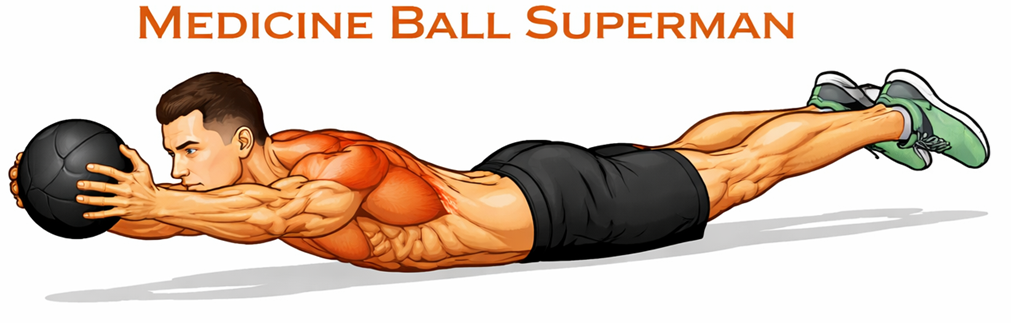
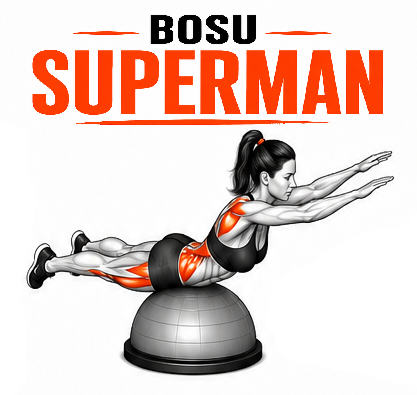
A superman back extension draped over the BOSU, lifting the arms and legs to strengthen the spinal erectors, glutes and rear delts.
Level: Beginner
Primary: Back - Lower
Secondary: Glutes Shoulders - Rear
Movement: Isolation
Tags: Balance / Stability Core Stability
Type: ISO
Equipment: Balance Trainer
Target muscles
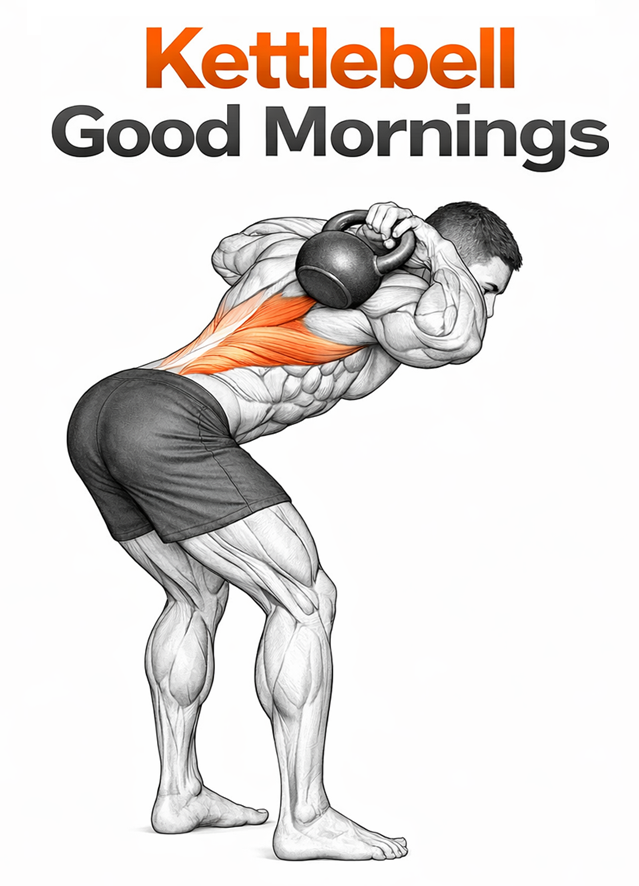
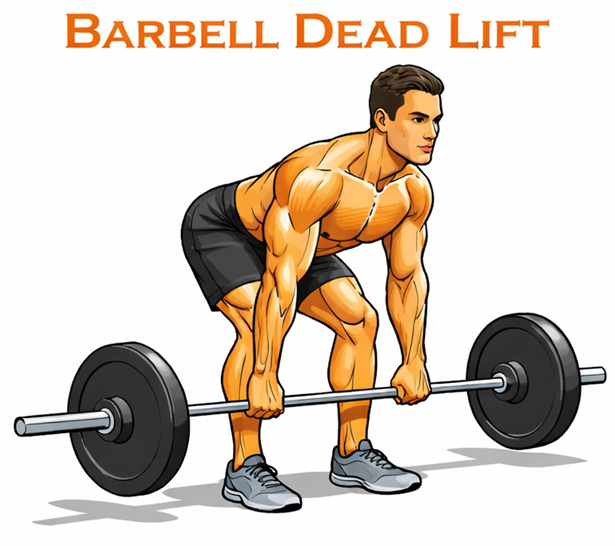
The superman trains the posterior chain that most sitting-heavy routines neglect. The lumbar erectors extend the spine to lift the chest, the gluteus maximus and hamstrings raise the legs, and the rear delts and mid-back muscles draw the arms back and up. Lying over the dome puts the spine in a slightly flexed start, so the erectors work through a fuller range, and the rounded base adds a small balance demand to the hold or reps.
How to perform
Setup
Lie face down with the dome under your hips and lower abdomen, legs long behind you and arms reaching forward overhead. Set the neck neutral, looking at the floor, and lightly brace the core.
Execution
Exhale and lift your arms, chest and legs away from the floor at the same time, squeezing the glutes and the mid-back as you rise into a gentle arc over the dome. Lift only as high as you can with control — this is a short, deliberate extension, not a violent crank of the lower back. Hold briefly at the top, feeling the erectors and glutes work, then lower under control. Either pause-and-hold each rep or hold the top position for time, breathing steadily.
Common mistakes
- Hyperextending the neck by looking up instead of keeping it neutral.
- Cranking the lower back violently rather than lifting smoothly with the glutes engaged.
- Lifting only the arms or only the legs instead of the whole posterior chain together.
- Holding the breath instead of exhaling on the lift.
Progressions and regressions
Regress by lifting only the upper body or only the legs, or by reducing the range. Progress by holding the top position longer, adding light arm reaches or a "swimming" arm action, or holding a very light weight in the hands.
Programming notes
Program it as low-back and posterior-chain accessory work, 2-3 sets of 10-15 controlled reps or 15-30 second holds. It is a gentle counter to the rounded posture of desk work and a good warm-up for hinging. Keep the range modest and the tempo slow; the lower back responds poorly to ballistic extension.