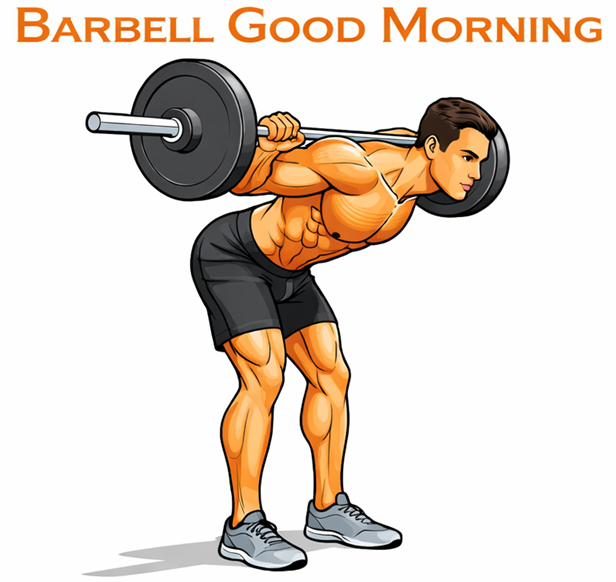
Barbell Good Morning
Hip-hinge with a barbell on the back — direct work for the hamstrings, glutes, and spinal erectors. Use light, own the range.
Level: Foundation
Primary: Back - Lower
Secondary: Glutes Hamstrings
Movement: Compound
Tags: Hinge
Type: Strength (Weight Lifting)
Equipment: Barbell
Sports: Football Rugby Track and Field
Target muscles
The hamstrings and gluteus maximus drive the concentric hip extension and eccentrically control the descent. The spinal erectors work isometrically to maintain spinal position against the lever the bar creates — and that lever is severe, because the bar sits far above the hinge point. The adductor magnus contributes to hip extension. The trunk braces against the load throughout. This is one of the few exercises where the hamstrings actually train as hip extensors against meaningful resistance, which is why it shows up in nearly every serious posterior-chain program.
How to perform
Setup
Set the bar in the rack at upper-chest height. Step under and place the bar high on the upper traps as you would for a high-bar back squat — not low-bar; the lever is too cruel from a low-bar position for this lift. Tighten the grip, pull the elbows down to lock the shelf, take a big breath, brace, unrack, and step back. Feet hip-width apart, toes forward, slight knee bend that you'll maintain through the entire set.
Execution
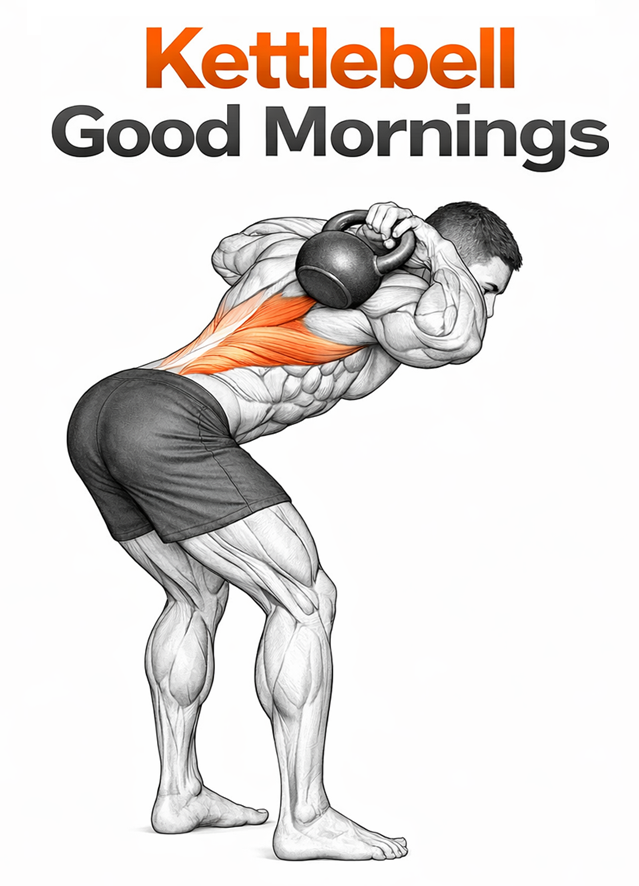
Push the hips back and let the torso fold forward at the hip joint — knees stay bent the same amount throughout. Lower until you feel a strong stretch in the hamstrings; for most lifters that's somewhere between a 45-degree torso angle and parallel with the floor. The lumbar spine stays neutral the entire time. Reverse the movement by driving the hips forward — finish with the glutes squeezed at the top. Don't lean back at the top; just stand tall. Exhale through the ascent or at the top of the rep.
Common mistakes
- Going too heavy. The good morning is not a one-rep-max contest. Use a load you can move with perfect spinal position for at least 6-8 reps.
- Bending the knees more as the rep gets harder, which turns the lift into a partial back squat. Lock in the knee angle and keep it there.
- Rounding the lower back at the bottom. Stop when you feel the hamstrings tension out the hinge — going further is just spinal flexion under load.
- Squatting forward instead of hinging back. The hips go back, not down. The sensation should be nothing in the quads, everything in the hamstrings and glutes.
- Programming it the day before a heavy deadlift. Recovery overlap is severe.
Progressions and regressions
Regress with bodyweight or PVC-pipe good mornings to groove the pattern. The Romanian deadlift is a useful sister movement that loads the same muscles with less spinal-lever stress and might be the better starting point for many lifters. To progress, work the seated good morning (sat on a box, legs straight, much harder), the safety-bar good morning (the SSB's forward weighting is brutal here), or the banded good morning (variable resistance through the lockout).
Programming notes
Excellent posterior-chain accessory after squats or as a primary hinge variation on a non-deadlift day. 3-4 sets of 8-12 reps with moderate loads. Once a week is plenty for most lifters; the spinal load combined with the hip-hinge volume catches up to you fast. Don't program it the day before any heavy lower-back work. Excellent for building the hinge strength that translates to deadlift PRs without the same systemic recovery cost.