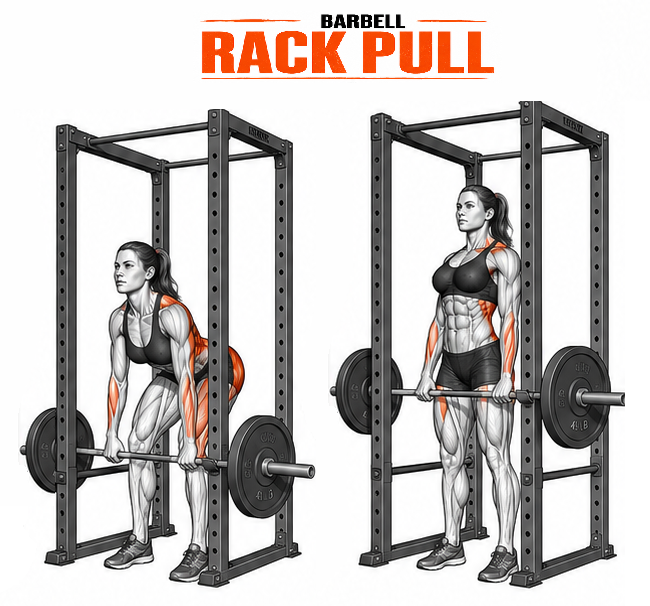
Barbell Rack Pull
A partial deadlift from pins set near knee height, overloading the lockout and the posterior chain with heavy weight.
Level: Intermediate
Primary: Back - Lower
Secondary: Back - Upper Glutes Hamstrings Traps
Movement: Compound
Type: Strength (Weight Lifting)
Equipment: Barbell
Target muscles
Starting above the floor shortens the range to the top half of the pull, so the glutes, spinal erectors, traps and upper back take a heavier load than a full deadlift through the strongest part of the movement. The hamstrings assist the hip extension. It's a posterior-chain overload tool that builds lockout strength and back thickness.
How to perform
Setup
Set the safety pins in a rack at roughly knee height (adjust higher or lower to target the range you want). Position the bar over the mid-foot, take a shoulder-width grip, set a flat back, chest up and lats tight.
Execution
Take the slack out of the bar, then drive the floor away and extend the hips to bring the bar to a tall, locked-out standing position with the shoulders back. Squeeze the glutes at the top without leaning back. Lower the bar under control back to the pins, reset your position, and pull again from a dead stop. Don't bounce the bar off the pins.
Common mistakes
- Rounding the upper back under the heavy load instead of keeping the spine braced.
- Hyperextending and leaning back at lockout, stressing the lower spine.
- Bouncing the bar off the pins to cheat the next rep.
- Setting the pins so high that the range becomes a token shrug.
Progressions and regressions
Regress to a conventional deadlift or set the pins higher to reduce the range and load. Progress by lowering the pin height toward the floor or adding weight as lockout strength improves. It's a useful accessory for lifters whose deadlift fails at the top.
Programming notes
Program it as a deadlift accessory or overload day, 3-4 sets of 3-6 reps. Because the range is short you can load it heavy — respect that and keep the back position locked. Use it to bring up a weak lockout or add posterior-chain volume without the fatigue of pulls from the floor.