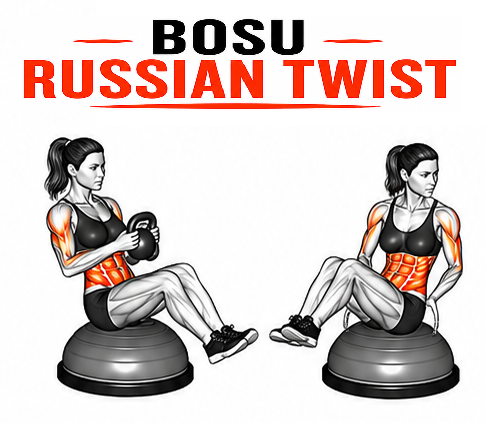
BOSU Russian Twist
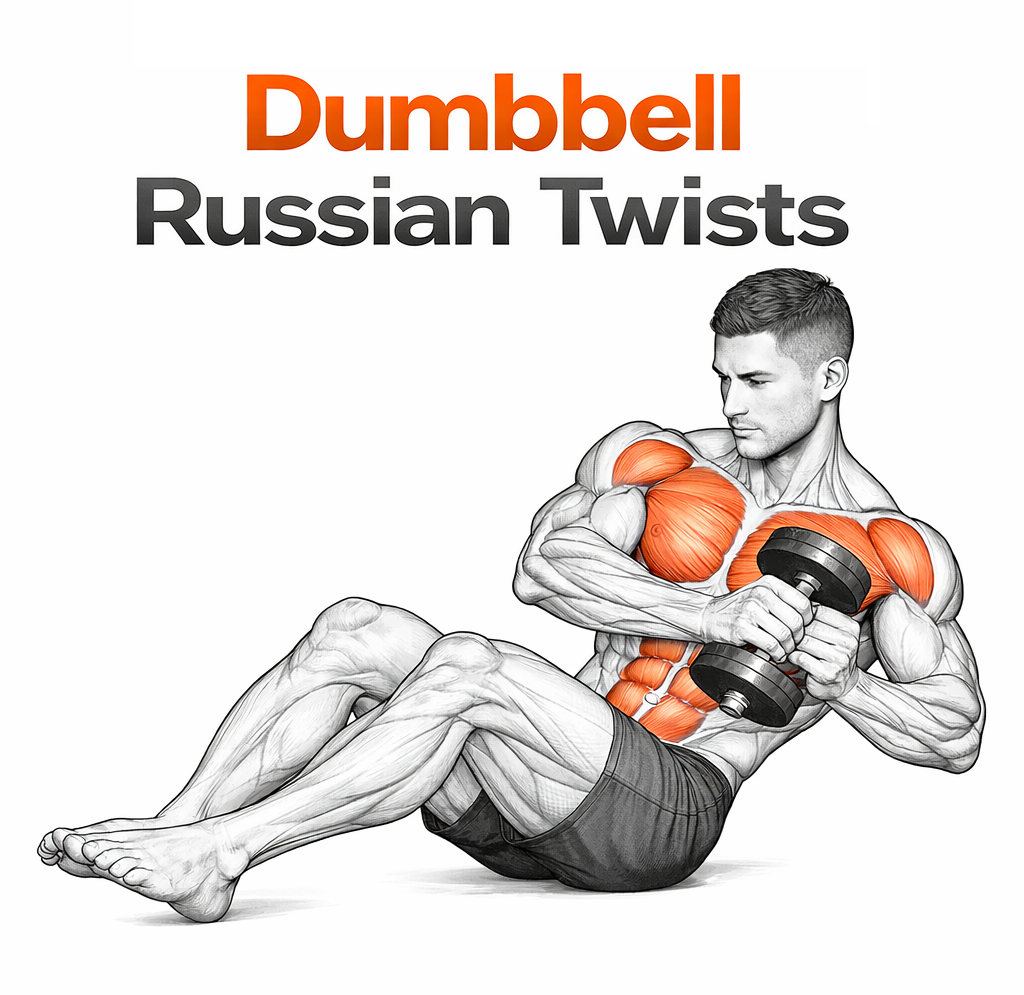
A seated Russian twist balanced on the BOSU dome, rotating the torso side to side to load the obliques while the base demands balance.
Level: Beginner
Primary: Abs
Movement: Isolation
Tags: Balance / Stability Rotational
Type: Strength (Weight Lifting)
Equipment: Balance Trainer
Target muscles
The obliques are the prime movers, rotating the ribcage from side to side, while the rectus abdominis holds the trunk in its leaned-back position and the deep transverse abdominis stabilises the spine. The hip flexors keep the legs up if the feet are lifted, and the whole core fights to keep you centred on the rounded, unstable dome. The balance demand makes the abs work even between rotations.
How to perform
Setup
Sit on the centre of the dome and walk your hips back slightly so you balance on the base of your pelvis. Lean the torso back to about forty-five degrees, brace the core, and hold your hands together at chest height (feet down to start, lifted to progress).
Execution
Rotate your torso to one side, leading with the ribs and reaching the hands toward the floor beside your hip, then rotate smoothly to the other side. Keep the chest tall and the spine long rather than collapsing forward, and let the twist come from the waist rather than just swinging the arms. Control the dome's wobble by keeping the brace constant. Move at a steady tempo, pausing briefly at each side to keep the obliques under tension.
Common mistakes
- Swinging the arms while the torso barely rotates, removing the oblique work.
- Rounding the back and collapsing the chest instead of staying tall.
- Rushing side to side so momentum, not the obliques, moves the load.
- Losing the lean-back position and sitting upright, which slackens the abs.
Progressions and regressions
Regress by keeping the feet flat on the floor and the lean-back shallow, or by twisting on the floor first. Progress by lifting the feet off the floor, holding a light plate or medicine ball, or pausing at each side for two seconds.
Programming notes
Use it as oblique accessory work, 2-3 sets of 12-20 total rotations. Keep any added weight light and the tempo controlled — rotational core work rewards quality, and heavy, fast twisting just invites the lower back to round. Pair it with an anti-rotation hold so the obliques are trained to both produce and resist rotation.