Battle Ropes Russian Twists
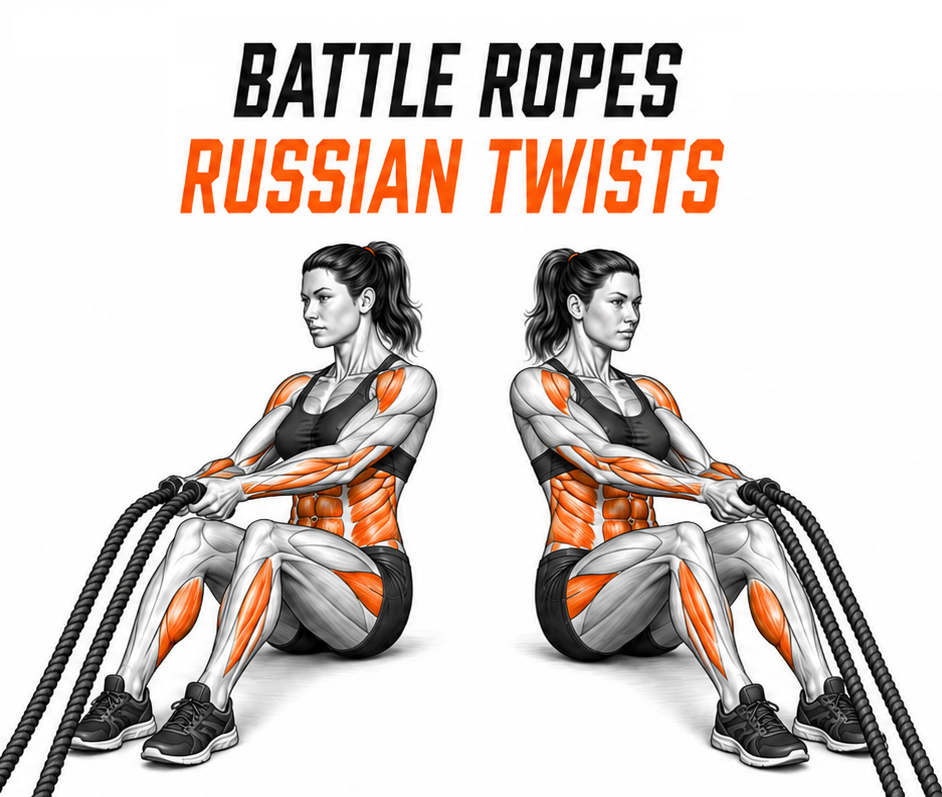
Seated rotation that sweeps both rope ends side to side across the body, lighting up the obliques against the drag of the rope.
Level: Intermediate
Primary: Abs
Secondary: Back - Upper Shoulder
Movement: Isolation
Tags: Rotational
Type: Anaerobic Intervals (HIIT / Bootcamp / Circuit) Strength (Weight Lifting)
Equipment: Battle Ropes
Target muscles
The obliques are the focus, rotating the trunk to sweep the rope ends from one side of the body to the other against the rope's drag. The rectus abdominis braces to hold the leaned-back seated position, and the hip flexors stabilise the elevated or anchored legs. The shoulders and forearms move and grip the rope, while the upper back helps control the rotation. The constant resistance and seated brace make this both a rotational strength move and a heart-rate raiser when reps come quickly.
How to perform
Setup
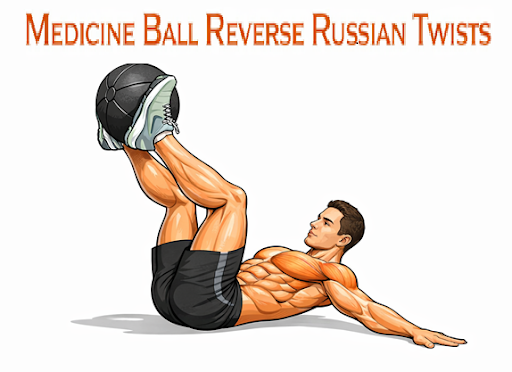
Sit on the floor facing the anchor, holding both rope ends together with both hands and leaning the torso back to about forty-five degrees with the core braced and the chest tall. Bend the knees with the heels down or hovering just off the floor. Take the slack out so the rope provides real resistance, set the shoulders down, and feel the obliques load before the first sweep so the rotation drives from the trunk.
Execution
Rotate the trunk to sweep both rope ends down and across to one side, tapping toward the floor beside your hip, then reverse and sweep them across to the other side. Drive the rotation from the obliques, not just the arms, and keep the chest up and the back from rounding. Move at a controlled, rhythmic pace so each side gets a full turn and the rope stays under tension. Keep the lower body relatively stable so the twisting happens through the trunk rather than by swinging the legs.
Common mistakes
- Swinging the arms side to side while the torso stays square, so the obliques barely work.
- Rounding the lower back as you lean away from the anchor.
- Rushing the sweeps so the rotation becomes shallow and loses range to each side.
- Letting the feet flail to generate momentum rather than rotating from the core.
Progressions and regressions
Regress by keeping the heels planted, sitting more upright, or slackening the rope until the rotation is controlled and the back stays flat. Progress by leaning further back, lifting the feet off the floor, increasing the rope tension, or pausing at each side for a harder peak contraction. Slowing the tempo deliberately raises the oblique demand more than speeding up does, and a longer reach to the floor extends the working range.
Programming notes
Program it as rotational-core work, 2-4 sets of 12-20 total reps or 30-40 second intervals, balanced evenly left and right. It pairs well with anti-rotation work like plank weaves so a single session trains both producing and resisting rotation. Keep the back flat and the rotation honest through the trunk, balanced evenly to both sides, rather than chasing speed at the cost of range.