Barbell Muscle Snatch
A snatch taken to overhead with no re-bend of the knees, building pulling power, turnover speed and overhead strength.
Level: Advanced
Primary: Shoulder
Secondary: Back - Upper Glutes Traps
Movement: Compound
Tags: Explosive Olympic Lift
Type: Hybrid Athletic Strength (Weight Lifting)
Equipment: Barbell
Target muscles
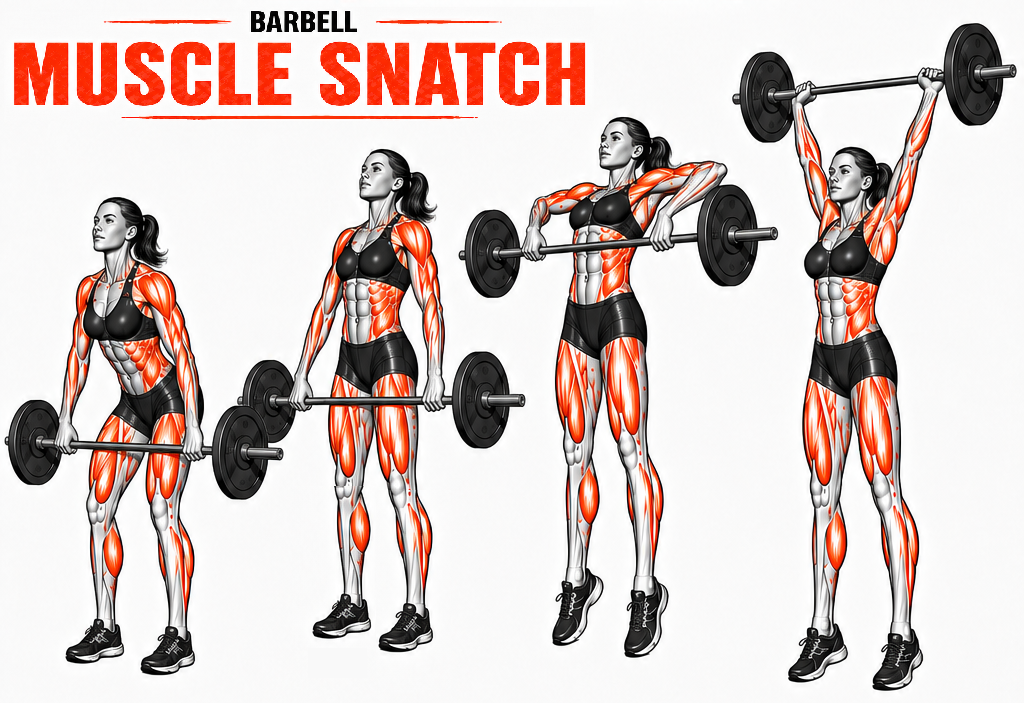
Because there's no dropping under the bar, the muscle snatch demands the pull and the turnover carry the load all the way to lockout. The traps, upper back and shoulders finish the bar overhead, while the hips and hamstrings produce the initial drive. It strengthens the top of the snatch pull and the overhead receiving strength without the squat.
How to perform
Setup
Take a wide snatch grip with the bar at the hang or floor, back flat, shoulders over the bar, lats tight.
Execution
Extend the hips and knees explosively to launch the bar, keeping it close. As it rises, pull the elbows high then rotate the hands around the bar and press it to a locked overhead position — all without re-bending the knees to dive under. The bar travels in one continuous path from hips to overhead through muscular effort. Lower under control and reset.
Common mistakes
- Re-bending the knees to receive the bar, which makes it a power snatch rather than a muscle snatch.
- Letting the bar loop forward instead of keeping a tight, close path.
- A slow turnover, so the bar crashes onto straight arms.
- Loading it too heavy, which forces a dip and defeats the purpose.
Progressions and regressions
Regress to snatch-grip high pulls and overhead presses to build the components. Ensure overhead mobility is adequate before loading. Progress to power and full snatches, using the muscle snatch as a strength and turnover accessory.
Programming notes
Use it as a snatch accessory, 3-4 sets of 3-5 reps with light to moderate load. It's a technique and strength builder rather than a max-effort lift, so keep the bar moving fast and the positions clean. It fits well in the accessory block after the main Olympic lifting.