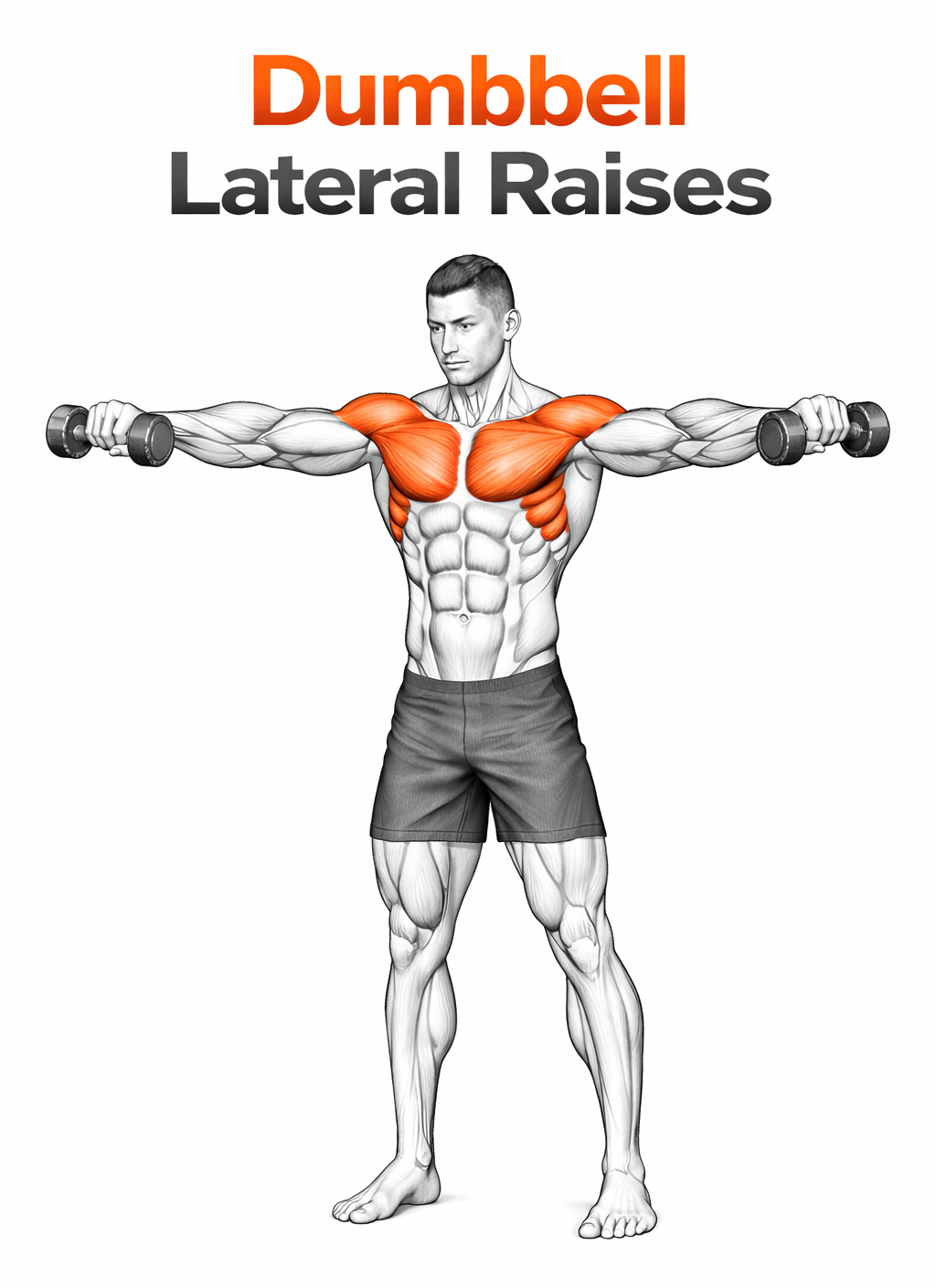
Dumbbell Lateral Raises
Standing dumbbell lateral raise — the foundational lateral deltoid builder, simple movement, hard to do well.
Level: Beginner
Primary: Shoulder
Movement: Isolation
Type: Strength (Weight Lifting)
Equipment: Dumbbell
Sports: Swimming Volleyball
Target muscles
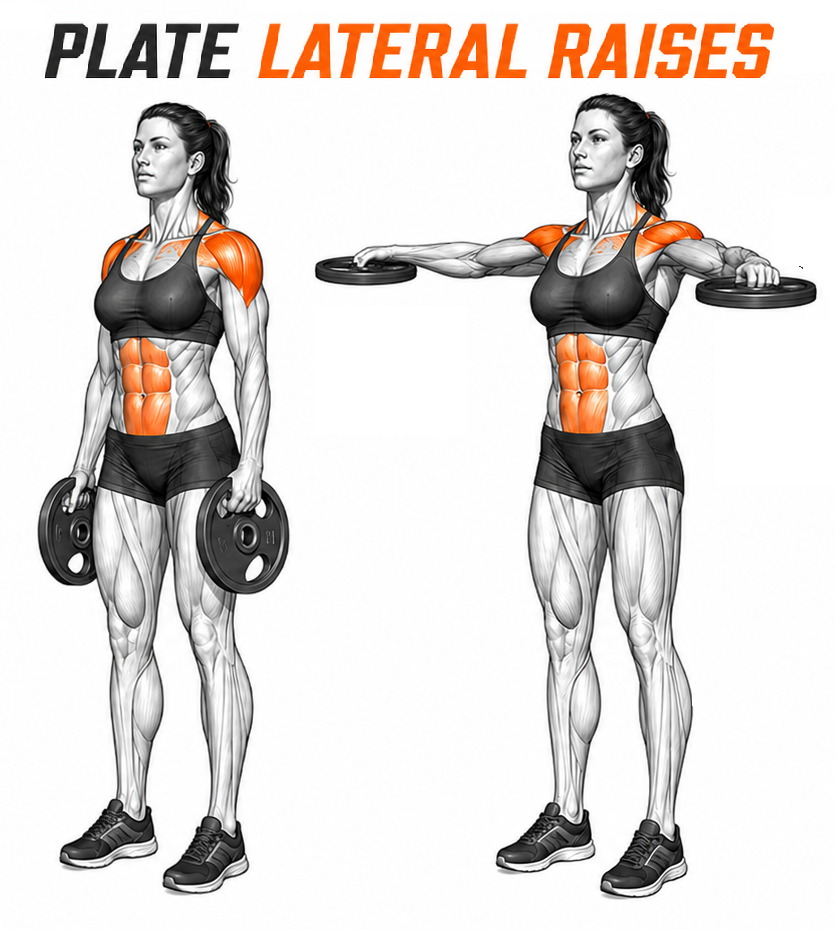
The lateral (middle) deltoid is the prime mover through shoulder abduction. The supraspinatus initiates the first 15 degrees. The serratus anterior holds the scapula stable. The upper trapezius assists at higher angles. The trunk braces against the asymmetric arm loading. The lateral raise's apparent simplicity hides its difficulty — most lifters either go too heavy and recruit the traps, or fail to lift to shoulder height and lose the full range.
How to perform
Setup
Stand with feet hip-width apart, a dumbbell in each hand at the sides, palms facing the body. Slight bend in the elbows that stays consistent through the rep. Shoulders down and back. Trunk braced.
Execution
Raise both arms out to the sides with the slight elbow bend maintained. Lift to roughly shoulder height — the dumbbells should end up roughly parallel to the floor. Pause briefly at the top. Lower the dumbbells under control to the sides. The torso stays still; if it sways, the load is too heavy. Don't shrug the shoulders up — keep them down through the entire rep. The elbows lead slightly (the elbow is higher than the hand at the top); this biases the lateral deltoid over the front deltoid.
Common mistakes
- Going too heavy and shrugging the shoulders. If the traps are working harder than the lateral delts, drop the load.
- Raising the arms higher than shoulder height. Stop at shoulder level.
- Letting the elbows bend more during the rep. Maintain the consistent slight bend.
- Swinging the torso. Body stays still.
- Bouncing at the bottom. Pause briefly before the next rep.
Progressions and regressions
Regress to seated lateral raises (less trunk demand) until the pattern is dialed. To progress, work pause lateral raises (2-second hold at peak), drop sets (heavy set, drop weight 30%, immediately rep to failure), or single-arm cable lateral raises for constant tension.
Programming notes
Excellent accessory shoulder work. 3-4 sets of 12-15 reps, two or three times a week. The lateral deltoid responds particularly well to high volume and moderate load — chase reps and pump over weight. Pair with rear-delt flyes and face pulls for a balanced shoulder program.