Barbell Hip Thrusters
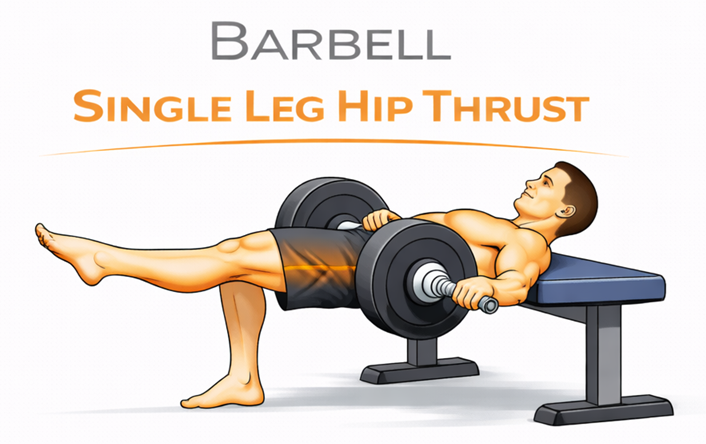
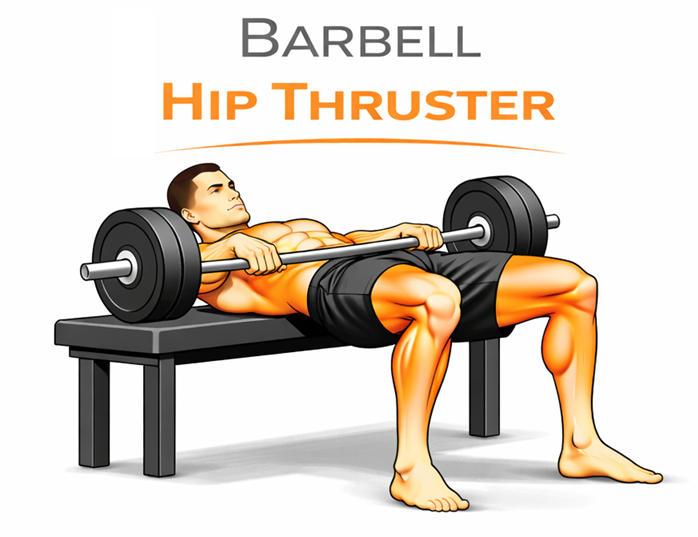
Loaded barbell hip thrust — the most direct heavy-load exercise for the glutes, with hip extension as the prime mover.
Level: Advanced
Primary: Glutes
Secondary: Hamstrings
Movement: Compound
Tags: Explosive Hinge Olympic Lift
Type: Anaerobic Intervals (HIIT / Bootcamp / Circuit) Hybrid Athletic Strength (Weight Lifting)
Equipment: Barbell
Sports: Football MMA Rugby Running Soccer Track and Field
Target muscles
The gluteus maximus is the primary mover, working through a long range from full hip flexion (in the bottom) to full extension (at lockout). The hamstrings co-contract to extend the hip and flex the knee against the load. The adductor magnus assists with hip extension. The spinal erectors and trunk muscles brace to keep the spine neutral against the load on the hips. Done well, the hip thrust loads the glutes more directly than any squat or deadlift variation — which is why it's become a staple in serious lower-body programs.
How to perform
Setup
Sit on the floor with your upper back against a flat bench (the edge of the bench should hit just below the shoulder blades). Roll a loaded barbell up to your hips — use a barbell pad or a thick towel; the bar on bare hip bones is unpleasant. Set the feet flat on the floor, shoulder-width apart, knees bent so that at the top of the lockout your shins will be vertical. Grip the bar lightly to keep it stable.
Execution
Drive through the heels and the entire foot to extend the hips. Push the bar up until the body forms a straight line from the shoulders to the knees. Squeeze the glutes hard at lockout — a true squeeze, not a bounce. The chin should tuck slightly and the eyes look forward at lockout, not toward the ceiling; an extended neck pulls the lower back into hyperextension. Lower the hips with control until the bar is just above the floor or you've reached your usable range, then drive again.
Common mistakes
- Hyperextending the lower back at the top to "get higher." Lockout means hips fully extended, not lumbar in extension. Tuck the chin and squeeze the glutes; the bar shouldn't go higher than that allows.
- Feet too far forward, which turns the lift into a hamstring movement. Shins should be vertical at the top.
- Feet too close, which puts the load onto the quads and shortens the range. Set them where the shins are vertical at lockout.
- Bar slipping off the hips during the lift. Use a pad and keep light tension on the grip.
- Pumping reps with no top-end squeeze. The pause and squeeze at lockout is most of the value of the lift.
Progressions and regressions
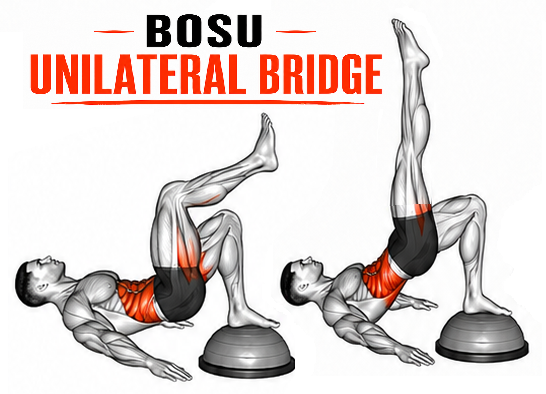
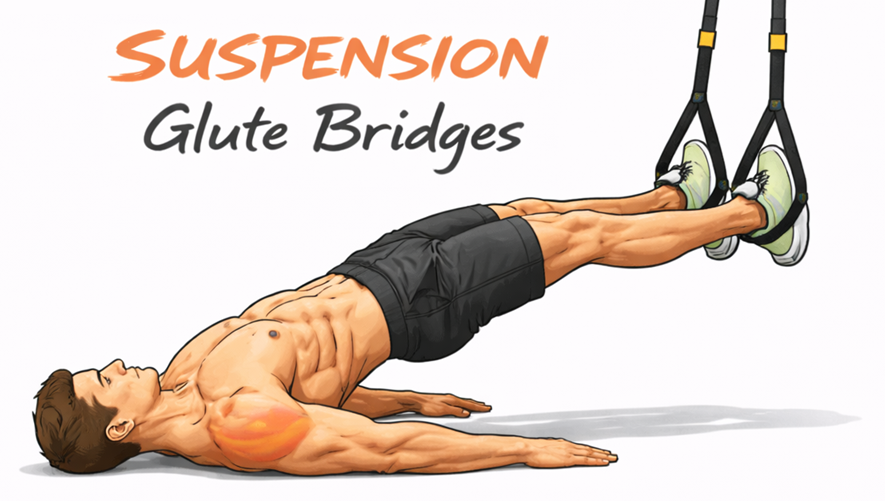
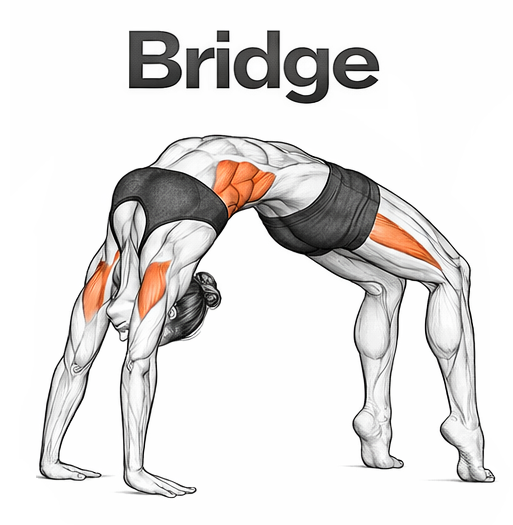
Regress to the bodyweight glute bridge (no bench, no load) until you can produce a clean lockout, then to the elevated glute bridge (bench-supported but unloaded). From there, add load — first a single dumbbell, then a barbell. To progress beyond standard hip thrusts, layer in pause reps (3-second hold at lockout), single-leg hip thrusts, or banded hip thrusts (band around the knees challenges the glute medius simultaneously). The B-stance hip thrust (rear foot lightly tapped, working leg taking most of the load) is a useful single-leg progression.
Programming notes
Excellent as a main glute lift on a posterior-chain day or as accessory work after squats and deadlifts. 3-5 sets of 6-12 reps, two to three times a week. The glutes recover quickly compared to the lower back, so frequency can be higher than for squats and deadlifts. Heavy hip thrusts can shorten subsequent squat depth slightly through residual quad-glute fatigue, so don't program them right before a heavy squat session.