Dumbbell Deadlifts
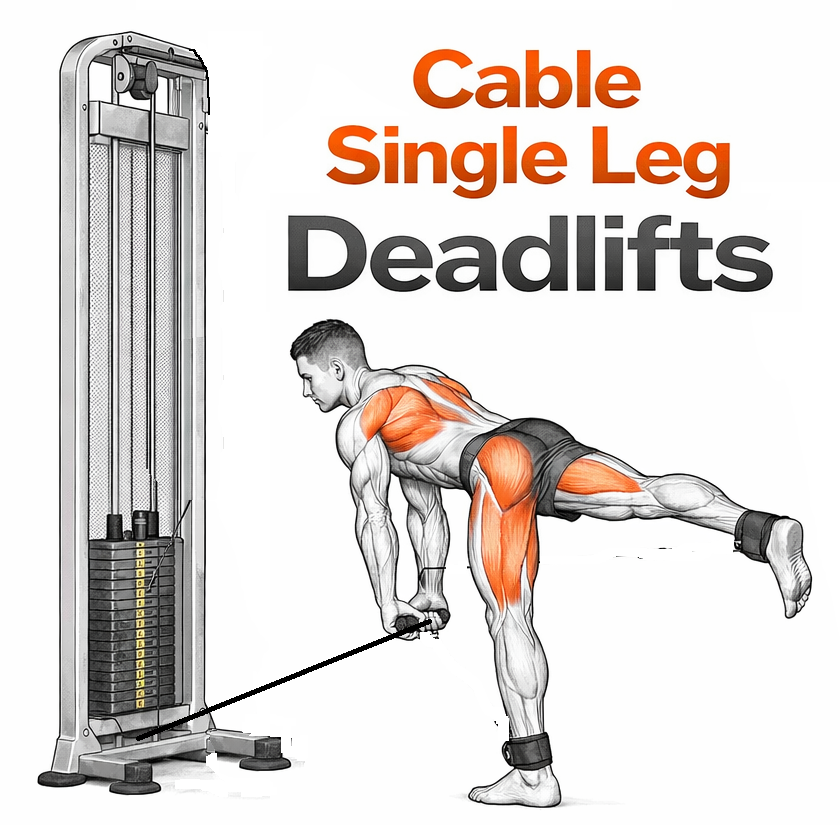
A hip-hinge deadlift with a dumbbell in each hand — an accessible way to build the glutes, hamstrings and back.
Level: Foundation
Primary: Glutes
Secondary: Back - Lower Hamstrings Quads
Movement: Compound
Tags: Hinge
Type: Strength (Weight Lifting)
Equipment: Dumbbell
Target muscles
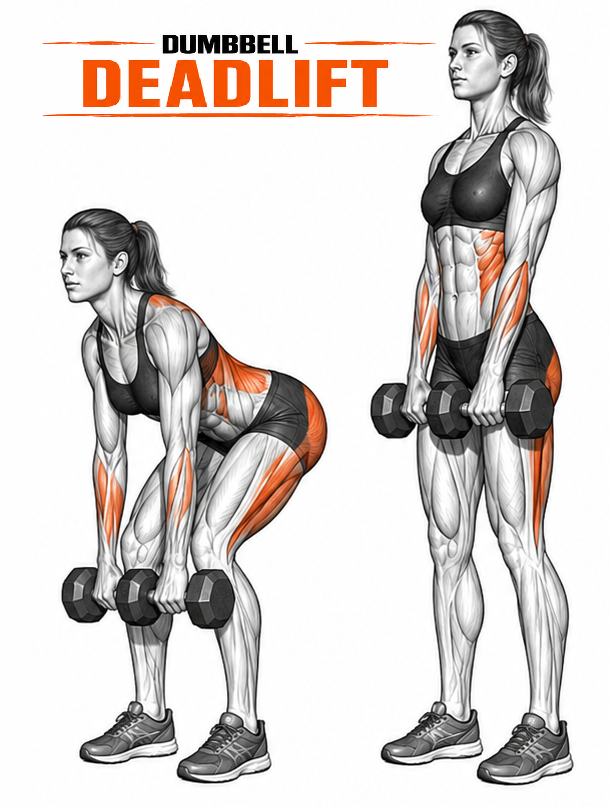
The gluteus maximus and hamstrings extend the hips to lift the load, the spinal erectors hold the back rigid, and the quads assist out of the bottom. Holding dumbbells at the sides keeps the load close to the body's centre and lets the hands travel naturally past the knees, making it a friendly, joint-kind entry point to deadlifting.
How to perform
Setup
Stand with a dumbbell in each hand at the sides of the thighs, feet hip-width, knees soft, back flat, shoulders back.
Execution
Push the hips back and bend the knees to lower the dumbbells down along the outside of the legs, keeping the back flat and the weights close. Lower until the dumbbells reach mid-shin or the floor with a neutral spine. Drive through the whole foot and extend the hips to stand tall, squeezing the glutes at the top. Keep the chest up and the bar of the dumbbells tracking close to the legs throughout.
Common mistakes
- Rounding the lower back instead of hinging with a flat spine.
- Letting the dumbbells drift forward away from the legs.
- Turning it into a squat by bending the knees too early and too much.
- Yanking the weights up with the back rather than driving with the legs and hips.
Progressions and regressions
Regress by reducing the range or using lighter dumbbells while you groove the hinge. Progress by adding load, slowing the eccentric, or moving to a barbell deadlift once the pattern is solid. A Romanian-style version biases the hamstrings more.
Programming notes
Program it as a foundational hinge or posterior-chain builder, 3-4 sets of 8-12 reps. It's ideal for beginners learning to deadlift and as higher-rep accessory work for experienced lifters. Prioritise a flat back and a strong hip drive over the size of the dumbbells.