Treadmill Walking
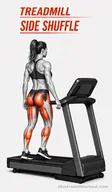
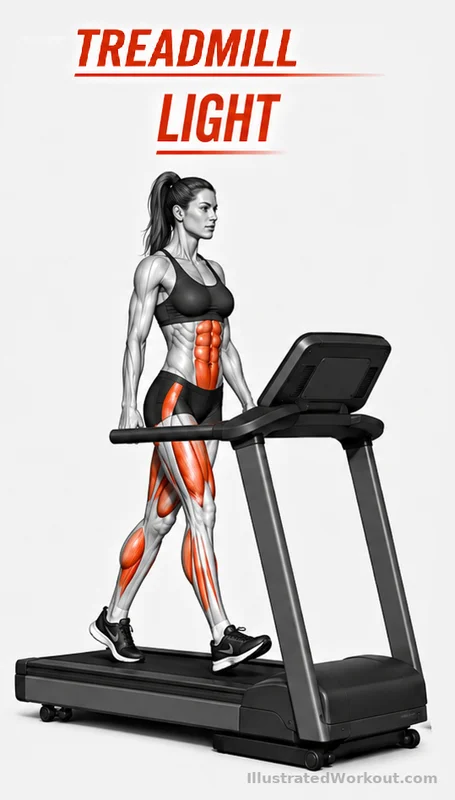
A steady walk on the belt at an easy pace, building low-impact aerobic fitness while the quads, glutes and calves handle the gentle stride.
Want a treadmill conditioning workout?
Our wizard builds one around your time, goal, and equipment in about two minutes. Free — no signup needed.
Make Me a Workout → Just did it? Track your setsA steady walk on the belt at an easy pace, building low-impact aerobic fitness while the quads, glutes and calves handle the gentle stride.
Level: Beginner
Primary: Cardio
Secondary: Glutes Quads
Movement: Isolation
Type: Aerobic (Cardio) Light Activity
Equipment: Treadmill
Target muscles
A relaxed heel-to-toe gait powers the walk: the quads and glutes propel each step, the hamstrings control the leg swing, and the calves push off the toes. The core stays lightly engaged to hold the torso upright, and the effort is easy enough to sustain for long stretches, so the cardiovascular system is the main beneficiary through steady, low-intensity work with almost no joint stress.
How to perform
Setup
Straddle the belt or hold the rails as you set an easy walking speed. Step on, find a comfortable rhythm, and stand tall with the chest up, shoulders relaxed, and the gaze forward. Let the arms swing naturally at the sides rather than gripping the rails, and settle into a relaxed, repeatable stride.
Execution
Walk with a smooth heel-to-toe stride, rolling from the heel through to a push off the toes on each step. Keep the posture tall and the arms swinging in an easy, opposite rhythm to the legs. Breathe comfortably and keep the pace easy enough to hold a full conversation. Let the feet land under the body rather than reaching them far ahead, and keep the steps even and unhurried. Adjust the speed to stay in a comfortable, sustainable zone throughout.
Common mistakes
- Gripping the rails and leaning on them, which unloads the legs and undermines the point of the walk.
- Setting the pace or incline higher than a comfortable, sustainable effort.
- Overstriding by reaching the foot far ahead of the body instead of landing under the hips.
- Staring down at the feet, which rounds the neck and back over a long walk.
Progressions and regressions
Regress by slowing the pace or shortening the duration to build tolerance gradually. Progress by walking longer, lifting the pace toward a brisk power walk, or adding an incline to raise the effort while keeping the impact low. Adding light hand weights or a loaded pack turns it into a heartier conditioning walk.
Programming notes
Use it as accessible low-impact aerobic work, warm-up, or active recovery, ten minutes to an hour at an easy pace on most days. It suits beginners, deload days, and general health goals, and adds daily activity with almost no joint stress. It is gentle enough to do frequently; simply keep the posture tall and let go of the rails so the legs actually do the work.