Treadmill Jogging
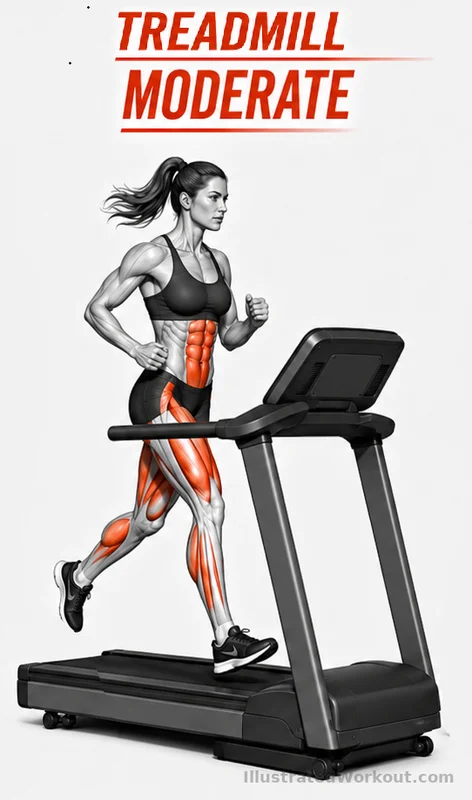
A steady aerobic jog on the belt at a conversational pace, building endurance while the quads, glutes and calves handle the continuous stride.
Want a treadmill conditioning workout?
Our wizard builds one around your time, goal, and equipment in about two minutes. Free — no signup needed.
Make Me a Workout → Just did it? Track your setsA steady aerobic jog on the belt at a conversational pace, building endurance while the quads, glutes and calves handle the continuous stride.
Level: Beginner
Primary: Cardio
Secondary: Glutes Quads
Movement: Isolation
Type: Aerobic (Cardio)
Equipment: Treadmill
Target muscles
Steady jogging is driven by the legs cycling through stride after stride: the quads and glutes propel each push-off, the hamstrings control the swing, and the calves handle the repeated contacts. The core stays lightly engaged to keep the torso upright, and above all the cardiovascular and aerobic systems do the sustained work of supplying oxygen to the working muscles across the effort.
How to perform
Setup
Straddle the belt or hold the rails as you set a comfortable jogging speed. Step on, find the rhythm at a conversational pace, and settle the posture tall with the chest up and shoulders relaxed. Bend the elbows to ninety degrees and let the gaze settle forward on the console or ahead, not down at the feet.
Execution
Jog with a relaxed, repeatable stride, landing under the hips rather than reaching the foot out in front. Keep the cadence quick and light, driving the arms in an easy rhythm with the hands loose. Breathe steadily and stay tall, letting the shoulders sit low and the torso stay quiet. Keep the effort conversational, able to speak in short sentences, and adjust the speed to hold that steady aerobic zone. Let the feet land softly and roll through rather than pounding the belt.
Common mistakes
- Overstriding by reaching the foot out ahead of the hips, which brakes each step and jars the knees.
- Gripping the rails and hunching forward instead of running tall with a free arm swing.
- Setting the pace too fast to sustain, turning a steady aerobic jog into an unsustainable effort.
- Staring down at the feet, which rounds the neck and back over time.
Progressions and regressions
Regress to a brisk walk or a walk-jog alternation to build the base. Progress by extending the duration, lifting the pace toward a tempo run, or adding a gentle incline to raise the effort without pounding. Structured intervals of faster and easier segments develop fitness beyond a flat steady jog.
Programming notes
Use it as steady-state aerobic training, twenty to sixty minutes at a conversational pace two to four times a week, or as an easy warm-up and cool-down around harder work. It builds the aerobic base most training plans rest on and is low-skill and accessible. Keep footwear supportive, progress mileage gradually, and ease off if the joints ache from the repetitive impact.