Sled Drag Forward
The quads and glutes drive a loaded sled forward from a waist harness, a leg-powered drag with almost no eccentric stress on the joints.
Want a sled glute workout?
Our wizard builds one around your time, goal, and equipment in about two minutes. Free — no signup needed.
Make Me a Workout → Just did it? Track your setsThe quads and glutes drive a loaded sled forward from a waist harness, a leg-powered drag with almost no eccentric stress on the joints.
Level: Foundation
Primary: Glutes Quads
Secondary: Calves Hamstrings
Movement: Compound
Tags: Loaded Carry
Type: Anaerobic Intervals (HIIT / Bootcamp / Circuit) Functional Fitness (Obstacle & Hybrid) Strength (Weight Lifting)
Equipment: Sled
Target muscles
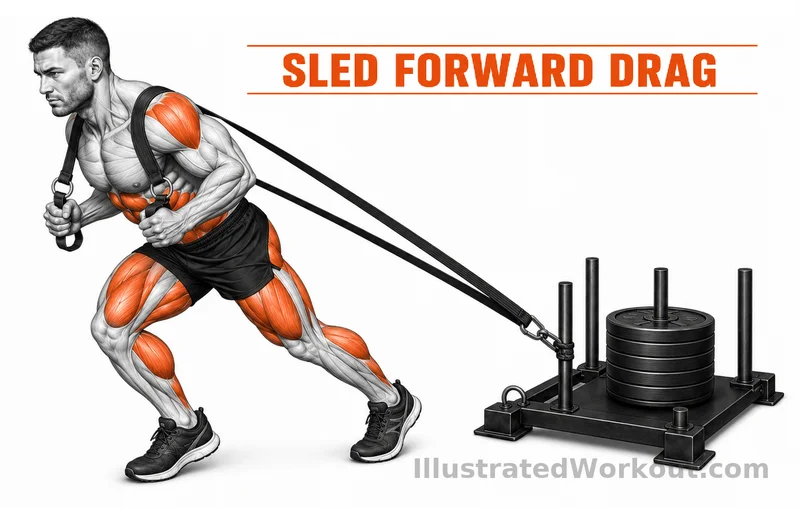
Each stride is powered by the quadriceps extending the knee and the glutes driving the hip through, so those two groups do the bulk of the work against the sled's drag. The hamstrings assist as the hip finishes and stabilise the pull, while the calves push off the balls of the feet on every step. The trunk braces against the harness tension so the load transfers cleanly from legs to strap, and the effort is concentric-only, which spares the muscles from the soreness of lengthening under load.
How to perform
Setup
Fasten a harness or belt around the waist with the strap running back to the loaded sled. Walk forward until the line is taut, then lean the torso slightly forward into the strap so your weight helps pull. Set the feet hip-width, brace the abs, and take the weight onto the mid-foot ready to drive.
Execution
Walk forward with strong, deliberate steps, driving each foot into the ground and extending the hip and knee to move the sled. Keep the forward lean so the big leg muscles do the pulling rather than the lower back. Maintain continuous turnover — the sled should keep moving rather than stopping and starting between steps. Push through the ball of the foot on each stride and keep the arms swinging naturally for rhythm. Breathe steadily and hold the lean consistent as the legs fatigue over the distance.
Common mistakes
- Standing too upright, which loads the lower back into the harness instead of letting the quads and glutes pull.
- Taking tiny shuffling steps that stall the sled rather than driving long, powerful strides.
- Letting the pace collapse mid-length so the sled stops and the leg drive has to restart each step.
- Loading so heavy that the stride shortens and the hips can no longer extend fully.
Progressions and regressions
Regress by lightening the load or shortening the lane so form holds for the whole drag. A push-strap or shoulder harness lets beginners find the forward lean before adding weight. Progress by adding plates, extending the distance, or driving harder for a timed sprint. A backward sled drag facing the sled shifts the emphasis onto the quads, and a hand-held strap drag adds grip and upper-back demand.
Programming notes
Run it as leg-focused conditioning or accessory work, four to eight lengths of twenty to forty metres, or thirty-second efforts with walk-back recovery. Because the drag is concentric-dominant it builds work capacity and leg strength without the next-day soreness of squats, so it fits recovery days and in-season training well. Keep the lean and stride quality high; stop the set once the steps shorten and the sled starts to stall.