BOSU Lunge
A forward or reverse lunge with one foot on the BOSU dome, building single-leg strength while the unstable base sharpens balance.
Level: Intermediate
Primary: Quads
Secondary: Abs Glutes Hamstrings
Movement: Compound
Tags: Balance / Stability Lunge Unilateral
Type: Strength (Weight Lifting)
Equipment: Balance Trainer
Target muscles
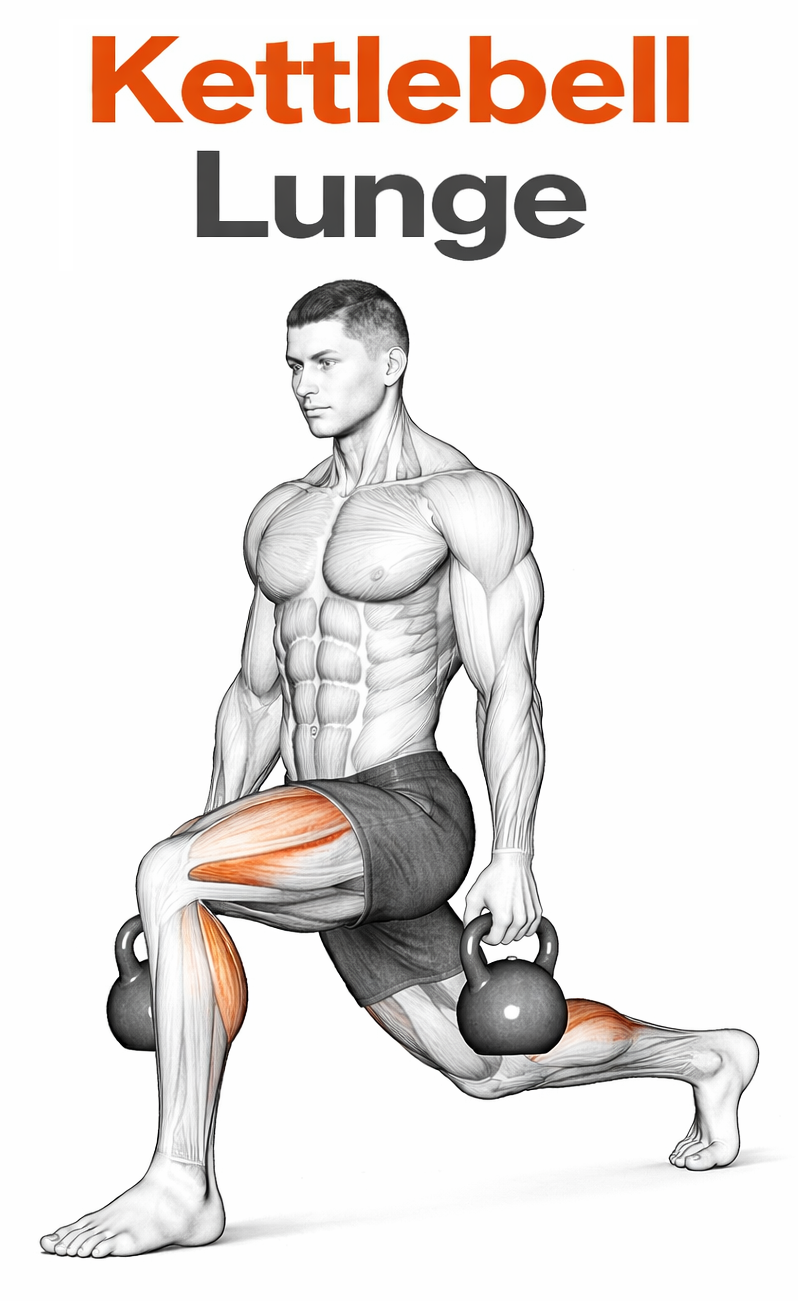
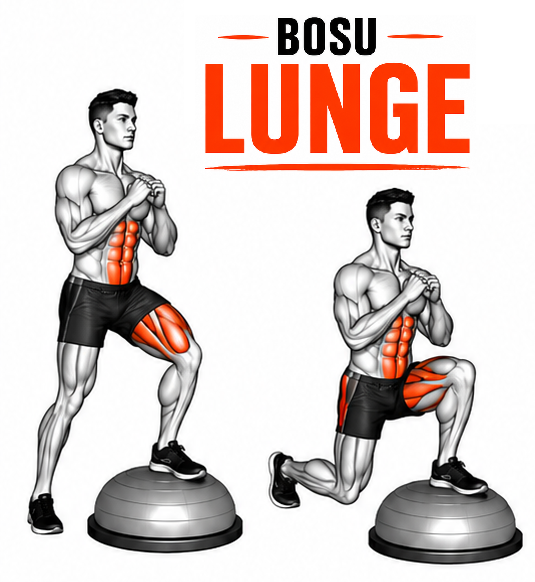
The lunge is a single-leg builder: the quads of the front leg extend the knee, the gluteus maximus and hamstrings extend the hip, and the calf and ankle stabilisers steady you on the moving dome. The trunk braces to keep you upright as the unstable surface tries to tip you side to side. Putting a foot on the BOSU forces the smaller stabilising muscles to fire far more than a flat-ground lunge does.
How to perform
Setup
Set one foot squarely on the centre of the dome and the other a stride behind on the floor (or in front, for a reverse lunge onto the dome). Stand tall, square the hips, and brace the core before lowering.
Execution
Lower straight down by bending both knees, letting the front knee track over the foot until the back knee hovers just above the floor. Keep your torso tall and the front heel pressed into the dome, controlling the slight wobble with your foot and core. Drive through the dome-side foot to stand back up without letting the knee drift inward. Finish the set, then swap legs so both work on the unstable base.
Common mistakes
- Letting the front knee cave inward as you descend or stand.
- Leaning the torso forward and shifting load off the working leg.
- Pushing off the back foot instead of driving through the dome-side leg.
- Bouncing out of the bottom rather than controlling the wobble.
Progressions and regressions
Regress to a static split squat with the back foot on the dome, or do the lunge on flat ground until balance improves. Progress by holding dumbbells, adding a pause at the bottom, or driving the rear knee up into a balance hold at the top of each rep.
Programming notes
Use it as lower-body accessory or unilateral strength work, 2-3 sets of 8-12 reps per leg. The instability caps the load you can use, so chase clean reps over heavy weight. It complements a heavy bilateral squat earlier in the session by addressing single-leg balance and any left-right strength gap.