Sandbag Curl
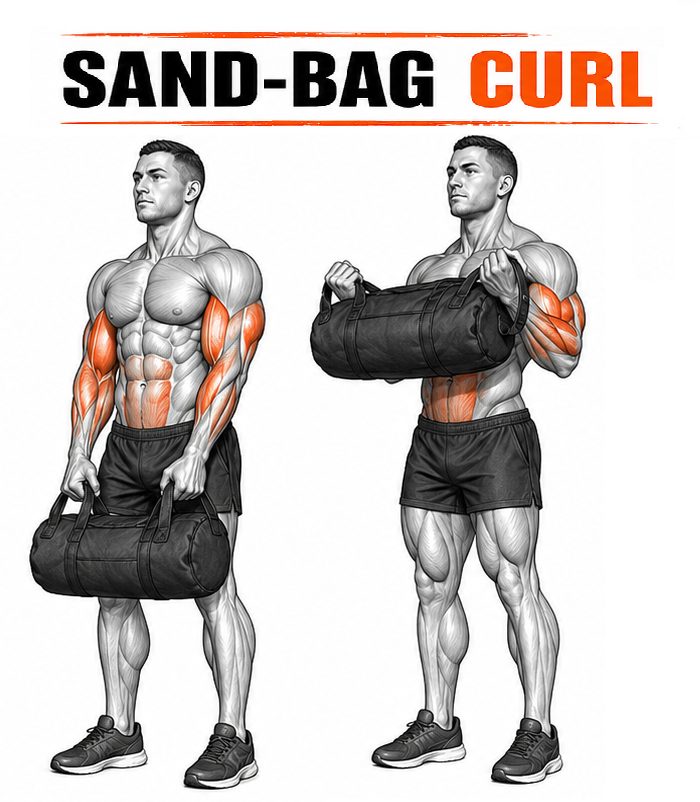
Biceps curl using a thick, awkward sandbag, where the fat body of the bag turns grip and forearm strength into the real limiter.
Level: Beginner
Primary: Biceps
Secondary: Forearms
Movement: Isolation
Tags: Pull
Type: Strength (Weight Lifting)
Equipment: Sandbag
Target muscles
The biceps brachii and brachialis flex the elbows to curl the bag up, exactly as in a dumbbell curl. What changes is the demand on the forearm flexors and the brachioradialis: the bag's bulky, soft body has no neat handle, so the grip works overtime just to hold it, and the thick effective diameter recruits the forearms far harder than a bar would. The front deltoids and the abs stabilise lightly to keep the elbows pinned and the torso still.
How to perform
Setup
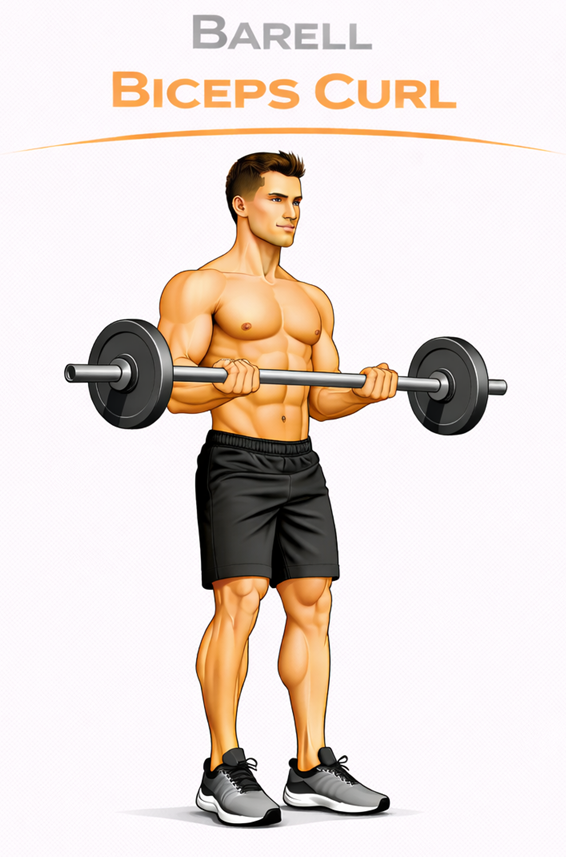
Stand tall with feet hip-width and hold the bag in front of your thighs, gripping it by its side handles or hugging the ends of its body with both hands. Pin your elbows to your sides, brace the abs, and set the shoulders down and back.
Execution
Curl the bag up toward your shoulders by flexing the elbows, keeping the upper arms still so the work stays on the biceps rather than swinging from the shoulders. Squeeze hard at the top where the biceps are fully shortened, then lower the bag slowly back to the start under control, resisting the pull all the way down. Keep the torso upright and avoid leaning back to heave the load up. The shifting filler means you may feel the bag try to roll in your hands — grip tighter rather than letting it sag.
Common mistakes
- Swinging the torso and using body english to fling the bag up instead of curling it.
- Letting the elbows drift forward, which turns the curl into a partial front raise.
- Dropping the bag quickly on the way down and skipping the strength-building eccentric.
- Loosening the grip mid-set so the bag slips, breaking the tension on the biceps.
Progressions and regressions
Regress by using a lighter bag or curling with both hands hugging the body for a more secure hold. Progress by adding weight, slowing the lowering phase to three seconds, or curling one end of the bag at a time for a unilateral challenge. A bag held in a hammer-grip position shifts more emphasis onto the brachioradialis and forearms.
Programming notes
Use it as arm and grip accessory work at the end of a session, 3 sets of 10-15 reps. The heavy grip component means it doubles as forearm training, which is handy when equipment is limited. Pair it with a triceps movement to balance the arms, and keep the reps controlled — the awkward load rewards strict form over heavy momentum-driven sets.