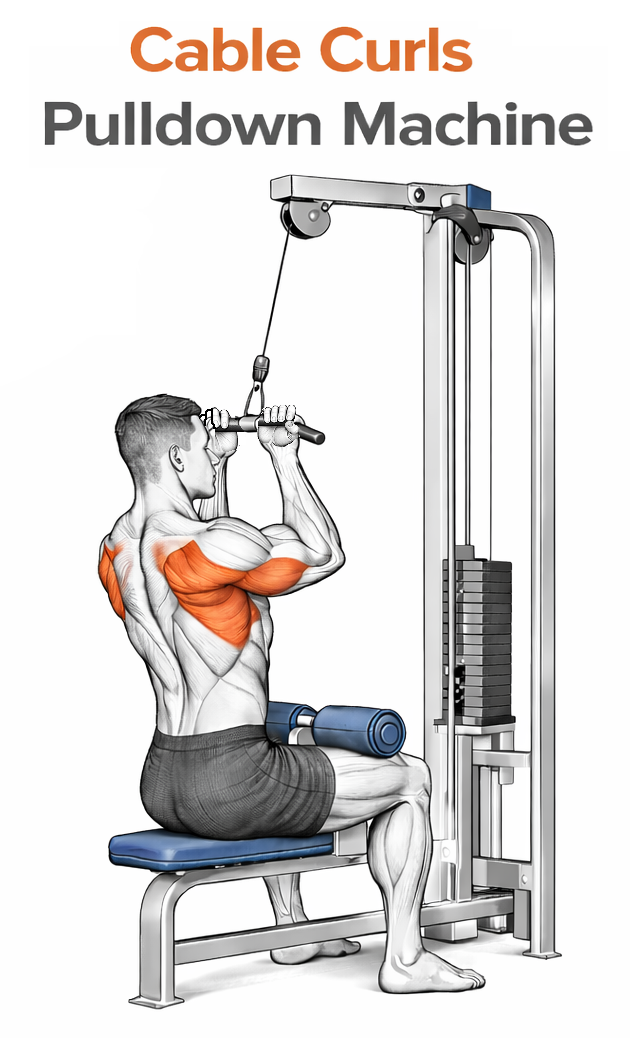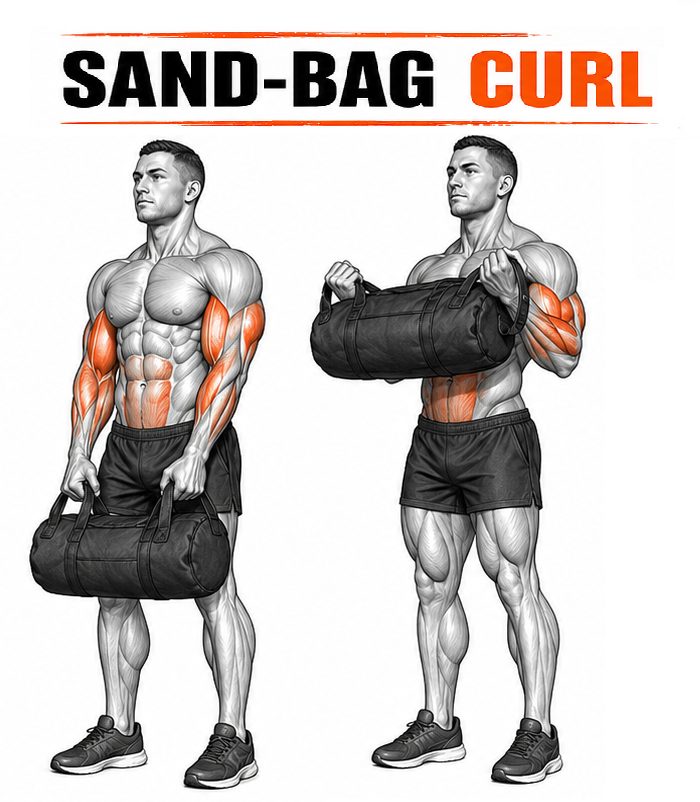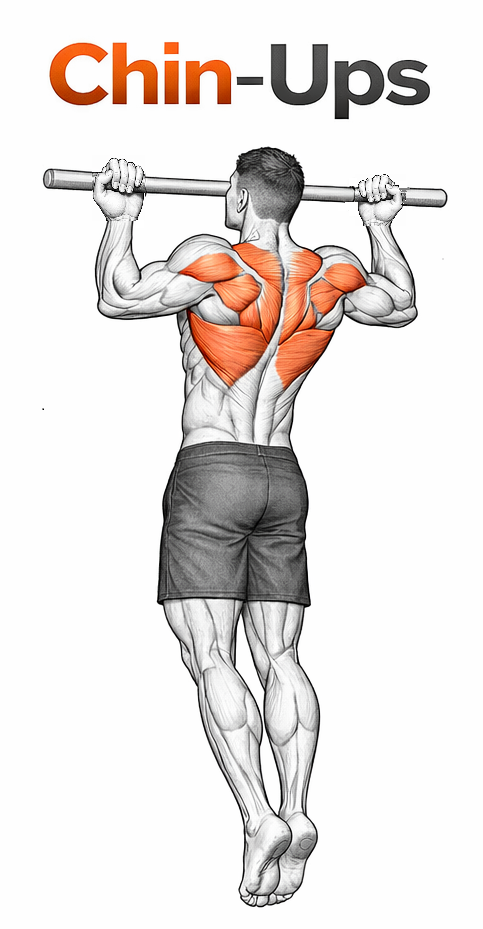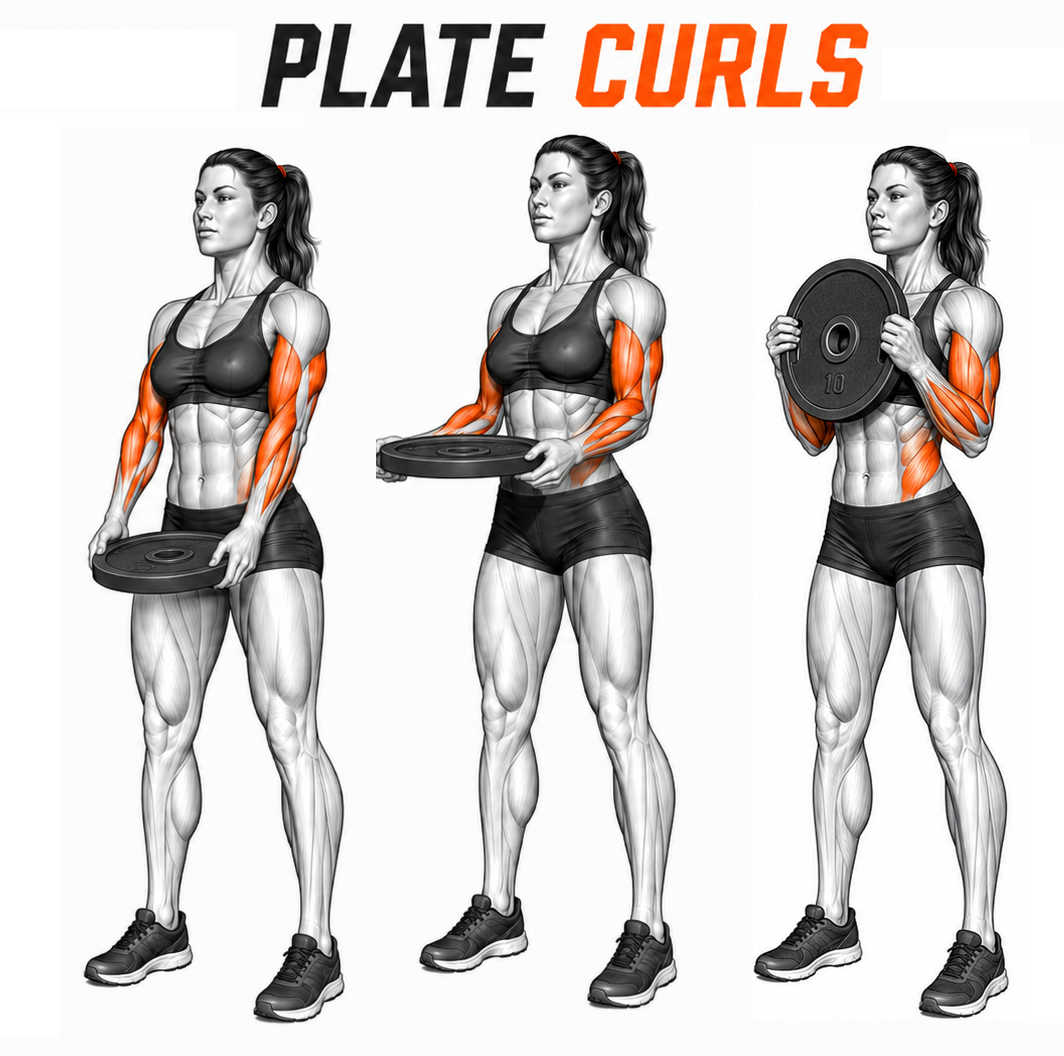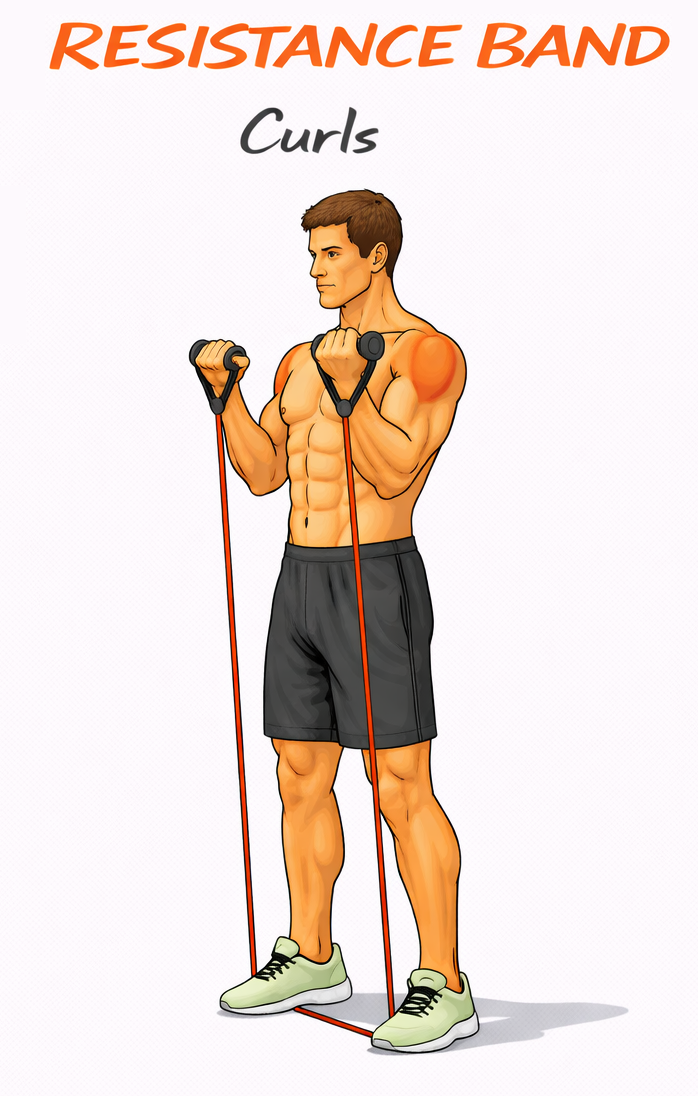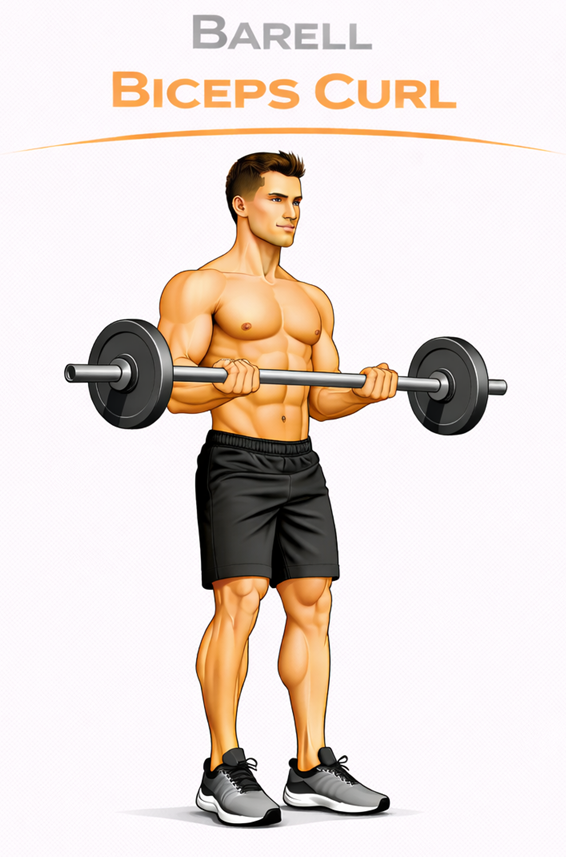
Barbell Biceps Curl
Standing barbell curl — the foundational mass-builder for the biceps, simple, hard to dose wrong, and effective when honest reps are used.
Level: Foundation
Primary: Biceps
Movement: Isolation
Tags: Pull
Type: Strength (Weight Lifting)
Equipment: Barbell
Sports: Baseball Wrestling
Target muscles
The biceps brachii (long head and short head) is the prime mover. The brachialis sits underneath and contributes meaningfully to elbow flexion, especially in the lower half of the rep. The brachioradialis of the forearm assists at the elbow and gets a real working stimulus, particularly with a wider grip. With strict form, the anterior deltoids should not be doing much; if they're burning, you're swinging.
How to perform
Setup
Stand tall, feet hip-width apart, bar held in a supinated grip slightly wider than shoulder-width. Elbows pinned to your sides — imagine pinching a sheet of paper between your upper arm and ribcage. Wrists neutral, neither cocked back nor curled in. Shoulders down and back. A slight bend in the knees keeps you from locking out and rocking.
Execution
Curl the bar up by flexing at the elbow only. The upper arms shouldn't drift forward as the bar rises — if they do, you've recruited the front delts to help. Stop short of locking the bar against your shoulders; pause briefly at peak contraction (about chin height for most). Lower the bar over a count of two to three to the fully extended position — don't slam through the negative. The down phase is where most of the muscle-building stimulus lives, so don't skip it. Keep the wrists straight; let the bar hang on the palms, not the fingers, to take stress off the wrist tendons.
Common mistakes
- Swinging the torso to launch the bar. If the upper body is moving, the load is too heavy. Drop the weight and own the rep.
- Letting the elbows drift forward to "shorten" the lever. Pin them to your sides through every rep.
- Curling halfway down between reps to keep tension on the biceps. There's a place for that, but it's not in a basic strength curl. Full range, every rep.
- Cocking the wrists back to "include the forearms." It just irritates the wrists.
- Using a thumbless grip — risk for no benefit. Wrap the thumbs.
Progressions and regressions
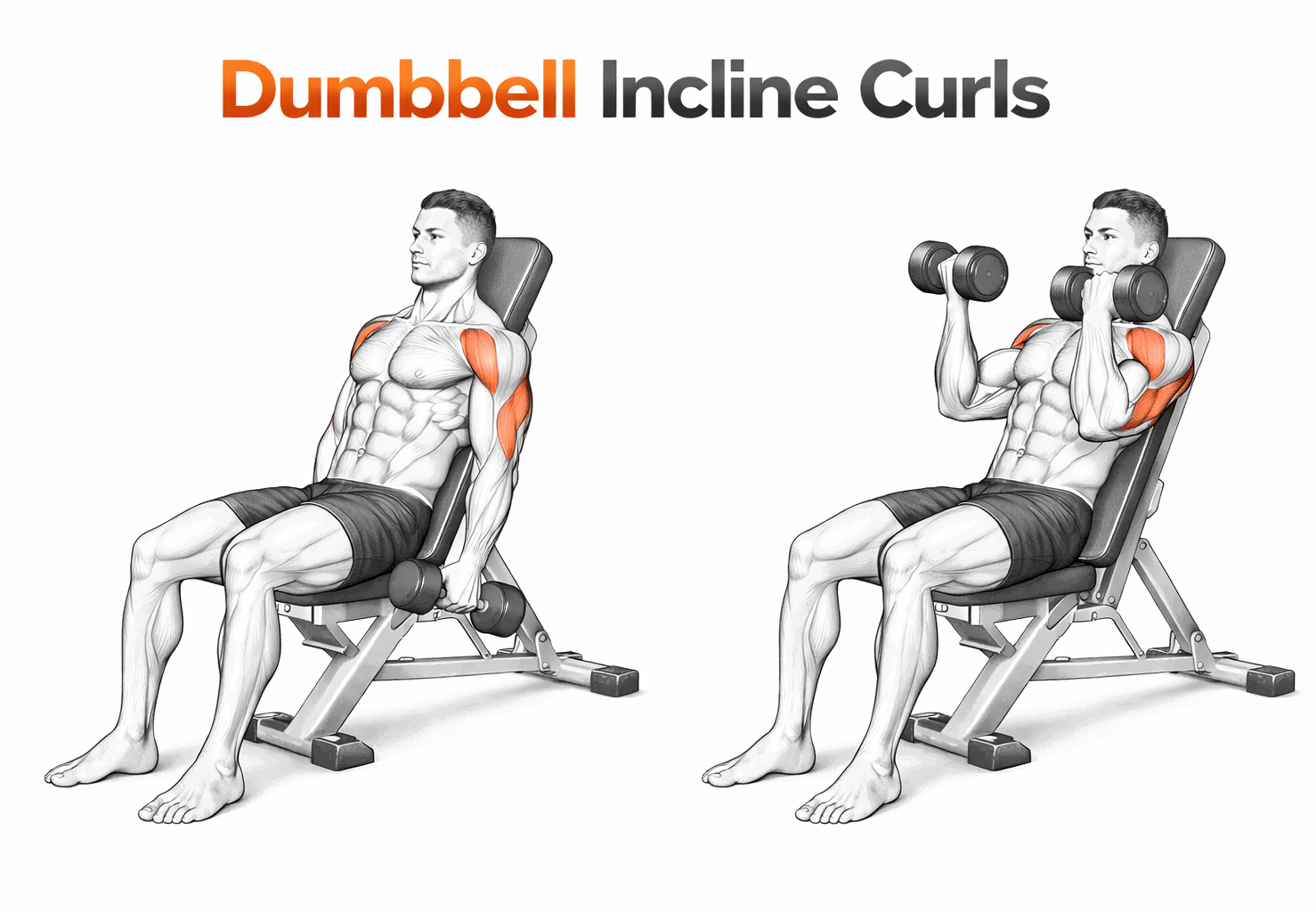
Regress to dumbbell curls if a straight bar bothers your wrists; the EZ-bar is the in-between choice and easier on most lifters' joints than a straight Olympic bar. To progress, layer in cheat curls (a small body swing on the last 1-2 reps of a set after honest strict reps), 21s (seven half-reps bottom, seven half-reps top, seven full), and incline dumbbell curls for a deeper stretch. Once you can curl half your bodyweight strictly, gains slow — variation matters more than weekly load increases.
Programming notes
Curls are accessory work, not main lifts. Two or three sessions per week, 3-4 sets of 8-12 reps, after the heavy compound pulls (rows, pull-ups, deadlifts). Stack them with triceps work for an arm day if that fits the split, or tag them onto the end of back day. Don't program them right before a session that needs grip strength — fried biceps tendons leak into chin-up and deadlift performance the next day.