Push-Up to Downward Dog
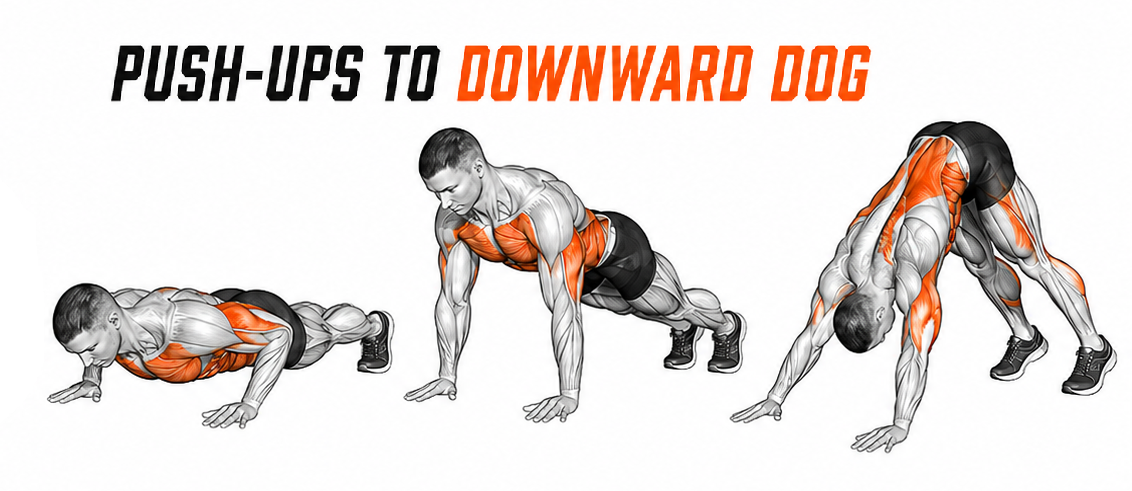
A push-up flowed into a downward-dog press-back, blending chest and triceps pressing with a dynamic shoulder and hamstring stretch.
Level: Foundation
Primary: Chest
Secondary: Shoulder Triceps
Movement: Compound
Tags: Push
Type: Flexibility (Dynamic Stretching) Strength (Weight Lifting)
Equipment: Body Weight
Target muscles
The pectoralis major, anterior deltoids and triceps drive the push-up portion, while the press back into downward dog loads the shoulders overhead and stretches the lats, hamstrings and calves. The core works to control the transition between the two positions, and the serratus anterior helps push the floor away in the dog. It marries a pressing strength stimulus with a mobility component, which is why it fits both strength and flexibility work.
How to perform
Setup
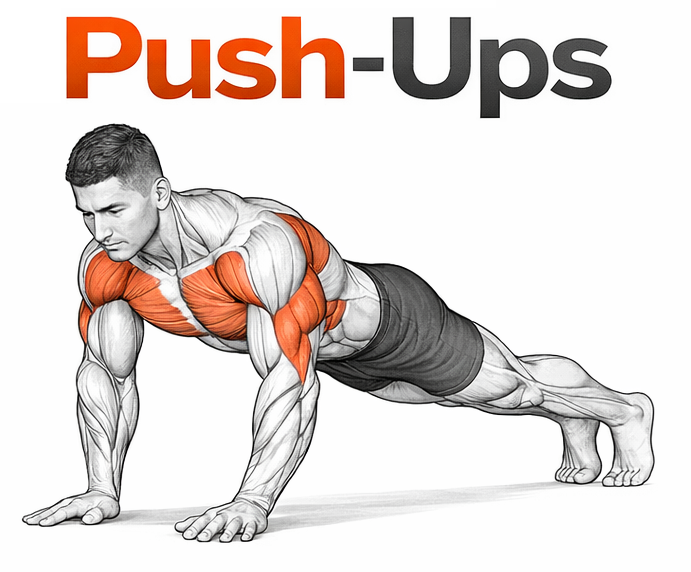
Begin in a high plank with the hands under the shoulders, arms straight, and the body in one straight line. Brace the abs and set the shoulders firm over the wrists so the press starts from a solid base.
Execution
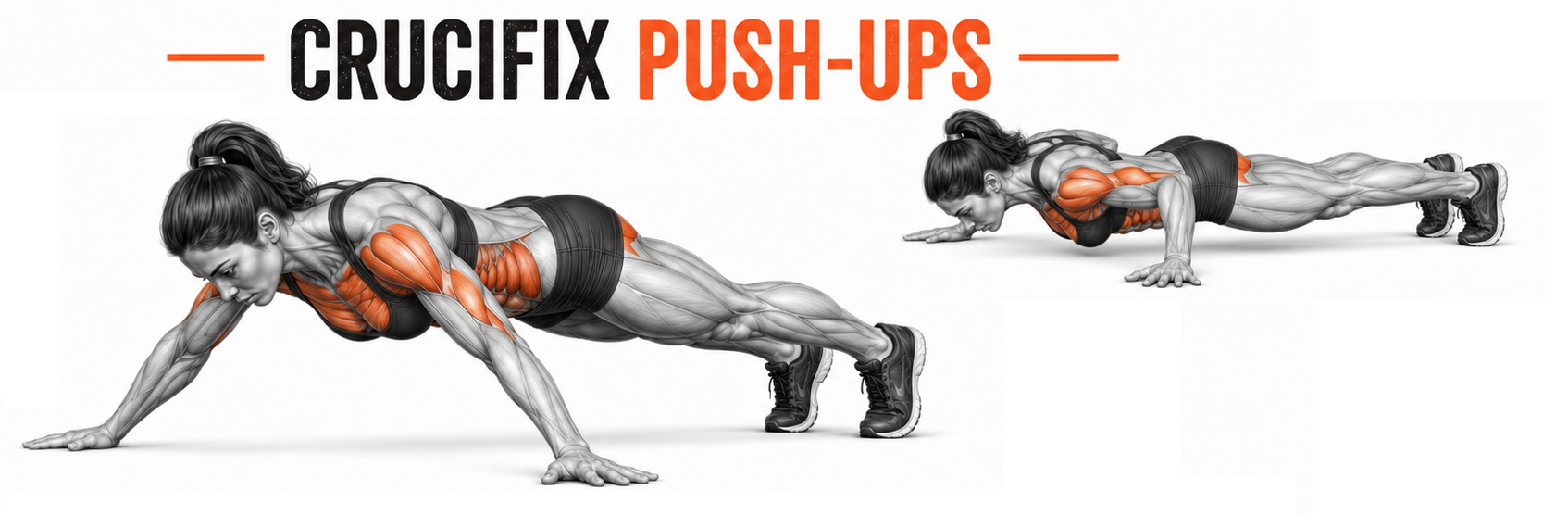
Perform a controlled push-up, lowering the chest toward the floor with the elbows tucked, then pressing back up to the plank. From the top, push the hips up and back into downward dog, straightening the arms and driving the chest toward the thighs while pressing the heels down toward the floor for a hamstring and calf stretch. Hold the dog for a breath, then return to the plank and flow into the next push-up. Move smoothly between the two shapes, keeping the arms straight in the dog and the body rigid in the push-up, and breathe with the rhythm of the movement.
Common mistakes
- Rushing through the downward dog without actually reaching the chest back and the heels down, which loses the stretch.
- Letting the hips sag during the push-up portion instead of keeping a rigid plank line.
- Bending the arms in the dog rather than pushing the floor away through straight arms.
- Rounding the upper back hard in the dog instead of lengthening the spine and reaching the chest toward the thighs.
Progressions and regressions
Regress by performing the push-up from the knees, or by reducing the depth of the downward dog if hamstring or shoulder mobility is limited. Progress by adding a pause at the bottom of the push-up, deepening the dog, or flowing through a cobra or upward dog for a fuller vinyasa. Slowing the whole sequence increases both the strength and the mobility benefit.
Programming notes
Program it as a pressing-and-mobility movement in a warm-up, a flow, or a circuit, two to three sets of six to twelve reps. It primes the shoulders and posterior chain while building light pressing volume, so it works well early in a session or on a mobility-focused day. Keep both halves honest — a real push-up and a real stretch — rather than skimming through to rack up reps.