Pike Ups
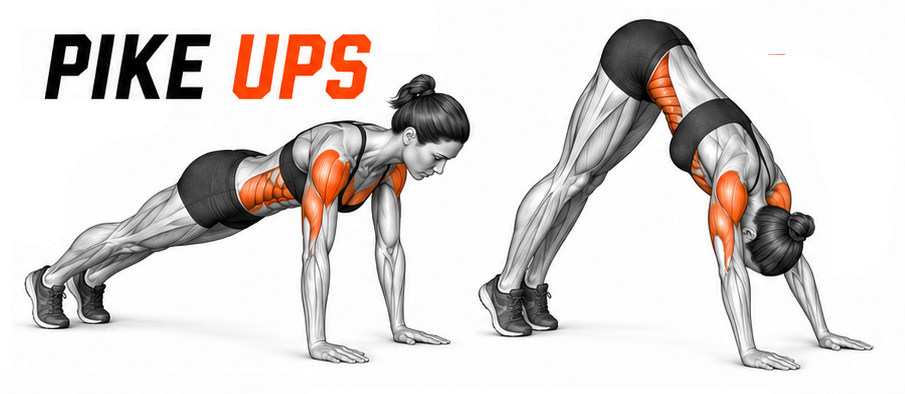
A plank-to-pike drill that drives the hips straight up toward the ceiling using the abs, training dynamic core flexion and shoulder stability.
Level: Foundation
Primary: Abs
Secondary: Shoulder
Movement: Isolation
Tags: Core Stability
Type: Functional Fitness (Obstacle & Hybrid) ISO
Equipment: Body Weight
Target muscles
The rectus abdominis and hip flexors produce the pike, folding the body at the hips to lift the seat toward the ceiling, while the lower abs work hardest at the top of the range. The shoulders, chest and serratus anterior stabilise the supporting arms throughout, and the hamstrings lengthen as the hips hinge. It bridges the gap between a static plank and full pike compressions like leg raises and toes-to-bar.
How to perform
Setup
Begin in a high plank with the hands under the shoulders, arms straight, and the body in a straight line from heels to head. Brace the abs and set the shoulders firm over the wrists. Keeping the feet on the floor or on sliders makes the movement smoother.
Execution
Without bending the knees, drive the hips straight up toward the ceiling by contracting the abs, walking or sliding the feet in slightly as the body folds into an inverted V like a downward dog. Push the floor away through straight arms and let the head settle between the arms at the top. Pause briefly, feeling the abs and shoulders work, then lower the hips back down under control to a flat plank without letting them sag below the line. Keep the legs as straight as your hamstring flexibility allows and move deliberately rather than swinging up.
Common mistakes
- Bending the knees to lift the hips, which lets the legs do the work instead of the abs.
- Letting the hips drop below the plank line at the bottom and stressing the lower back.
- Shrugging the shoulders up to the ears rather than pressing the floor away through long arms.
- Swinging up with momentum instead of pulling the hips up with a deliberate ab contraction.
Progressions and regressions
Regress by piking only partway, bending the knees toward the chest in a knee-tuck, or doing the same fold with the feet on sliders to reduce friction. Progress by piking higher toward a vertical pike, slowing the tempo, or elevating the feet on a box. Performing them on rings or moving toward a pike handstand sharply increases the shoulder and core demand.
Programming notes
Program it as core and shoulder-stability work, three sets of eight to twelve controlled reps, or hold the top pike for time. It fits a gymnastics-strength or functional circuit and serves as a stepping stone toward harder compression skills. Keep the reps strict and avoid bouncing; the value is in the controlled fold, not in racking up sloppy repetitions.