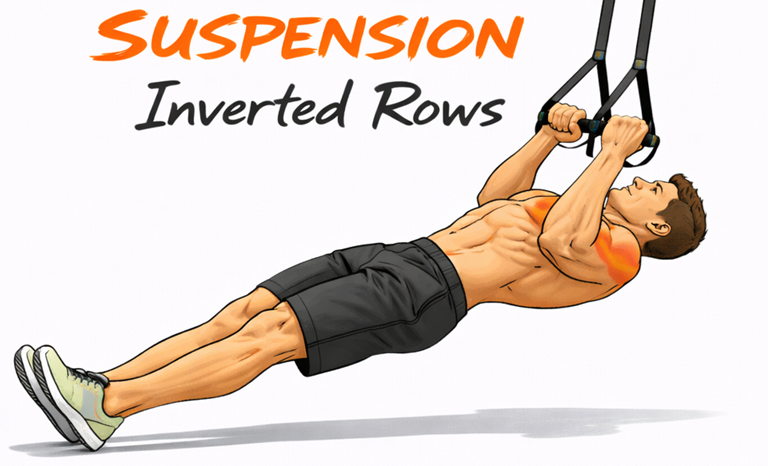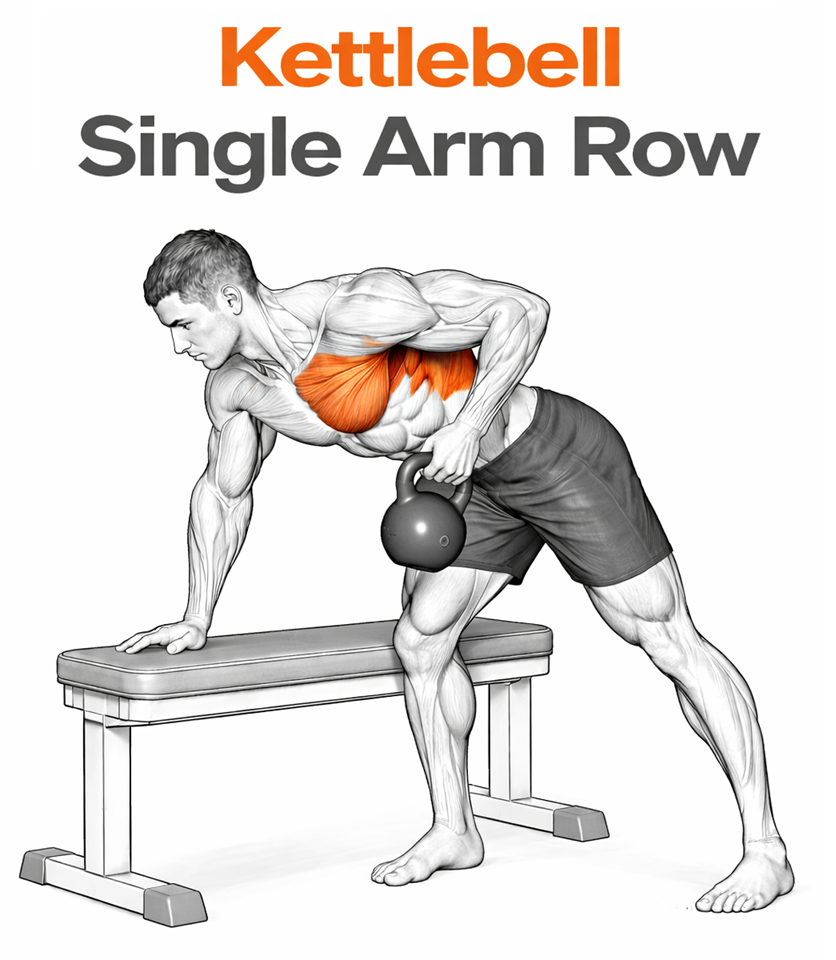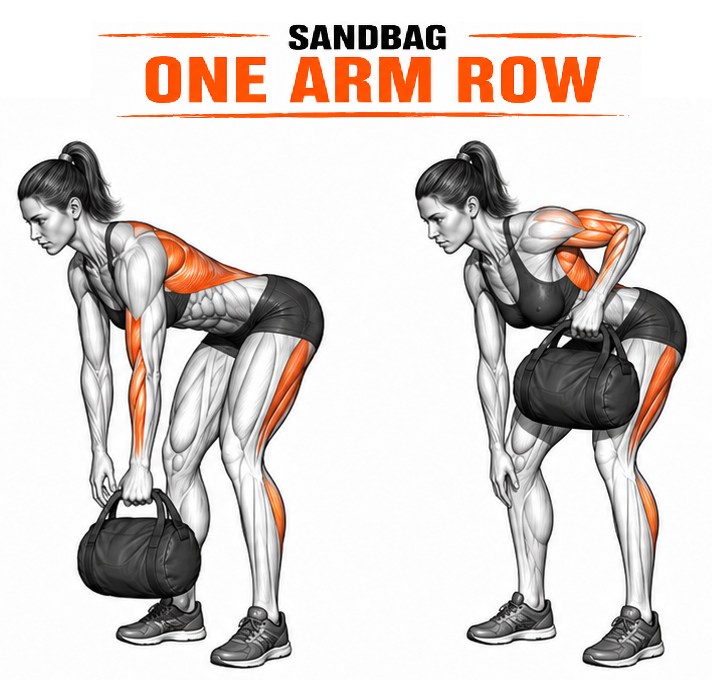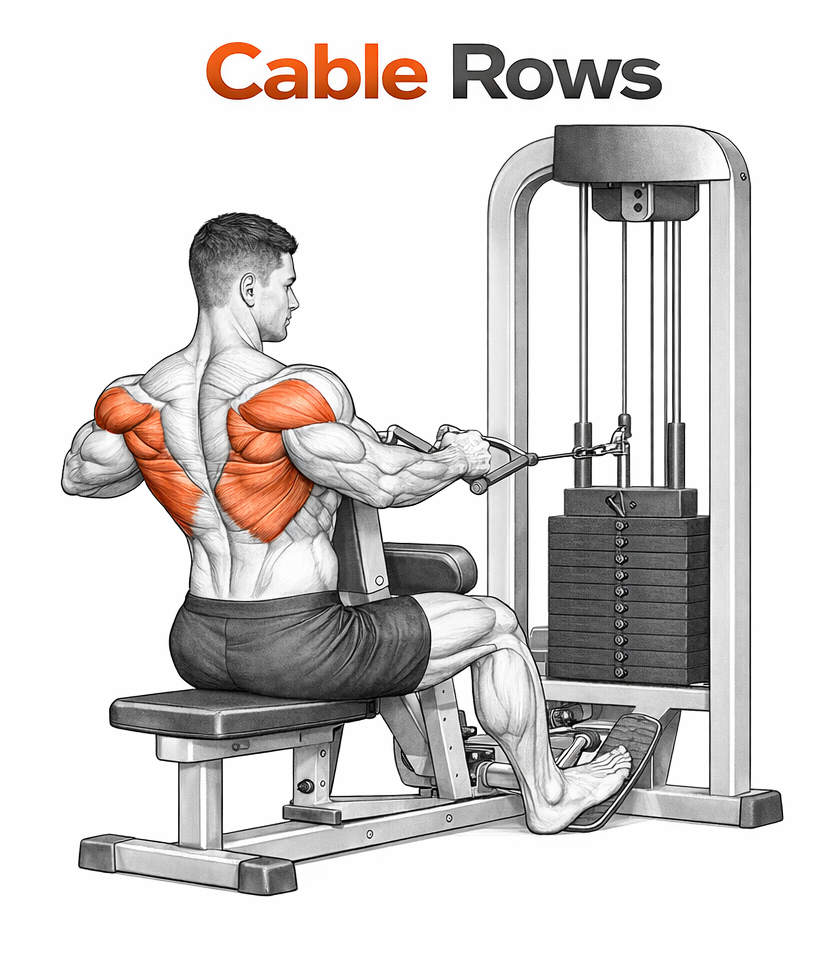
Inverted Rows
Bodyweight horizontal row from a hip-height bar — fundamental pulling pattern, accessible and scalable.
Level: Foundation
Primary: Back - Upper
Secondary: Biceps
Movement: Compound
Tags: Pull
Type: Functional Fitness (Obstacle & Hybrid)
Equipment: Body Weight
Sports: Football Rugby Swimming Wrestling
Target muscles
The latissimus dorsi drive the pull. The rhomboids and middle trapezius retract the scapulae. The biceps and brachioradialis assist. The trunk braces continuously to keep the body straight. The glutes hold hip extension. As a horizontal pulling movement, the inverted row is the bodyweight counterpart to a barbell row — accessible and brutal at the right angle.
How to perform
Setup
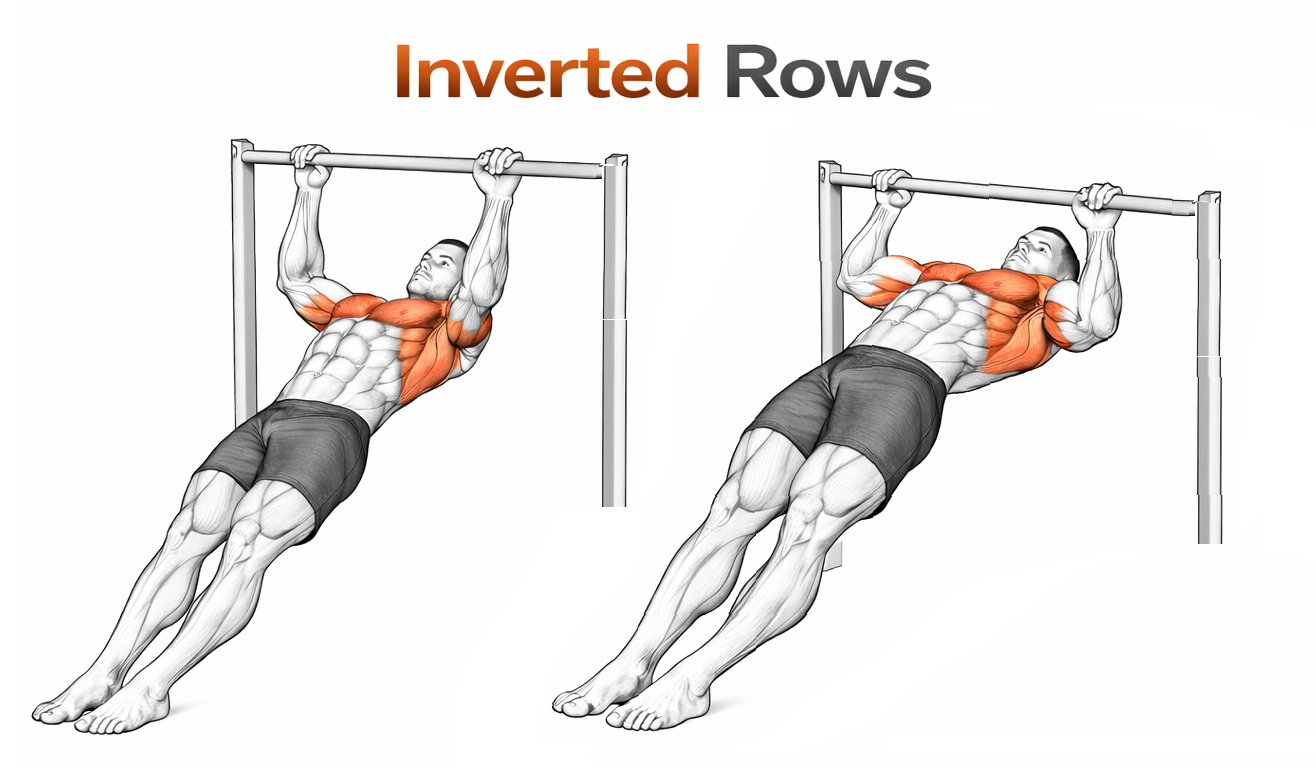
Set a bar at hip height in a rack or use a sturdy table. Grip the bar with an overhand or underhand grip slightly wider than shoulder-width. Hang beneath it with the body in a straight line, heels on the floor (or feet elevated for more difficulty). Trunk braced.
Execution
Pull the chest up to the bar by retracting the shoulder blades and driving the elbows back. The body stays in a straight line throughout — no sagging hips, no piking up. Pause briefly at peak contraction. Lower the body back down with control. The eccentric matters; slow it down.
Common mistakes
- Sagging hips. Maintain the body line.
- Cutting the top range. Touch or near-touch the chest to the bar.
- Pulling primarily with the biceps. The back leads.
- Letting the bar approach the chest unevenly. Symmetric pull.
- Going too fast. Slow controlled.
Progressions and regressions
Regress by raising the bar (more upright body angle = easier). To progress, lower the bar, elevate the feet, add a weighted vest, or move to single-arm inverted rows.
Programming notes
Excellent foundational pull. 3-4 sets of 8-12 reps, two times a week. Pair with push-ups for balanced upper-body bodyweight work.