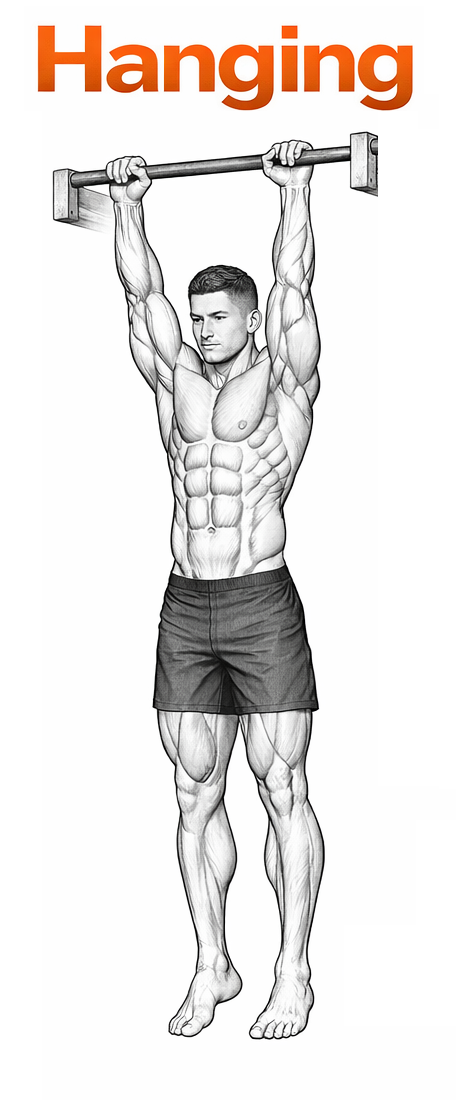
Hang
Passive bar hang with shoulders packed — fundamental shoulder, grip, and decompression position.
Level: Beginner
Primary: Full Body
Movement: Isolation
Type: ISO
Equipment: Pull-Up Bar
Sports: Gymnastics Rock Climbing
Target muscles
The forearms and grip muscles work continuously. The lats and trunk maintain the body position. The shoulders are loaded eccentrically — packed but not actively pulling. The decompression of the spine and shoulders is the real benefit; many lifters use the hang as a daily reset for tight shoulders. As a foundational skill, the hang is the prerequisite for every pull-up variation.
How to perform
Setup
Grip a pull-up bar with hands slightly wider than shoulder-width, palms facing forward (or whatever grip your program calls for). Hang with arms fully extended, body straight. Slightly engage the core; squeeze the glutes lightly.
Execution
Hold the position with shoulders slightly depressed and retracted — packed, not loose. The wrists are aligned with the forearms. Breathe in slow controlled cycles. Hold for the prescribed duration. Drop carefully when the time is up.
Common mistakes
- Loose shoulders shrugged up to the ears. Pack them down and back.
- Holding the breath. Breathe in cycles.
- Going too long too soon. Build the grip and forearm endurance gradually.
- Not warming the shoulders before going overhead.
- Dropping carelessly from the bar.
Progressions and regressions
Regress to dead hangs from a bar at chest height with feet still touching the floor (active hang) until grip strength is sufficient. To progress, increase hang duration, work single-arm hangs, or use a thicker bar for greater grip work.
Programming notes
Excellent foundational work. 3-4 sets of 30-60 seconds, two or three times a week. Pair with pull-up work for complete grip and pulling development. Daily hangs (even just 15-30 seconds) are excellent for shoulder health.