Dumbbell Shoulder Press
Standing or seated dumbbell shoulder press — the foundational vertical press, independent paths, shoulder-friendly.
Level: Foundation
Primary: Shoulder
Secondary: Triceps
Movement: Compound
Tags: Push
Type: Strength (Weight Lifting)
Equipment: Dumbbell
Sports: Football Rugby Swimming
Target muscles
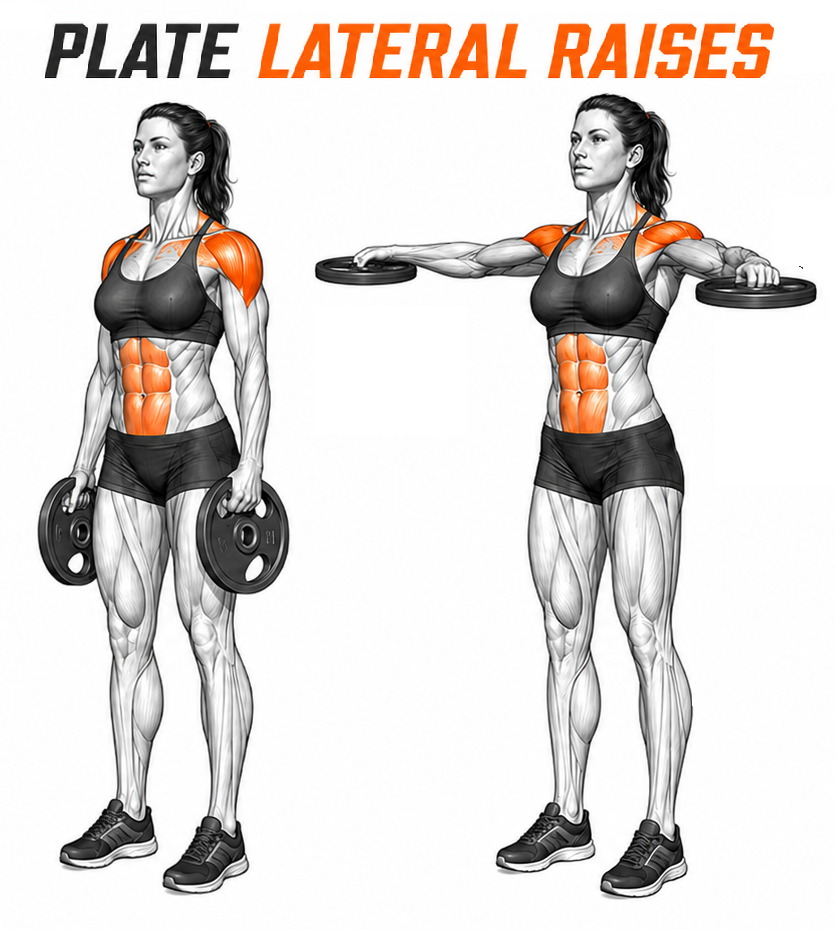
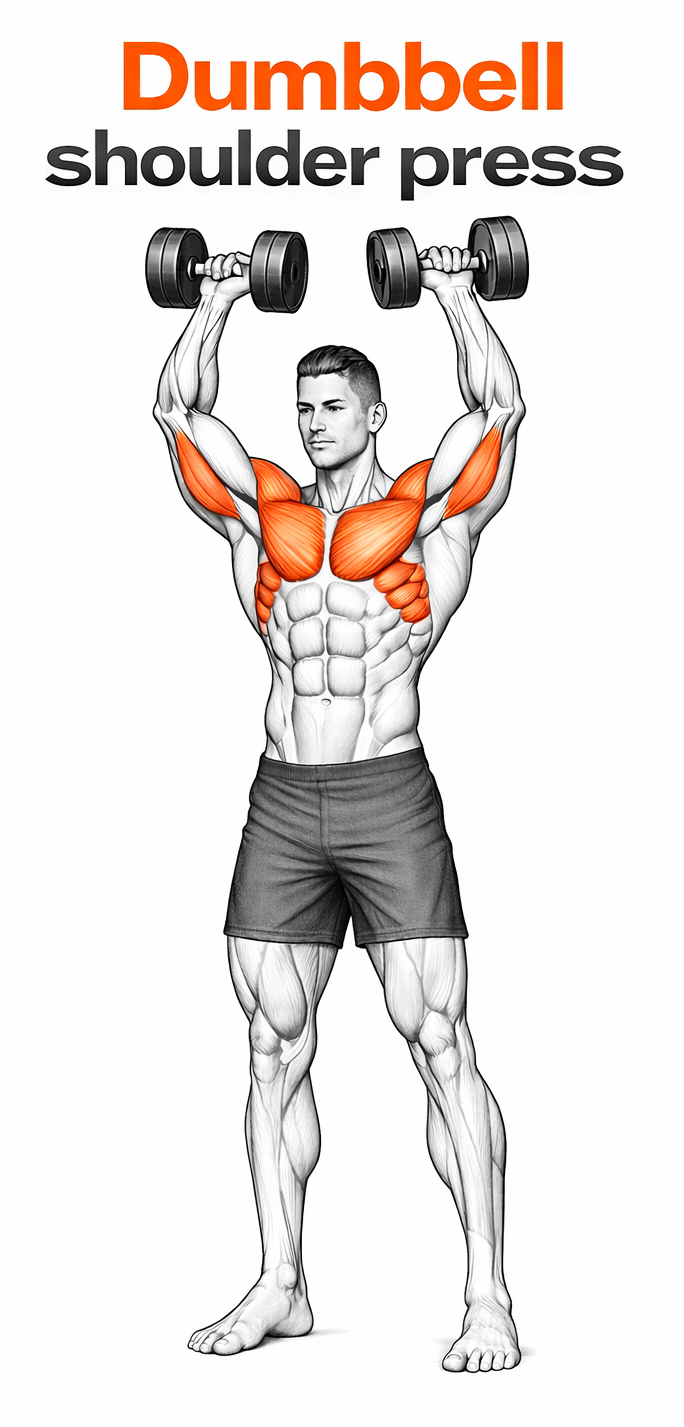
The deltoids — anterior and lateral primarily — drive the press. The triceps lock out the elbows. The upper pectoralis contributes through the bottom portion. The serratus anterior holds the scapulae stable. The trunk braces (more in standing than seated). The dumbbells' independent paths let each shoulder work through its natural range — friendlier to most lifters than a fixed barbell path.
How to perform
Setup
Sit on a bench with back support, or stand with feet hip-width apart. Hold dumbbells at shoulder height with palms facing forward, elbows bent at 90 degrees, wrists stacked over elbows. Trunk braced.
Execution
Press the dumbbells straight overhead by extending the elbows. The dumbbells come together (or nearly so) at the top, with the arms fully extended. Pause briefly. Lower the dumbbells back to shoulder height under control. The elbows track in line with the wrists throughout; don't flare them out wide.
Common mistakes
- Flaring the elbows wide. They track under the wrists.
- Pressing around the head rather than straight up. The path is vertical.
- Arching the lower back in the standing variant. Brace and tuck the ribs.
- Not locking out at the top. Lock the elbows.
- Going too heavy. The shoulder press caps; dumbbell shoulder-press loads typically run 60-75% of bench-press loads.
Progressions and regressions
Regress to seated dumbbell press with back support if the standing variant is too unstable. To progress, work pause press (2-second pause at the bottom rack), single-arm shoulder press (anti-lateral-flexion demand), or the Arnold press for greater range.
Programming notes
Primary or secondary vertical press. 3-4 sets of 6-12 reps. Two times a week. Pair with horizontal pulling in equal or greater volume to keep shoulders balanced. The dumbbells' independent paths make this useful for lifters with shoulder asymmetries.