Dumbbell Reverse Fly
Bent-over dumbbell reverse fly — direct rear-delt work in a hinged position, classic posterior shoulder builder.
Want a dumbbell shoulder workout?
Our wizard builds one around your time, goal, and equipment in about two minutes. Free — no signup needed.
Make Me a Workout → Just did it? Track your setsBent-over dumbbell reverse fly — direct rear-delt work in a hinged position, classic posterior shoulder builder.
Level: Beginner
Primary: Shoulders - Rear
Movement: Isolation
Tags: Pull
Type: Strength (Weight Lifting)
Equipment: Dumbbell
Sports: Football Swimming
Target muscles
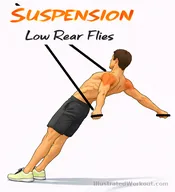
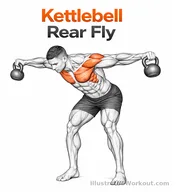
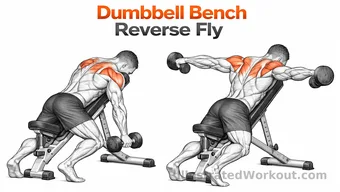
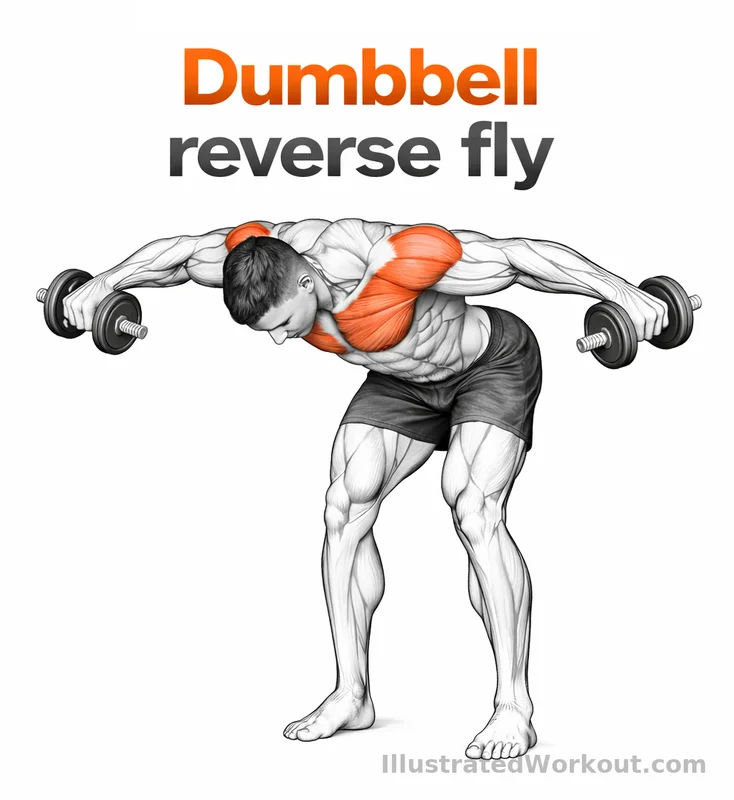
The posterior deltoids drive horizontal shoulder abduction. The middle trapezius and rhomboids retract the scapulae at the top. The rotator cuff (infraspinatus, teres minor) externally rotates through the end range. The spinal erectors and trunk hold the hinged position. The hamstrings and glutes hold the hip hinge. Versus the chest-supported version, the standing reverse fly has more trunk demand but no equipment requirement beyond dumbbells.
How to perform
Setup
Stand with feet hip-width apart, dumbbells in each hand. Hinge forward at the hips with a slight knee bend until the torso is nearly parallel to the floor. Back flat, chest up, lats engaged. Dumbbells hang below the chest with palms facing each other, slight bend in the elbows.
Execution
Raise both dumbbells out to the sides in a wide arc — the arms travel until they're parallel to the floor at shoulder height. The elbow bend stays consistent. Squeeze the rear delts and middle traps at the top for a one-second peak contraction. Lower the dumbbells under control to the starting position. The torso stays still throughout — don't bob up and down to use momentum.
Common mistakes
- Bobbing the torso to launch the dumbbells. Body stays still.
- Bending the elbows more during the rep. Maintain the consistent slight bend.
- Going too heavy. The rear delts are small; chase strict form over load.
- Raising too high. Stop at shoulder height; higher recruits the traps.
- Lower back rounding from the hinge. Maintain neutral spine.
Progressions and regressions
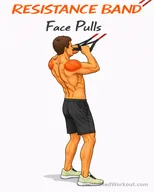
Regress to chest-supported reverse flyes (lying face-down on incline bench) until the standing hinge is solid. To progress, work pause reverse flyes (3-second hold at peak), cable rear-delt flyes for constant tension, or alternate with face pulls in supersets.
Programming notes
Excellent rear-delt accessory after the main pulling. 3-4 sets of 12-15 reps, two or three times a week. The rear delts are dramatically undertrained in most programs; volume here pays off in shoulder health and balanced development.