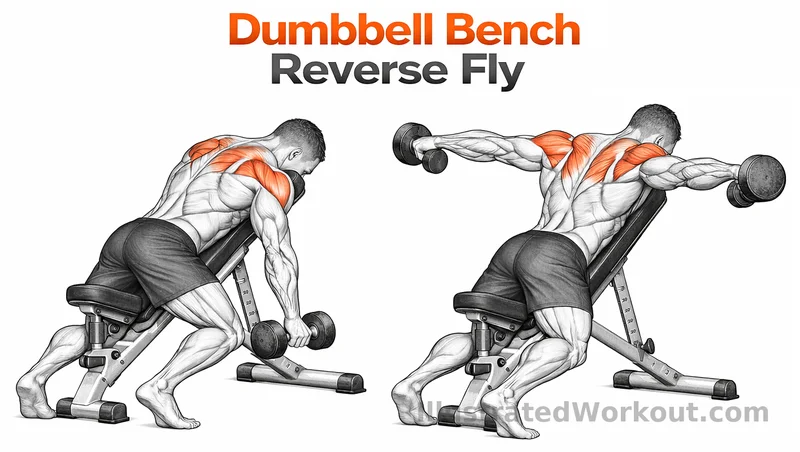
Dumbbell Bench Reverse Fly
Lying face-down on an incline bench, raising dumbbells out to the sides — direct rear-delt isolation with no trunk involvement.
Want a dumbbell shoulder workout?
Our wizard builds one around your time, goal, and equipment in about two minutes. Free — no signup needed.
Make Me a Workout → Just did it? Track your setsLying face-down on an incline bench, raising dumbbells out to the sides — direct rear-delt isolation with no trunk involvement.
Level: Beginner
Primary: Shoulders - Rear
Movement: Isolation
Tags: Pull
Type: Strength (Weight Lifting)
Equipment: Dumbbell
Sports: Football Swimming
Target muscles
The posterior deltoids are the primary target through horizontal shoulder abduction. The middle trapezius and rhomboids retract the scapulae at the top of the rep. The rotator cuff (infraspinatus, teres minor) externally rotates the shoulders through the end range. The lats and lower trapezius stabilize. Because the bench supports the chest, the lower back and trunk are removed from the work — the load is concentrated entirely on the upper-back and rear-shoulder muscles. This is one of the cleanest rear-delt isolation exercises available.
How to perform
Setup
Set an adjustable bench to a 30-45 degree incline. Lie face-down on the bench with the chest supported on the pad and the feet planted on the floor or footrests. Hold a dumbbell in each hand with palms facing each other (neutral grip), arms hanging straight down from the shoulders. Slight bend in the elbows that stays consistent.
Execution
Raise both dumbbells out to the sides in a wide arc — the arms travel away from the body and slightly back. The shoulder blades retract at the top of the rep. Squeeze the rear delts and middle traps at peak contraction for a one-second hold. Lower the dumbbells under control back to the hanging start position. The dumbbells travel up to roughly shoulder height; going higher recruits the traps and loses the rear-delt focus.
Common mistakes
- Bending the elbows more during the rep, which converts the lift into a partial row.
- Using momentum from the body bouncing off the bench. The body stays still.
- Going too heavy. The rear delts are small; chase strict form over load.
- Raising the dumbbells too high. Stop at shoulder height; higher shifts to the traps.
- Skipping the peak-contraction squeeze. The end-range squeeze is most of the value.
Progressions and regressions
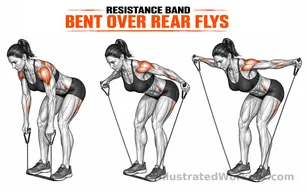
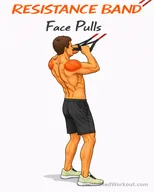
Regress to bent-over reverse flyes (standing hinge) until the bench supports your range comfortably. Cable rear-delt flyes are an alternative with constant tension. To progress, work pause flyes (3-second hold at peak), drop sets on the final set, or alternate with face pulls in supersets for a comprehensive rear-delt program.
Programming notes
Accessory work after the main back lifts. 3-4 sets of 12-15 reps, two times a week. The rear delts are dramatically undertrained in most lifters' programs — bench press dominates the chest, but rowing rarely keeps up. Add face pulls and rear-delt flyes to every upper-body session to balance the shoulders and prevent the rounded-forward posture that plagues press-heavy programs.