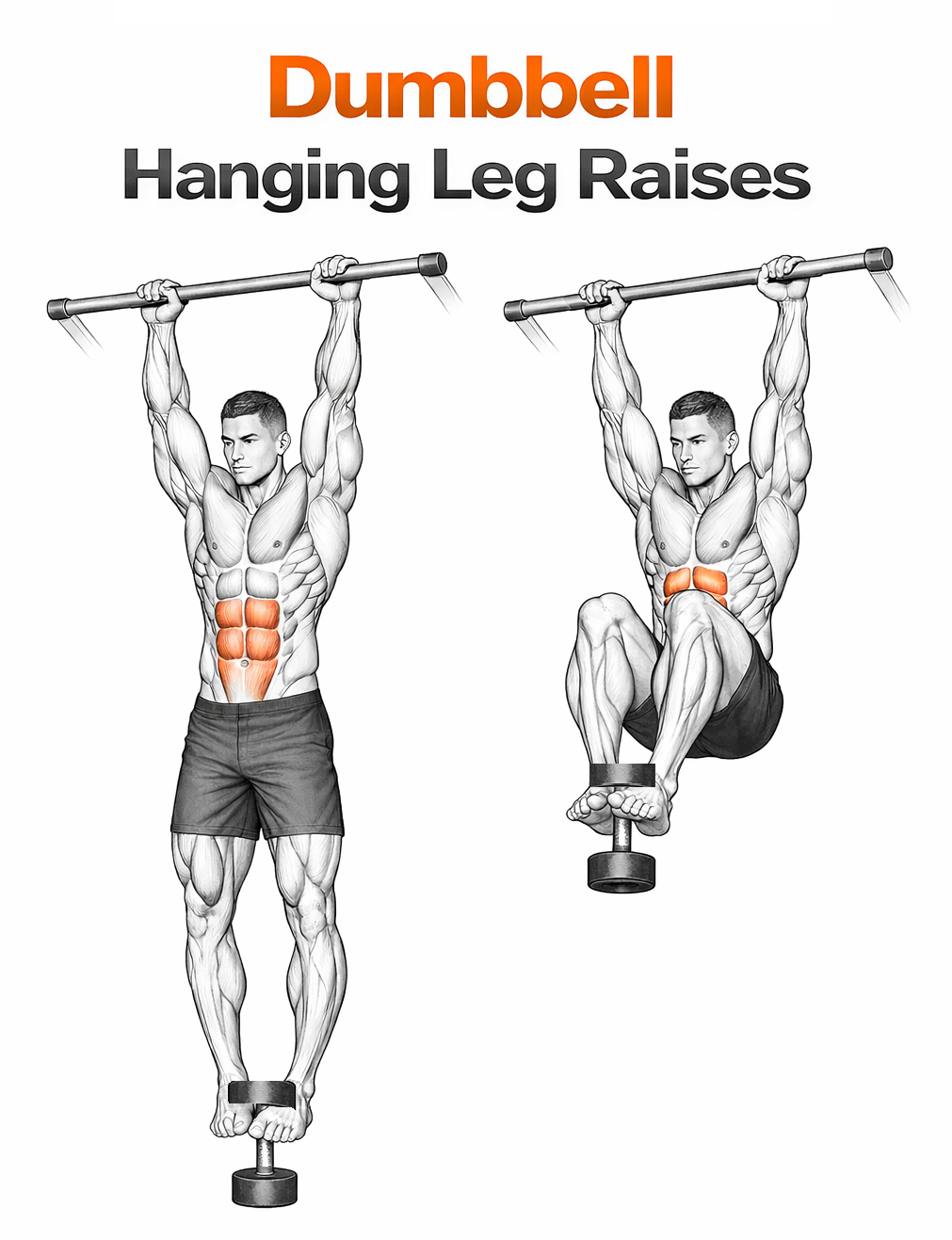
Dumbbell Hanging Leg Raises
Hanging leg raise with a dumbbell held between the feet — extreme trunk work, loaded version of the bodyweight hanging leg raise.
Level: Foundation
Primary: Abs
Movement: Isolation
Tags: Core Stability
Type: ISO Strength (Weight Lifting)
Equipment: Dumbbell Pull-Up Bar
Sports: Gymnastics Rock Climbing Swimming Volleyball
Target muscles
The rectus abdominis and lower abs drive spinal flexion as the legs raise. The hip flexors (especially iliopsoas) lift the legs. The obliques contribute to stabilizing the load. The lats and forearms hold the hanging position. The grip is significant — both holding the bar and holding the dumbbell between the feet. The dumbbell adds resistance to a movement that for many lifters has become easy at bodyweight; the loaded version is one of the most demanding ab exercises available.
How to perform
Setup
Hang from a pull-up bar with an overhand or neutral grip, shoulders packed (down and away from the ears). Place a dumbbell between the feet by squeezing the heels together against the dumbbell head. Some lifters use a foot-strap or specialized dumbbell hooks; clean ankle grip works for most. Hang with legs straight.
Execution
Keeping the legs as straight as possible, raise them up by flexing at the hips and contracting the abs — the legs travel forward and up until they're parallel to the floor (or higher, for advanced lifters). Don't swing; the lift should be controlled, not bobbing. Pause briefly at the top. Lower the legs back to the hanging position under control. The dumbbell stays secured between the feet throughout; if it slips, the working set is over.
Common mistakes
- Swinging for momentum. The body stays still; the legs do the work.
- Bending the knees to make the rep easier. Keep the legs straight (or very nearly so).
- Letting the dumbbell drop mid-set. Squeeze the feet tight.
- Cutting the range short. Lift the legs to at least parallel.
- Going too heavy too soon. Build into the load over weeks; start with very light dumbbells.
Progressions and regressions
Regress to hanging knee raises (knees bent, not straight legs) and bodyweight hanging leg raises until you can do 10 clean unloaded reps. Then add a light dumbbell (5-10 pounds). To progress, increase the dumbbell load, work pause hanging leg raises (3-second hold at the top), or chain with toes-to-bar for advanced trunk work.
Programming notes
Excellent loaded ab work for advanced lifters. 3 sets of 6-10 reps. Two times a week. Pair with anti-extension work (rollouts, planks) and anti-rotation work (Pallof presses) for a complete trunk program. The grip demand from both the pull-up bar and the dumbbell holding is significant; don't program right before a heavy deadlift session.