Duck Walks
Forward walk in a deep-squat position with hips low — old-school leg-and-hip burn that builds quad endurance and ankle mobility.
Level: Beginner
Primary: Quads
Movement: Compound
Tags: Animal Movement
Type: Functional Fitness (Obstacle & Hybrid) Primal Movments (Animal Flow-QMT Specifics)
Equipment: Body Weight
Sports: Gymnastics MMA Wrestling
Target muscles
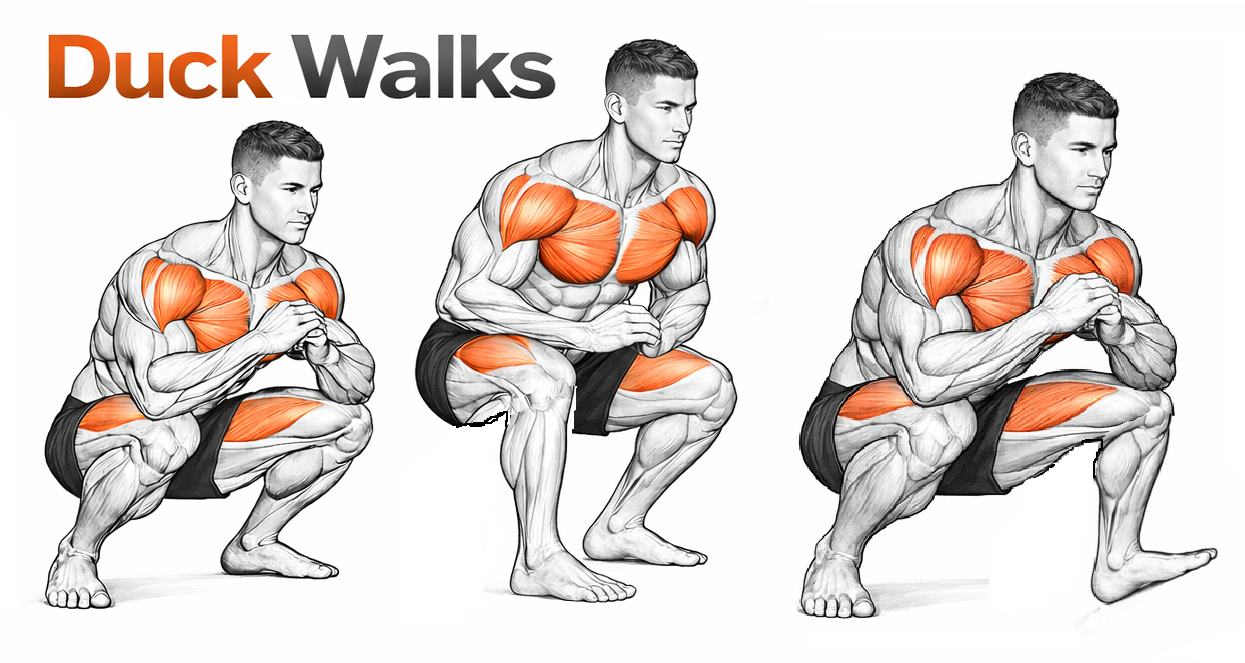
The quadriceps hold deep knee flexion throughout the walk — the constant submaximal contraction builds endurance more than max strength. The gluteus maximus and adductors of both legs work continuously. The trunk and spinal erectors hold the upright torso. The ankles work through dorsiflexion range each step. As old-school conditioning lifts go, this one is genuinely brutal at any meaningful distance — fifty meters of duck walking is more taxing than most people expect.
How to perform
Setup
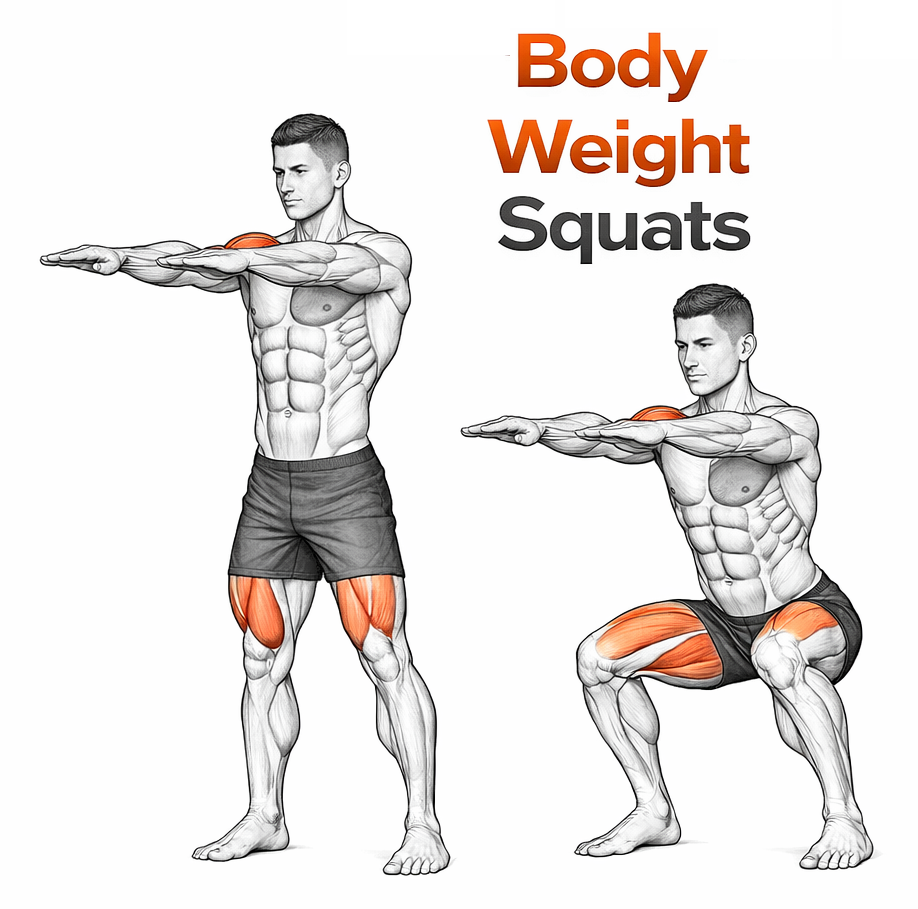
Drop into a deep squat — hips below the knees, heels flat, chest as upright as flexibility allows. Arms extended forward at chest level for balance, or hands clasped in front. Take a breath.
Execution
Walk forward by stepping one foot then the other, the hips staying low through every step. The forward step travels in a small arc; the trailing leg drags forward to meet it. The chest stays up, the heels stay flat, the trunk holds vertical. Move at a moderate pace — fast enough to feel like a walk, slow enough to maintain depth and form. Continue for the prescribed distance.
Common mistakes
- Standing up between steps. The hips stay low — if they rise, the working set is over.
- Heels lifting off the floor. If you can't keep them down, your ankle mobility limits the lift; build that first.
- Torso pitching forward. Stay upright; the legs do the work.
- Moving too fast. Speed loses the quad load.
- Doing it cold. The deep squat position demands prep work — warm up the ankles, hips, and knees first.
Progressions and regressions
Regress to a static deep-squat hold for a few minutes daily before chasing distance work. Then short ten-meter duck walks. To progress, add distance (twenty, thirty meters), add a goblet weight (kettlebell or dumbbell at chest), or chain with crouching tiger walks for primal-flow sequences.
Programming notes
Useful quad-endurance work, especially in athletic-conditioning programs. 3-4 sets of 10-meter walks, or 30-60 seconds of continuous duck walking for conditioning intervals. Two times a week. The quad load is real; soreness lasts two to three days after the first session. Build into the volume over weeks. Pair with deep-squat holds for daily mobility work.