Disc Slider Hip Abduction
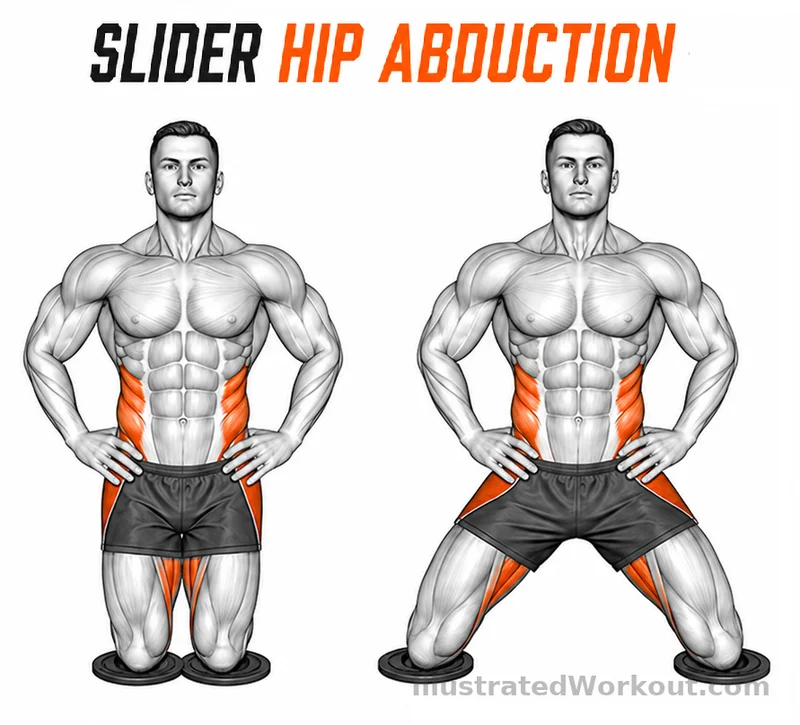
Standing on one leg with the other foot on a slider, the free leg glides out to the side and back, isolating the outer hip and glute medius.
Want a disc sliders leg workout?
Our wizard builds one around your time, goal, and equipment in about two minutes. Free — no signup needed.
Make Me a Workout → Just did it? Track your setsStanding on one leg with the other foot on a slider, the free leg glides out to the side and back, isolating the outer hip and glute medius.
Level: Foundation
Primary: Abductors
Secondary: Abs Glutes
Movement: Isolation
Type: Functional Fitness (Obstacle & Hybrid) Strength (Weight Lifting)
Equipment: Disc Sliders
Target muscles
The gluteus medius and minimus of the moving leg drive the abduction, sweeping the foot out to the side against the slider's resistance and then controlling it back in. The standing leg's abductors and glutes work just as hard to stabilise the pelvis and keep you balanced on one foot. The abs and obliques brace to hold the torso upright, so the drill quietly trains hip control on both legs at once.
How to perform
Setup
Stand tall with a slider under one foot and your weight settled on the opposite standing leg. Set the hips square and level, soften the standing knee and brace the trunk. Rest the hands on the hips or hold a support lightly, and find a steady, balanced position before you begin.
Execution
Glide the slider foot directly out to the side, keeping the leg fairly straight and the foot light on the disc, until you feel the outer hip working. Keep the torso upright and the pelvis level rather than leaning away to reach farther. Then draw the leg back in under control, resisting the slide the whole way so the abductors stay loaded. Move slowly and deliberately, keeping the standing hip stable so it does not collapse outward. Finish the reps on one side before switching.
Common mistakes
- Leaning the torso away from the sliding leg to gain range instead of keeping it tall and level.
- Letting the standing hip cave outward rather than holding the pelvis stable and square.
- Sliding the foot out fast and letting momentum, not the glutes, do the work on the return.
- Bending the moving knee heavily, which shifts the load off the outer-hip muscles.
Progressions and regressions
Regress by holding a wall or rail for balance, or by shortening the range while the outer hip and standing leg adapt. A seated or lying band abduction is an even gentler starting point. Progress by widening the slide, slowing the return, adding a pause at full abduction, or looping a light band above the knees to increase the demand on the glute medius.
Programming notes
Program it as glute-medius and hip-stability accessory work, two to three sets of ten to fifteen reps per side. It suits warm-ups, prehab and lower-body accessory blocks, and it is gentle enough for beginners once balance is steady. Because the outer hip fatigues quickly, keep the reps controlled rather than chasing range, and use light support early if standing on one leg is unstable.