BOSU Squat
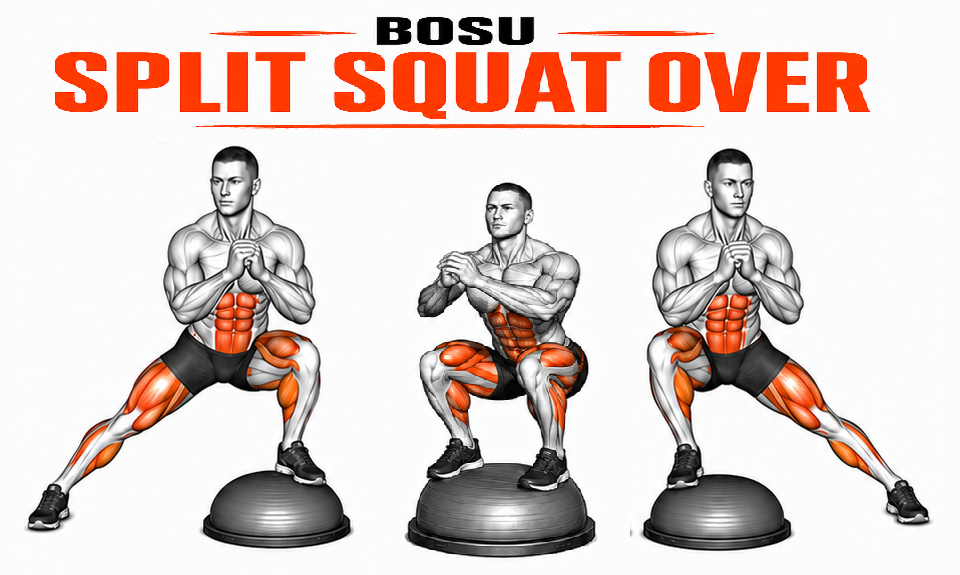
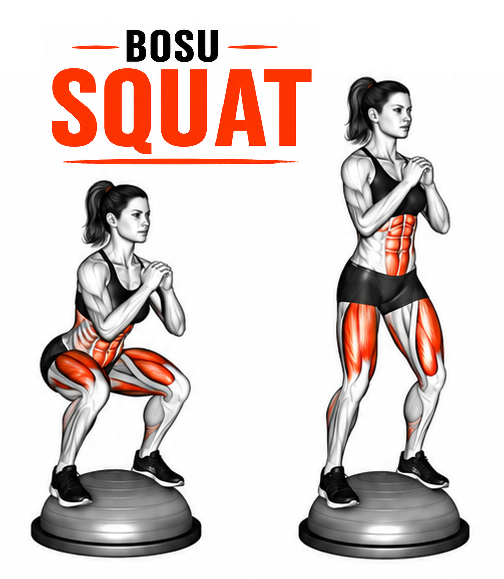
A bodyweight squat standing on the BOSU dome, building the quads and glutes while the unstable base trains ankle and core stability.
Level: Foundation
Primary: Quads
Secondary: Abs Calves Glutes Hamstrings
Movement: Compound
Tags: Balance / Stability Squat
Type: Strength (Weight Lifting)
Equipment: Balance Trainer
Target muscles
The squat pattern drives the quads to extend the knees and the gluteus maximus and hamstrings to extend the hips. Standing on the dome adds a heavy stabiliser tax: the ankle muscles, gluteus medius and core all work continuously to keep you balanced and the knees tracking as the surface shifts under both feet. It builds the squat pattern and balance at once, which is why it suits foundation-level trainees developing control.
How to perform
Setup
Step both feet onto the dome about shoulder-width apart, toes slightly out, and find your balance with the knees soft and core braced. Stand tall with the chest up and arms out front for counterbalance.
Execution
Push the hips back and down as you bend the knees, sitting into a squat while keeping both heels pressed into the dome and the knees tracking over the toes. Descend to a depth you can control without the dome tipping, keeping the chest tall and the weight balanced across both feet. Drive evenly through the feet to stand, squeezing the glutes at the top. Keep every rep smooth and balanced rather than fast — the surface rewards control.
Common mistakes
- Letting the knees cave inward as you descend or stand.
- Shifting the weight onto the toes so the heels lift off the dome.
- Leaning the chest too far forward and rounding the back.
- Dropping fast and bouncing, letting the wobble dictate the rep.
Progressions and regressions
Regress by squatting on the floor, or by flipping the BOSU dome-down for a flatter, less wobbly platform. Progress by holding a dumbbell or plate at the chest, adding a pause at the bottom, or moving to single-leg and squat-press variations.
Programming notes
Use it as foundational lower-body and balance work, 2-3 sets of 10-15 reps. It is a good teaching tool for the squat pattern and ankle stability, but the instability limits load, so it is not a substitute for heavy barbell squatting in strength programs. Pair it with a hinge to balance knee- and hip-dominant work.