BOSU Plank Jacks
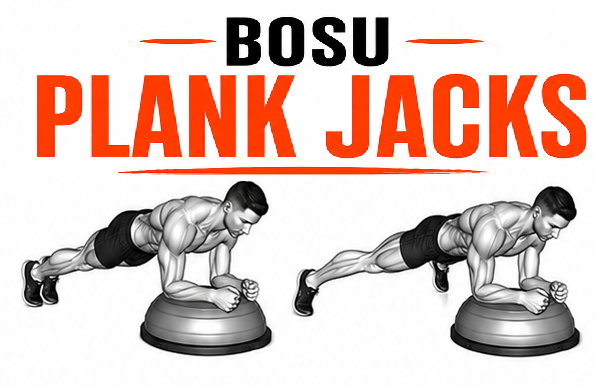
Plank jacks with hands on the BOSU, jumping the feet in and out while the core resists movement and the heart rate climbs.
Level: Intermediate
Primary: Abs
Secondary: Quads Shoulder
Movement: Isolation
Tags: Balance / Stability Core Stability
Type: Anaerobic Intervals (HIIT / Bootcamp / Circuit)
Equipment: Balance Trainer
Target muscles
This blends a plank's anti-extension demand with light conditioning. The rectus abdominis, obliques and transverse abdominis brace hard to keep the hips from bouncing as the legs jump in and out, while the hip abductors and adductors open and close the stance. The shoulders and chest stabilise the plank on the dome, and the cardiovascular system ramps up as the reps continue.
How to perform
Setup
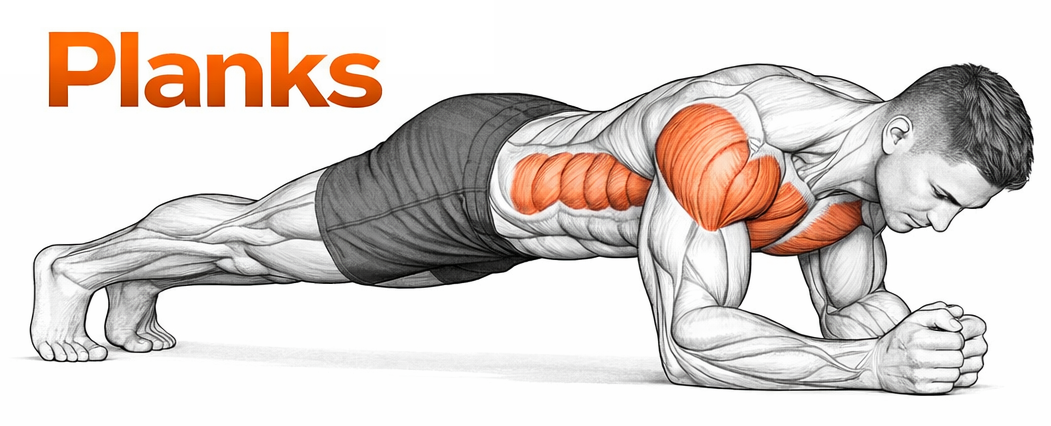
Set your hands on the BOSU platform or rim with the dome down and assume a tall plank, feet together, spine neutral and core braced. Square the shoulders over the hands.
Execution
Keeping the upper body still and the hips level, jump both feet out wide and then back together, like a jumping jack from the plank position. The challenge is to stop the hips from rising or twisting as the feet travel — the trunk stays locked while the legs move. Land softly through the balls of the feet and keep the dome quiet by pressing evenly through both hands. Maintain a steady, repeatable rhythm.
Common mistakes
- Letting the hips pike or rock with each jump instead of staying level.
- Landing heavily and stiff-legged rather than absorbing softly.
- Shrugging the shoulders up toward the ears and losing the set-blade position.
- Rushing so the plank line breaks down as you fatigue.
Progressions and regressions
Regress by stepping the feet out and in one at a time, or by doing plank jacks on the floor. Progress by increasing the pace in timed intervals, adding a push-up between jacks, or elevating the feet on a step for more shoulder and core load.
Programming notes
Program it in circuits and core-focused conditioning blocks, 20-40 second intervals or sets of 15-25 reps. It trains the core to stay rigid while the limbs move — a quality that carries over to running and athletic movement. Pair it with a static plank hold to train both the still and the dynamic sides of trunk control.