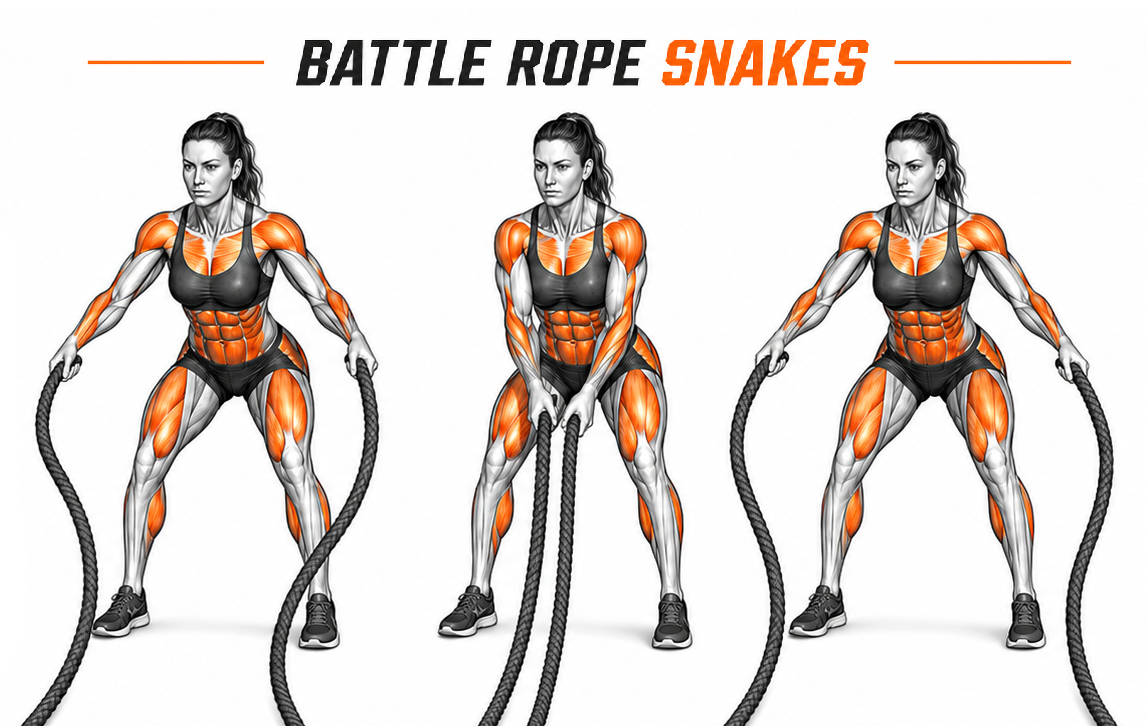
Battle Ropes Snakes
The shoulders whip both ropes flat along the floor so they slither outward like snakes, a low-amplitude burner for the delts and grip.
Level: Foundation
Primary: Shoulder
Secondary: Back - Upper Cardio Forearms
Movement: Compound
Type: Aerobic (Cardio) Anaerobic Intervals (HIIT / Bootcamp / Circuit)
Equipment: Battle Ropes
Target muscles
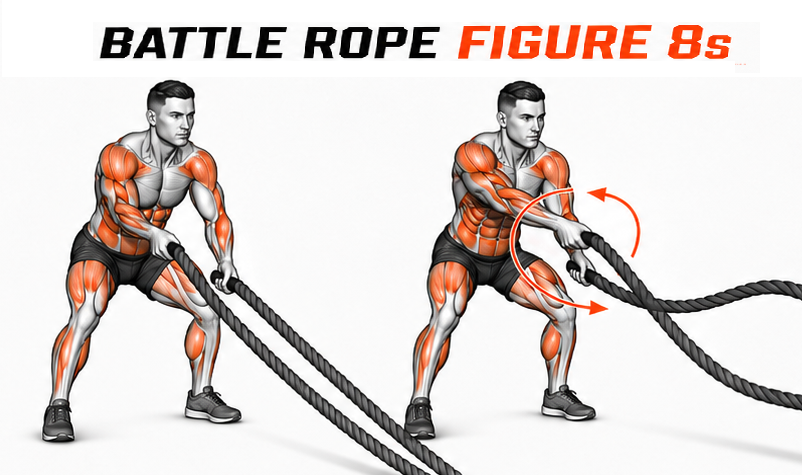
The deltoids drive fast, low horizontal movements that whip both ropes flat along the ground so they slither outward like snakes, keeping the side and front delts under continuous tension. The forearms grip hard to control the rapid, small-amplitude action, and the upper back stabilises the shoulders. Because the ropes stay low and the motion is quick and unbroken, the shoulders and grip fatigue quickly and the heart rate climbs, making this a sharp endurance-and-conditioning burner.
How to perform
Setup
Hold a rope end in each hand facing the anchor, with the ropes resting on the floor and a little slack taken out. Set a shoulder-width stance, sit into a quarter-squat, and brace the trunk with the chest tall and the shoulders set down. Lower your hands toward hip height so the ropes lie flat, keep your weight through the midfoot, and ready yourself to move the hands rapidly side to side close to the ground.
Execution
Move both hands quickly side to side close to the floor so the ropes whip flat and snake outward toward the anchor, keeping the action low and fast rather than tall. Drive the movement from the shoulders with the arms relatively straight, and keep the ropes hugging the ground so they slither rather than wave upward. Maintain a rapid, even cadence for the interval, staying low in the athletic stance. Keep the core braced and the chest up so the speed comes from the arms, not from bobbing the torso.
Common mistakes
- Letting the ropes lift up into tall waves instead of keeping them low and slithering along the floor.
- Standing upright and losing the low athletic stance the movement needs.
- Slowing the cadence so the snaking action loses its speed and intensity.
- Bobbing the torso to drive the ropes rather than working quickly from the shoulders.
Progressions and regressions
Regress by shortening the interval, taking out more slack, or standing nearer the anchor to ease the load until the cadence stays fast. Progress by quickening the hands, lengthening the work bout, or sitting deeper into the stance for more leg involvement. Widening the side-to-side travel of the hands increases the range and the grip demand, and holding the low squat throughout turns it into a brutal combined leg-and-shoulder burner.
Programming notes
Use it in 15-30 second bursts for 4-6 rounds with matched rest, since the fast low action fatigues the grip and shoulders quickly. It works well as a conditioning station or a short, sharp finisher at the end of a session. Keep the ropes low and the cadence high rather than drifting into tall, slow waves, and rotate it with slams and circles for variety.