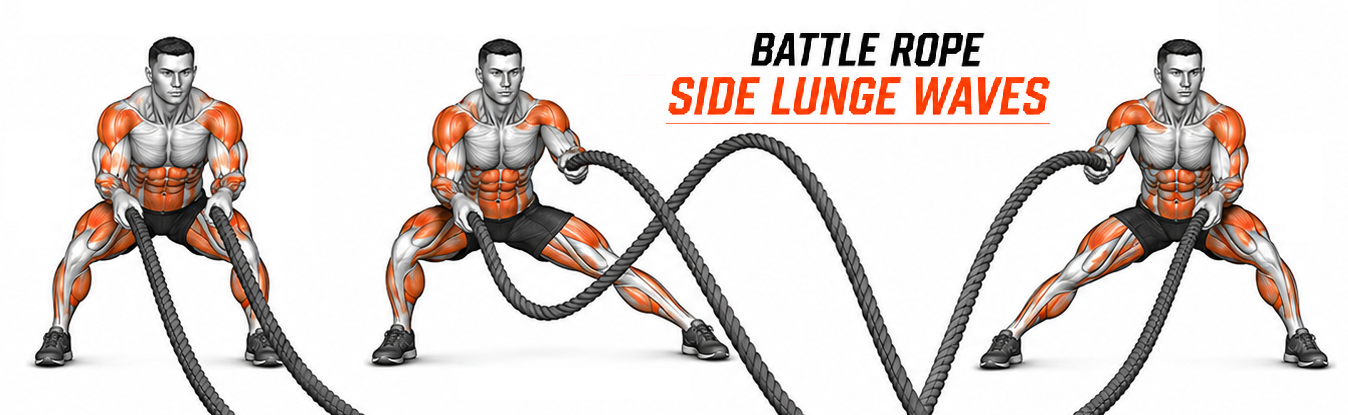
Battle Ropes Side Lunge Waves
Lateral lunges side to side that load the quads and adductors while the shoulders keep the ropes waving for a frontal-plane cardio hit.
Level: Intermediate
Primary: Quads
Secondary: Adductors Glutes Shoulder
Movement: Compound
Tags: Lunge
Type: Anaerobic Intervals (HIIT / Bootcamp / Circuit) Functional Fitness (Obstacle & Hybrid)
Equipment: Battle Ropes
Target muscles
The quads and glutes of the bending leg do the work on each lateral lunge, while the adductors of both legs stretch and contract to control the side-to-side travel, training the frequently neglected frontal plane. Up top, the deltoids and forearms keep the ropes waving for upper-body endurance. The core braces to keep the torso stable as the body shifts laterally, and pairing the lunges with continuous waves keeps the heart rate elevated, making it a well-rounded conditioning drill.
How to perform
Setup
Stand tall facing the anchor with a wide stance, a rope end in each hand and light tension on the line. Soften the knees and brace the trunk with the chest tall and the shoulders set down. Keep your weight balanced through the midfoot and the toes pointing roughly forward. Begin the waves before you start travelling side to side so the rope rhythm is locked in and steady from the first lateral shift.
Execution
Keeping the waves going, shift your weight to one side, bending that knee and pushing the hips back into a lateral lunge while the other leg stays long, then push back to centre and shift to the opposite side. Keep the bending knee tracking over the toes and the chest up as you sink. Maintain even waves throughout, which is the real test as the body travels laterally. Move at a pace where both the lunges and the waves can hold their quality for the full interval rather than letting either fall apart.
Common mistakes
- Letting the waves die each time you shift into the lunge instead of keeping them continuous.
- Caving the bending knee inward rather than tracking it over the toes.
- Staying upright and shallow instead of pushing the hips back to load the glutes and adductors.
- Rounding the torso forward as you sink to the side.
Progressions and regressions
Regress to lateral lunges with the ropes in low, gentle waves, or to bodyweight side lunges first, to learn the frontal-plane pattern before adding speed. Progress by lunging deeper, lengthening the interval, or switching to harder double waves. Adding a lateral hop or a skater bound between lunges turns it into a more explosive, plyometric movement that taxes the glute medius and the conditioning system harder.
Programming notes
Program it as functional conditioning, 3-6 rounds of 30-45 seconds or 8-12 lunges per side with the waves running throughout. It trains lateral movement that straight-ahead drills miss, so it fits a circuit or athletic conditioning block well. Keep the depth honest and balanced side to side, match the count on both legs, and ease off if the groin or inner thigh feels strained.