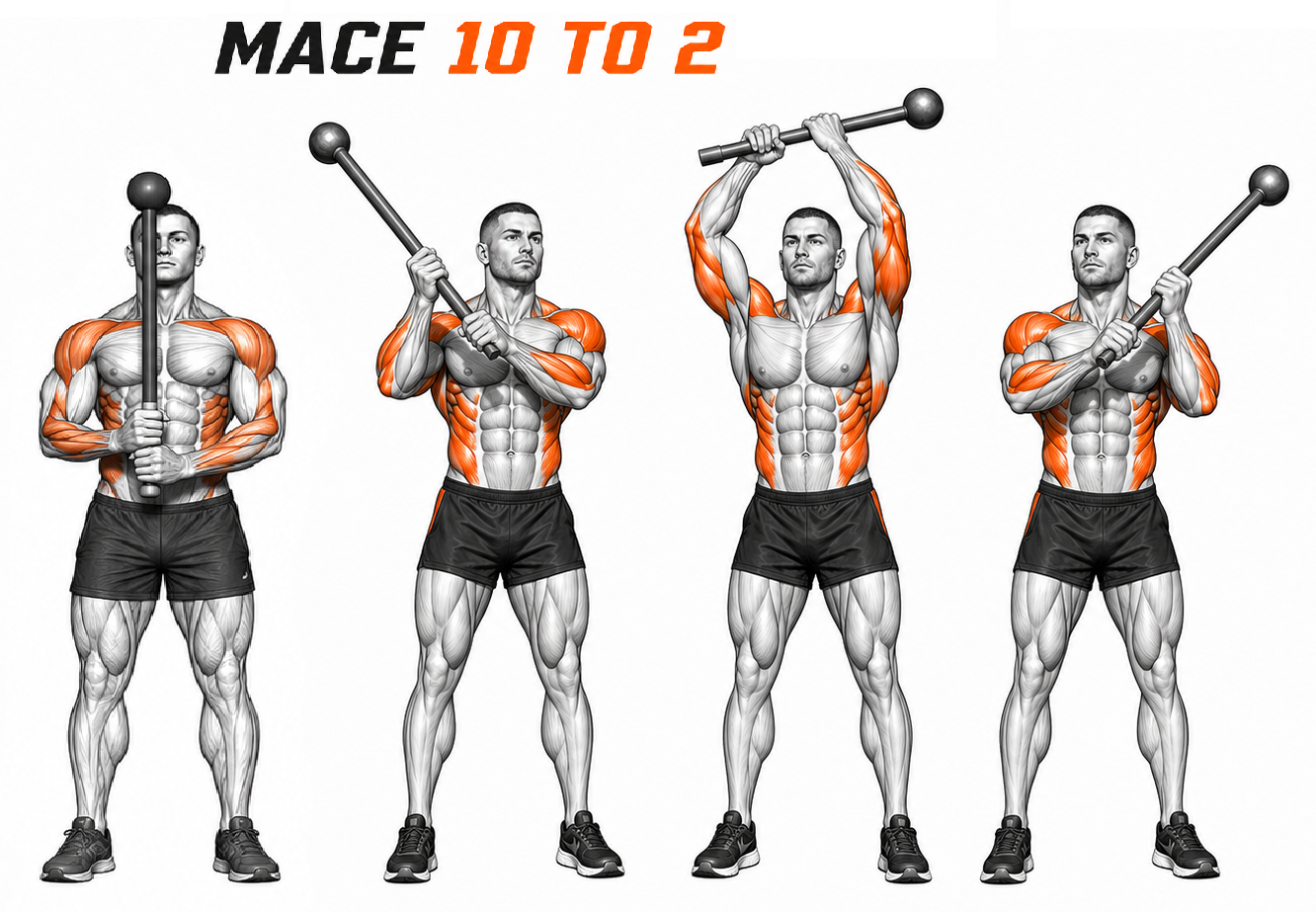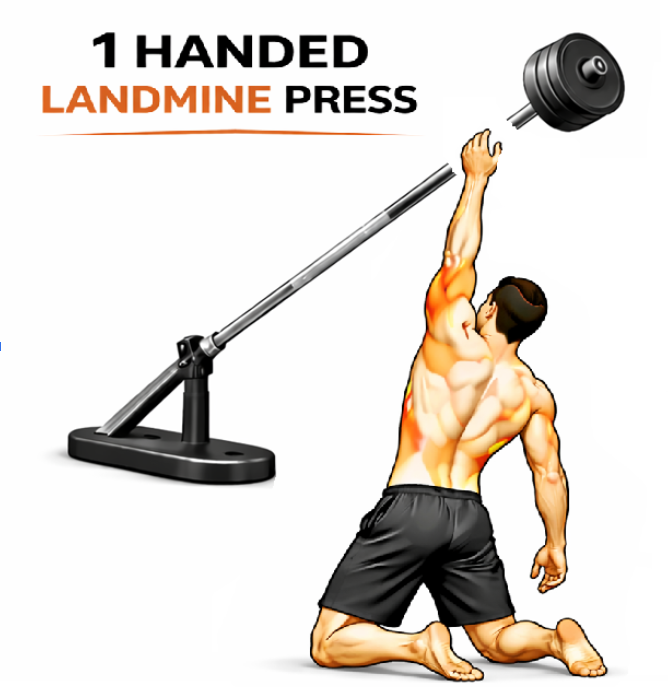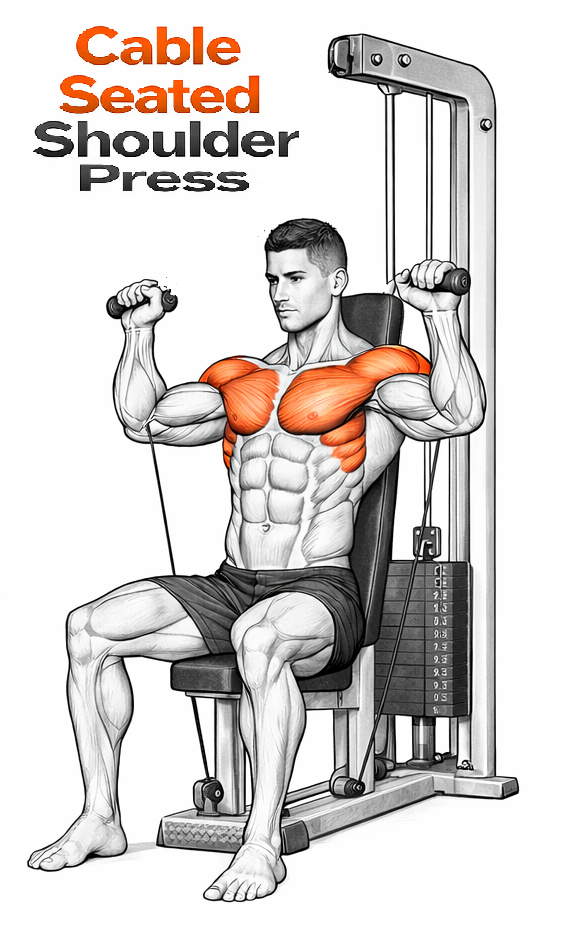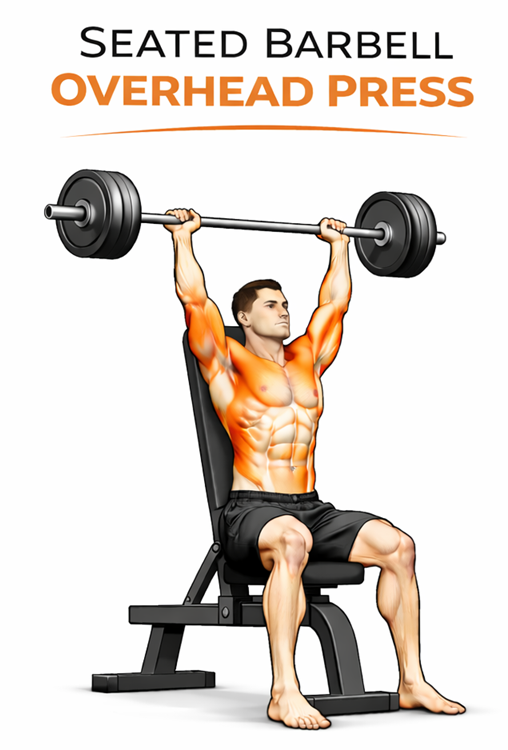
Barbell Seated Overhead Press
Seated strict overhead press with the back supported — removes leg drive entirely, isolating the shoulders and triceps for honest pressing strength.
Level: Intermediate
Primary: Shoulder
Secondary: Triceps
Movement: Compound
Tags: Primary Lift Push
Type: Strength (Weight Lifting)
Equipment: Barbell
Sports: Football Rugby Track and Field
Target muscles
The deltoids — anterior and lateral primarily — drive the press through the full range without any leg-drive assistance. The triceps brachii lock out the elbows. The upper pectoralis major contributes through the bottom portion. The serratus anterior holds the scapulae stable. With the lower body removed from the equation, the seated press exposes pressing weakness in a way standing presses sometimes hide; many lifters who can push-press 200 pounds find their strict seated press much lower than expected.
How to perform
Setup
Set an adjustable bench to 90 degrees (fully upright) inside a rack with the bar set to upper-chest height when seated. Sit down with the back firmly against the pad. Plant the feet flat on the floor for stability. Pull the shoulder blades back into the bench, take a clean front-rack grip just outside shoulder-width, big breath into the belly, brace the trunk, unrack the bar.
Execution
Press the bar straight up by extending the elbows. As the bar passes the face, push the head forward through the window so it locks out directly over the shoulders. Lock the elbows. Pause briefly at the top. Lower the bar back to the front rack along the same path, pulling the head back as it passes the face. The back stays pressed into the bench through the full set — if the chest comes off the pad to help the press, the load is too heavy. Reset the brace before the next rep.
Common mistakes
- Arching the lower back off the pad to assist. Stay pressed against the bench; the value of the seated press is the removal of body english.
- Pressing the bar around the face rather than pulling the head back through the window. The bar travels straight.
- Treating it as the same loaded weight as a standing press. Most lifters seated-press 75-90% of their standing strict press; expecting parity guarantees a failed rep.
- Skipping warm-up sets. The seated press position pre-loads the shoulders before the lift starts; light sets matter.
- Holding the breath through every rep on long sets. Inhale at the top, brace, press, exhale at lockout.
Progressions and regressions
Regress to seated dumbbell shoulder press (one arm or two-arm) for a smaller stability demand and easier joint position. The half-kneeling press is another strict-press regression that doesn't need a bench. To progress, work pause reps (2-second pause at the bottom rack position), the Z-press (sit on the floor with legs extended — brutal trunk demand), or behind-the-neck seated press for lifters with the shoulder mobility for it.
Programming notes
Excellent as a primary vertical press on a shoulder-focus day, or as the second pressing movement after standing overhead work. 3-4 sets of 4-8 reps. Once or twice a week. The seated press is particularly useful for lifters whose standing press is limited by trunk or hip stability rather than true shoulder strength — building the seated number directly carries over to standing press performance over time.