Barbell Push Jerk
A dip-and-drive overhead lift where you re-bend the knees to receive the bar, letting you press far more than a strict press.
Level: Advanced
Primary: Shoulder
Secondary: Quads Traps Triceps
Movement: Compound
Tags: Explosive Olympic Lift Push
Type: Anaerobic Intervals (HIIT / Bootcamp / Circuit) Hybrid Athletic Strength (Weight Lifting)
Equipment: Barbell
Target muscles
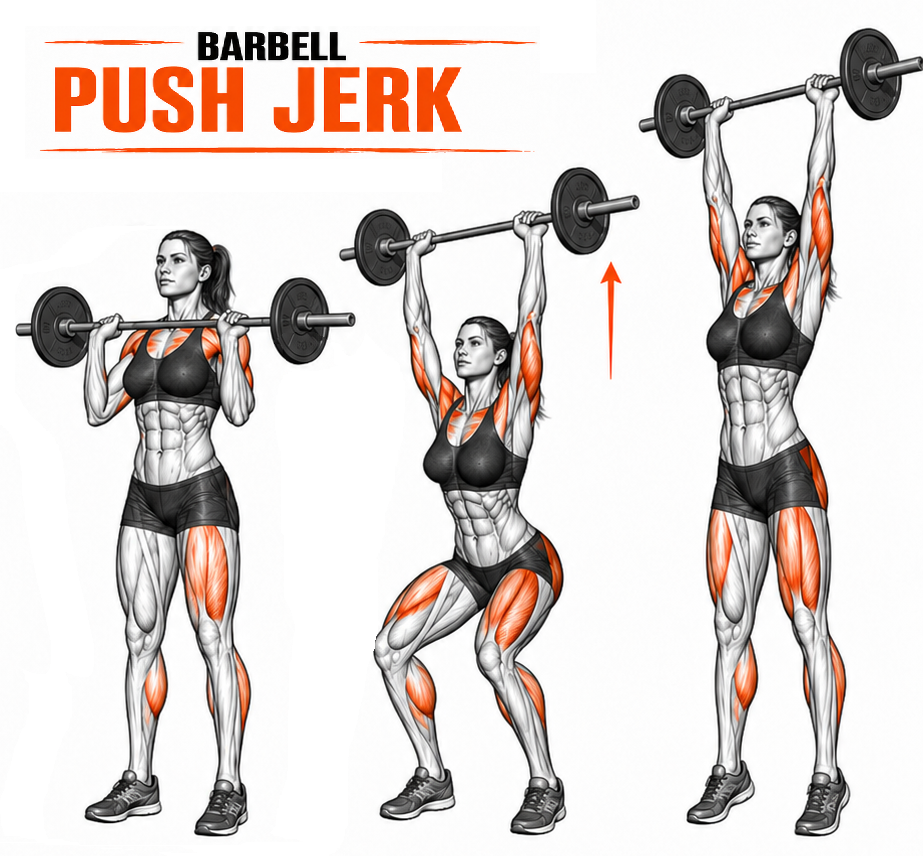
The push jerk uses the legs to launch the bar — quads and glutes drive the dip-and-extension — then the shoulders and triceps lock it out overhead. Crucially you drop back under the bar by re-bending the knees, so the lower body catches and stabilises a heavier load than the shoulders could press alone. The trunk braces throughout to transmit force cleanly.
How to perform
Setup
Hold the bar in a front rack at the shoulders, elbows up, feet hip-width, core braced.
Execution
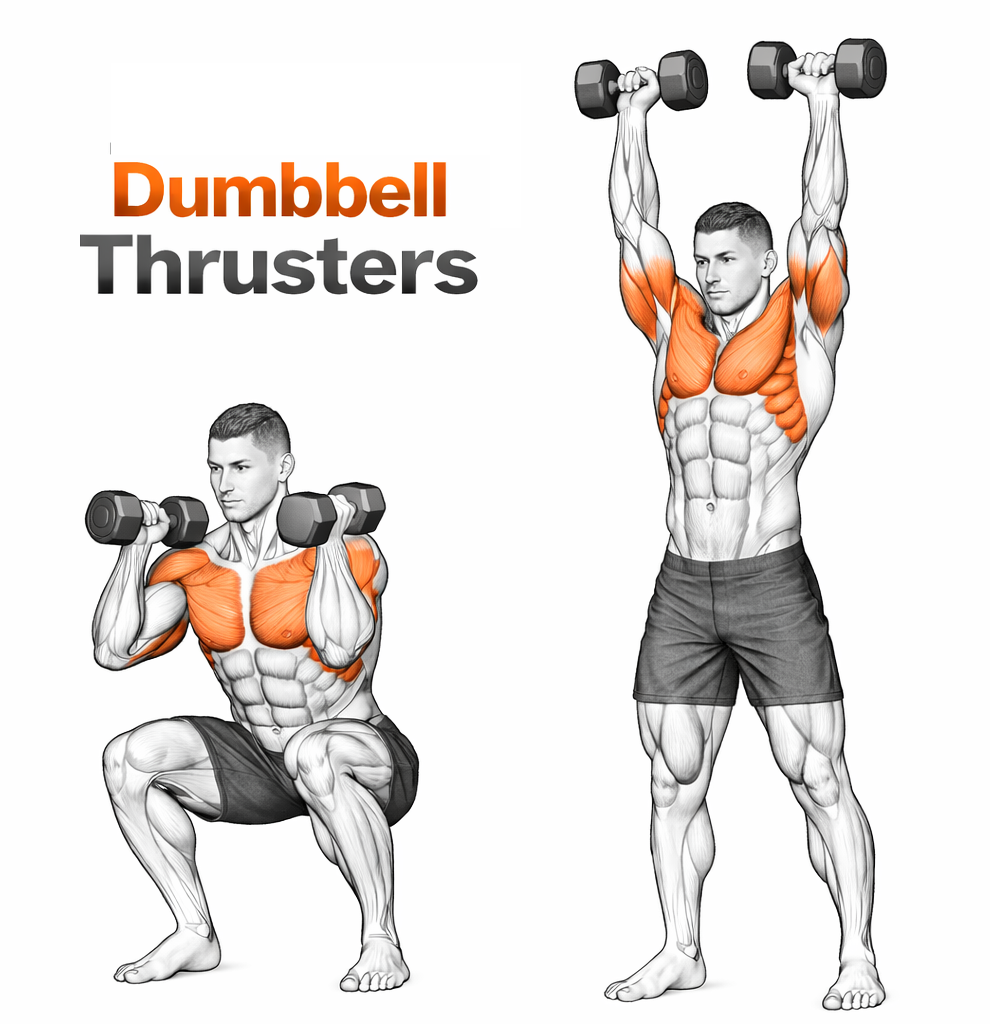
Dip straight down a few inches by bending the knees, keeping the torso vertical, then reverse hard and drive the bar off the shoulders. As the bar leaves the shoulders, push yourself down under it by re-bending the knees into a partial squat while punching the arms to lockout. Stand to full extension with the bar stacked overhead. The bar barely presses — the legs do the lifting and the re-dip does the catching.
Common mistakes
- Dipping with a forward lean, which sends the bar out in front instead of straight up.
- Pressing the bar out with the arms rather than driving with the legs and dropping under.
- A slow, shallow dip that produces no usable drive.
- Catching with soft, unlocked elbows overhead.
Progressions and regressions
Regress to a push press (drive up but no re-dip) to learn the leg drive, and to a strict press for baseline strength. Progress to the split jerk for the heaviest overhead loads. Drill the vertical dip relentlessly — it's where most jerks go wrong.
Programming notes
Use it for overhead power and as a conditioning tool, 3-5 sets of 2-5 reps. Keep the dip crisp and the catch solid; reduce load if the bar path drifts forward. It's a staple in athletic and circuit programming where you need to move loads overhead quickly.